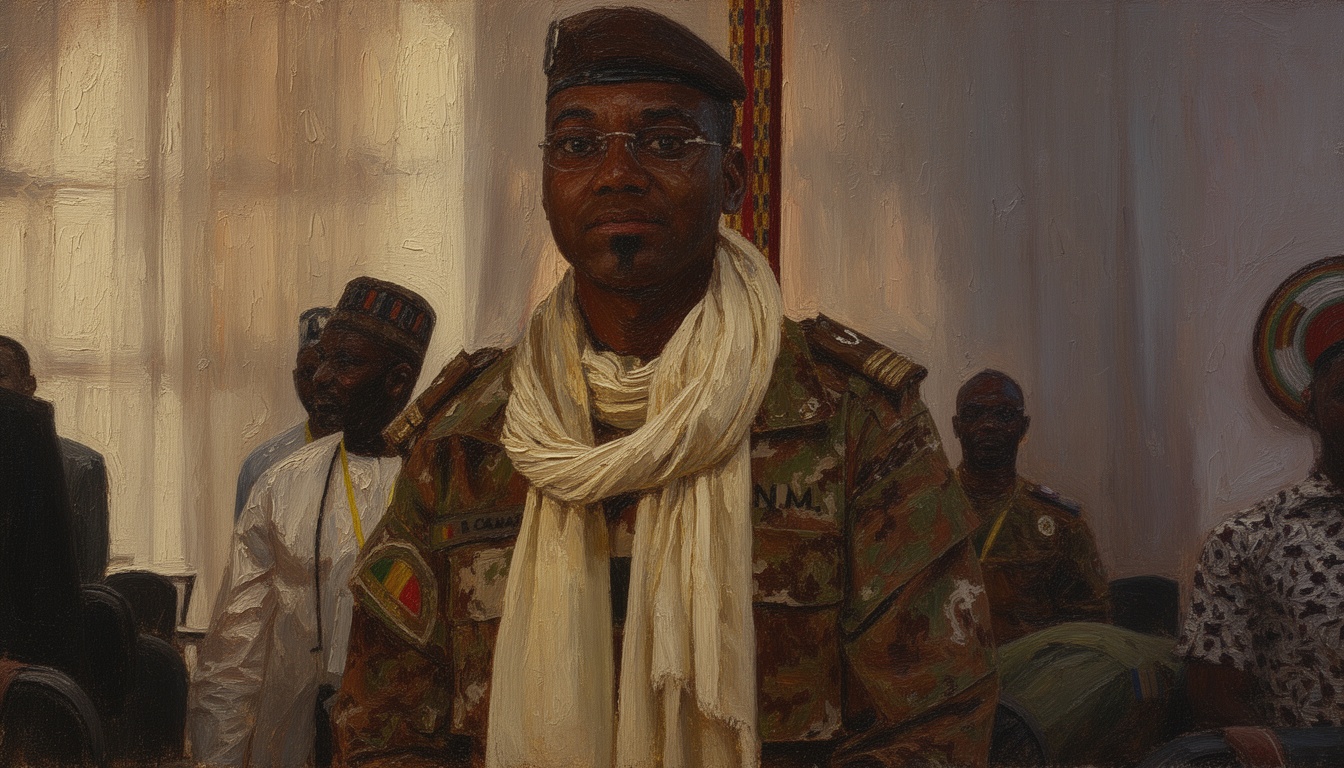
Mali Crisis Deepens as Defence Minister Killed, Town Captured
Mali’s ruling military junta faces a fresh security crisis following coordinated weekend attacks by jihadists and Tuareg rebels. The defense minister was killed, and a northern town reportedly fell under rebel control. With the junta’s leadership conspicuously absent, the situation signals a widening challenge to Mali’s fragile state stability and regional security dynamics.
The core development is blunt and alarming: Mali’s military government is confronting a coordinated assault that culminated in the death of the defence minister and an apparent seizure of a key northern town. Attacks began at dawn on Saturday and were described as synchronized, underscoring a deliberate attempt to exploit any command-and-control gaps. The death of a senior defence official dramatically raises the stakes for the junta’s ability to project authority across the country. Worsening the image problem for the regime, General Assimi Goita has not been seen since the weekend strikes began, leaving a leadership void at a moment of acute crisis.
Contextual background shows that Mali has long endured a mosaic of insurgencies, including jihadist violence and Tuareg separatist agitation. The Azawad Liberation Front (FLA) is identified as leading or coordinating Tuareg rebel actions in concert with jihadist factions likened to the Group for the Support of Islam and Muslims. While the attackers claimed tactical successes, the broader pattern is a test of the junta’s resilience and willingness to escalate. International attention has repeatedly focused on how regional counterterrorism efforts intersect with local ethnic politics, complicating any straightforward security solution. The weekend offensive marks a potential turning point in the balance of power between Mali’s state institutions and non-state armed groups operating with external and transnational links.
Strategically, the crisis intensifies questions about the junta’s legitimacy and its capacity to maintain command across diverse frontlines. The disappearance of the leader amid escalation raises concerns about succession risk, coordination, and morale within security forces. If unaddressed, the episode could catalyze a broader legitimacy crisis and invite external actors to recalibrate their engagement in the Sahel. The incident also has implications for regional stability, as counterparts in neighboring states weigh how to deter similar cross-border attacks and protect commercial and humanitarian corridors.
Technical details focus on the weaponized nature of the assault and the coalition dynamics. The weekend strike depicted a multi-front operation combining jihadist assault teams with Tuareg separatist units, signaling a level of readiness and interoperability that challenges local security forces. Specific force compositions remain unclear, but the attacks imply use of fortified positions, rapid assault teams, and possible convoy incursions into urban centers. The political shock follows a pattern in which rebel and militant groups exploit asymmetries in intelligence, mobility, and political pressure, pressing the junta to demonstrate both deterrence and governance credibility.
Consequence and forward assessment point to a drawn-out struggle over Mali’s sovereignty and territorial control. Short-term consequences likely include increased military sweeps, broader counter-insurgency campaigns, and potential distrust within civilian governance structures. Diplomatically, regional actors will scrutinize whether the junta can sustain a credible response without triggering further fragmentation or external intervention. Looking ahead, the security landscape in central and northern Mali could polarize further, with the risk of irreversible erosion of state presence in contested zones unless the regime can rapidly restore command, salvage legitimacy, and secure essential humanitarian and development channels.