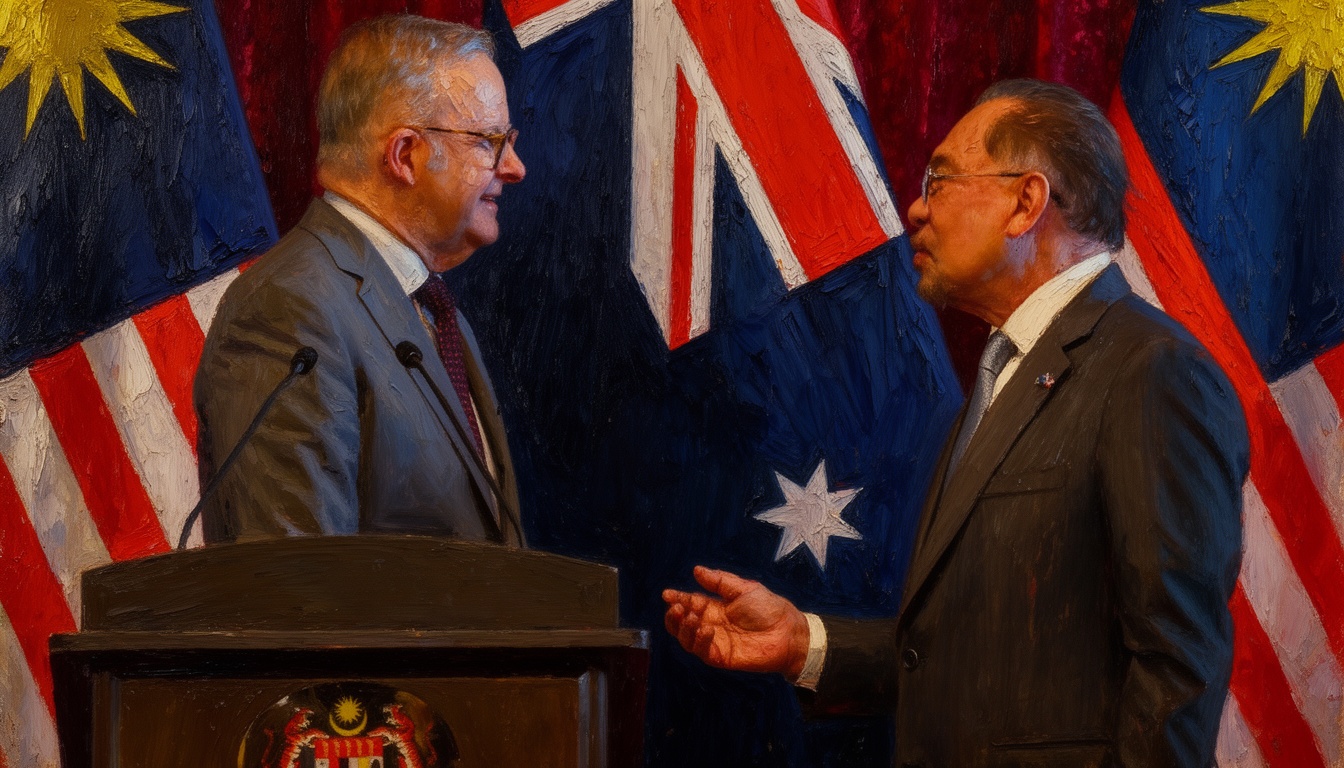
Malaysia and Australia strike energy supply pledge to bypass Iran war disruptions
Malaysia and Australia commit to maintaining oil and gas flows amid a widening energy disruption linked to the Iran conflict. The pledge aims to stabilize regional energy markets as Middle East supply routes face scrambles and diversifications. The move signals a broader push for energy security in Indo-Pacific chokepoints.
A formal pledge between Malaysia and Australia commits to sustaining oil and gas flows despite ongoing disruptions tied to the Iran conflict. Both sides emphasize robust commercial arrangements, rapid cargo movement, and mitigation measures to prevent any throttling of supply. The agreement signals a deliberate shift toward regional energy resilience in the wake of Middle Eastern supply shocks.
Background: Since Tehran's actions to restrict access to the Strait of Hormuz in response to US-Israeli strikes, crude shipments and gas flows through the region have faced increased volatility. Global buyers and traders have sought alternative routes and partners, raising costs and changing risk calculations for participants across Asia-Pacific. The Malaysia-Australia pact arrives amid a broader realignment in energy diplomacy that prioritizes diversified supply lines and neighborly energy interdependence.
Strategic significance: The pledge reinforces a regional dissuasion dynamic by signaling that energy security can be shielded from political turbulence via bilateral cooperation. It also tests the resilience of regional supply chains and could influence oil and gas pricing, storage strategy, and port throughput in Southeast Asia and Oceania. In a broader sense, the agreement contributes to the deterrence calculus of regional powers watching Tehran, Washington, and their allies.
Technical/operational details: The collaboration focuses on keeping liquid hydrocarbon markets liquid and predictable. It highlights commitments to supply arbitration, cross-border invoicing in stable currencies, and dedicated shipping slots to prevent bottlenecks. While no weapon systems are involved, the economic levers—tariff arrangements, insurance terms, and shipping insurance pools—will shape operational realities for carriers and producers in the region.
Consequences and forward assessment: If sustained, the pledge could temper price spikes and reduce volatility linked to Hormuz-area disruptions. It may encourage similar arrangements among other Indo-Pacific economies seeking to insulate themselves from Middle East shocks. However, the situation remains contingent on Tehran's calculations, US-Israeli policy, and the broader trajectory of the Iran conflict, which will dictate how durable such energy-security pacts prove to be.