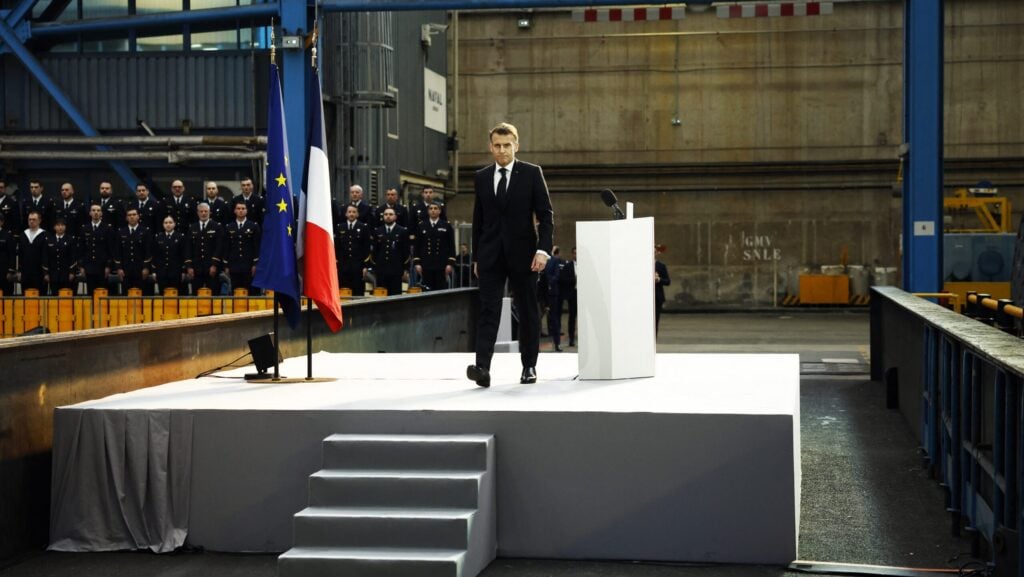
Macron Escalates Nuclear Ambitions, Calls for Enhanced Deterrence Strategy
French President Emmanuel Macron's push to expand the nuclear arsenal signals a dangerous escalation in European defense strategies amid rising global tensions. This call for collaboration with Germany reinforces concerns over nuclear proliferation in an already volatile geopolitical landscape.
French President Emmanuel Macron has called for a significant increase in France's nuclear arsenal, asserting that the current state of deterrence is no longer adequate for the nation's security needs. This announcement highlights a decisive shift in French defense policy, emphasizing the need for an expanded nuclear capability amidst rising global threats. Macron articulated that he owes the nation 'the absolute assurance' of credible nuclear deterrence, leaving little doubt about the seriousness of his intentions.
This drive to bolster nuclear forces comes on the heels of heightened security concerns in Europe, fueled by Russia's aggressive military actions in Ukraine and the increasing assertiveness of China in the Indo-Pacific. France has historically maintained a robust nuclear deterrent but has faced pressure to adapt its strategy in response to both regional conflicts and broader global instability. The call for enhanced deterrence also reflects a growing sentiment among NATO member states to prepare for an unpredictable future.
The significance of Macron’s statements cannot be understated; they represent a critical pivot toward a more aggressive stance on nuclear capabilities as conventional warfare dynamics evolve. In a landscape marked by great power competition, France's intentions could amplify nuclear tensions in Europe considerably. The collaboration with Germany and other European allies underlines fears of a new arms race and signals a departure from previous commitments to disarmament.
The key actors in this reshaping of deterrence include not just France and Germany, but also NATO and the European Union, all of whom must navigate the increased risk of a nuclear arms race. Macron's motivations appear to stem from a mixture of national pride in France's independent nuclear capability and a genuine concern over collective security in Europe. His reassertion of a nuclear strategy raises questions about the overarching framework of European defense collaboration.
In terms of operational specifics, Macron’s government has committed substantial resources to upgrade France's nuclear forces, notably its submarine-launched ballistic missiles (SLBMs) and air-delivered nuclear bombs. The French military budget for nuclear capabilities reportedly stands at around €37 billion annually. With both Germany and France accelerating their defense budgets and investments in joint military technologies, the landscape of European defense could witness a significant shift.
The likely consequences of this call for an expanded nuclear deterrence are manifold. Increased spending on nuclear arsenal upgrades could exacerbate existing tensions among NATO members, particularly concerning Russia's response. Such developments may provoke other nations, including non-NATO states, to reconsider their nuclear strategies, pushing Europe into a potentially perilous arms race.
Historically, Europe has faced similar crises, notably during the Cold War when nuclear deterrence dominated defense conversations. The 1986 Reykjavik Summit famously attempted to address nuclear disarmament, ultimately resulting in limited outcomes. As Macron's bold proposals gain traction, they parallel those tense periods, raising the question of whether diplomatic resolutions can be achieved amid renewed hostilities.
Moving forward, key indicators to watch include responses from NATO allies, particularly from Germany as it grapples with its post-war pacifist identity versus contemporary military realities. The potential for joint nuclear capabilities and exercises shows an essential shift in European defense policy, necessitating close monitoring of military expenditures, strategic partnerships, and public opinion in response to increased nuclear posturing across the continent.