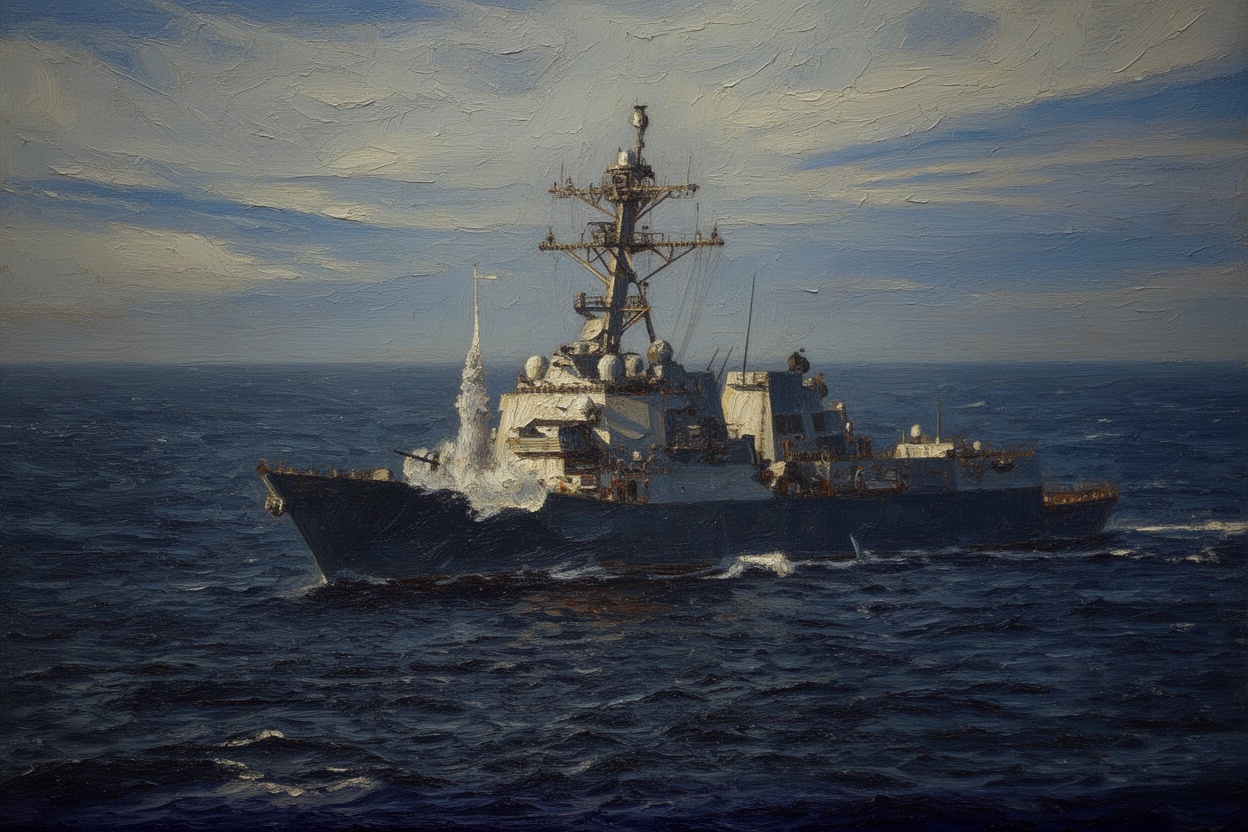
Lockheed Martin Secures $200 Million for PAC-3 MSE Integration on U.S. Navy Vessels
The Navy advances high-performance defense by funding PAC-3 MSE integration across surface ships, enlarging interceptor inventories. This accelerates deployment of a mature missile defense capability Lockheed Martin has refined for years, signaling a push to bolster maritime layered defense and deterrence.
The U.S. Navy is committing $200 million to integrate the PAC-3 MSE interceptor onto its surface fleet, a move aimed at rapidly expanding the service's defensive inventory. The decision follows a long development arc in which Lockheed Martin has led the maturation of the PAC-3 MSE, a system designed to extend engagement envelopes against ballistic missiles. The contract, announced in late April, marks a tangible step toward fielding a more capable defense architecture aboard U.S. surface ships. This effort dovetails with broader defense priorities to harden maritime deterrence and improve fleet resilience in contested environments.
Context matters: PAC-3 MSE is the latest iteration of Lockheed Martin’s hit-to-kill missile defense interceptor, built to counter incoming ballistic and cruise missiles with improved guidance, range, and maneuverability. The Navy has sought to integrate enhanced interceptors into its existing baseline fleet to avoid gaps in protection as threats evolve. The current funding signals a accelerated timeline for bringing additional missiles into service, and it underscores public-private coordination to scale defense industrial output without delaying deployment. Analysts view this as part of a larger push to standardize modern ballistic defense across naval platforms.
Strategically, the move strengthens the United States’ maritime layered defense posture. By embedding PAC-3 MSE on surface combatants, the Navy can better deter and defeat ballistic missiles that could threaten carrier strike groups, amphibious ships, and forward-deployed forces. It also has implications for allied navies that rely on U.S. defense guarantees and interoperability. As threats from state and non-state actors evolve, a more capable interceptor mix on ships reduces operational risk during high-tension crisis scenarios and mission-preservation drills.
Technical notes: PAC-3 MSE provides extended range and enhanced maneuverability over earlier PAC-3 variants, with improvements in guidance, propulsion, and hit-to-kill probability. The exact platforms to receive integration remain under execution planning, but the program aligns with ongoing modernization of the surface fleet’s point-defense capabilities. Budgetary details emphasize procurement of additional interceptors and the integration work required to retrofit existing hulls and combat systems across multiple ships.
Forward assessment: Expect accelerated fielding across selected Navy ships in the coming fiscal cycle, followed by broader expansion as production ramps up and integration lessons are codified. The improvements to shipboard defense bolster deterrence in contested littoral and blue-water environments. If the program scales as planned, it will shape naval engagement options in near-peer competition, increasing the U.S. Navy’s ability to sustain operations under ballistic-missile threats.