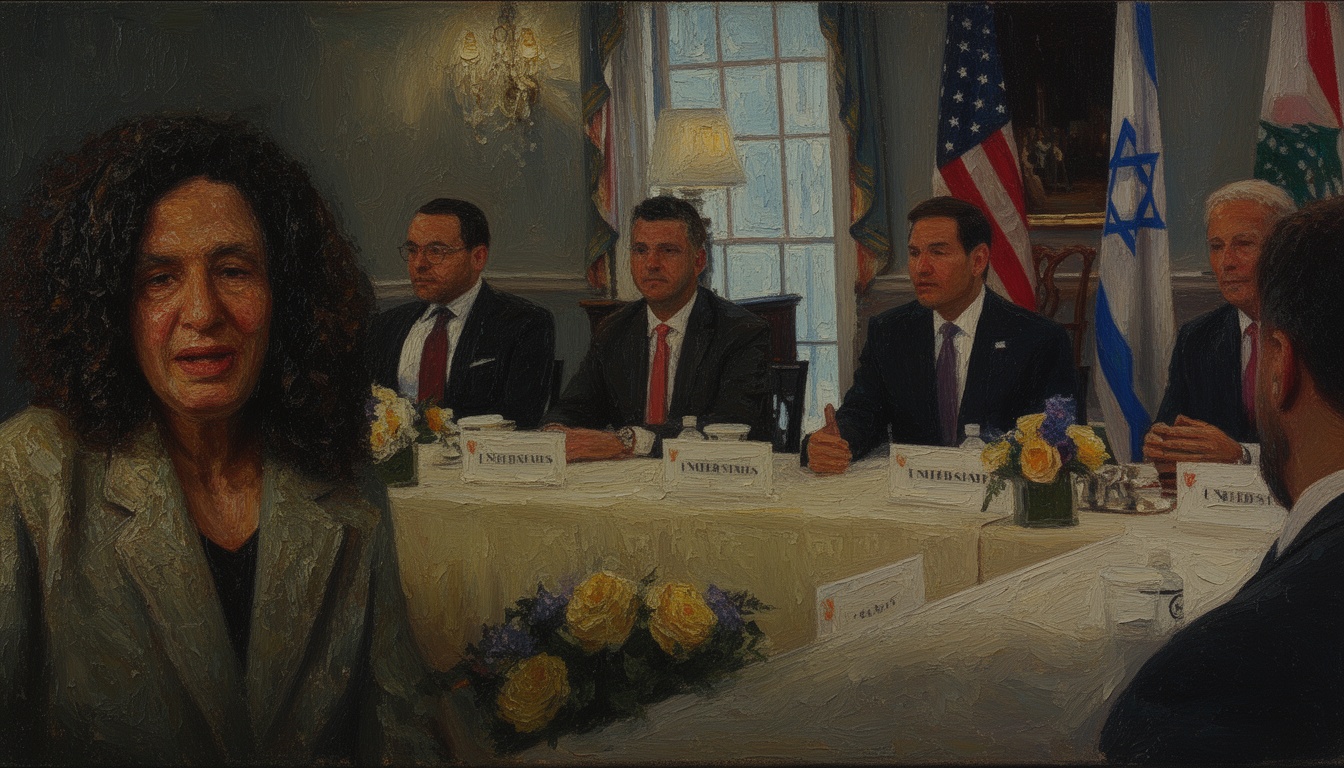
Lebanon, Israel push for border clarity after US-brokered talks
Lebanon signals desire to end Hezbollah occupation narrative in U.S.-brokered discussions with Israel. Government asserts a long-term vision for a clearly delineated border. Ambassador Yechiel Leiter frames the talks as a step toward regional stability, with Jerusalem reframing its own expectations.
In a blunt articulation of new strategic objectives, Lebanon and Israel are pursuing a path toward a clearly delineated border, following U.S.-brokered discussions. The Lebanese government conveyed a firm message that it does not want to be “occupied” by Hezbollah, signaling a recalibration of Beirut’s security policy. Israeli participation in the talks anchors a shared focus on border demarcation and regional stability, despite enduring sensitivity around Hezbollah's role. The dialogue appears designed to reduce ambiguity and deter escalation along the Lebanon-Israel frontier.
Background context centers on a long-running feud between Lebanon’s state institutions and Hezbollah, a powerful non-state actor with significant military capabilities. The U.S.-brokered framework seeks to separate Lebanon's civil governance from militia influence and to reduce the risk of miscalculation that could trigger wider hostilities. Observers note Tehran-aligned Hezbollah's posture remains a critical variable, even as Beirut emphasizes sovereignty and a formal border regime. Washington’s role underlines a broader strategic interest in preserving balance in the Levant while limiting Iranian influence through proxy networks.
Strategically, the talks reflect a broader pivot toward deterrence through clarity: fewer ambiguities about who controls zones along the border, and clearer conditions for cross-border activity. For Israel, a stable frontier reduces the risk of inadvertent engagements that could escalate into wider conflict. For Lebanon, progress on border delineation could open avenues for sovereignty-centric governance and accelerated security reform. The framing by Israeli diplomats suggests a calculated effort to normalize tensions through predictable rules of engagement rather than open confrontation.
Operational specifics remain sparse in the briefing, but officials indicate discussions cover long-term visions for border delineation, civilian protection corridors, and integrated security arrangements. Military and border force coordination would likely require joint mechanisms, monitoring arrangements, and external verification to sustain credibility. Budgetary and procurement details are not disclosed, but the trajectory implies intensifying civil-military cooperation to enforce any agreed boundary norms. The dialogue’s momentum depends on domestic political cohesion within Lebanon and continued international backing for the demarcation process.
Looking ahead, the most likely consequences include a gradual reduction in inadvertent clashes, increased international leverage over non-state actors along the frontier, and a potential realignment of Beirut’s security posture. If talks consolidate, Beirut could pursue formal border regimes and enhanced governance in border districts. However, Hezbollah’s strategic calculus may resist a thorough demarcation if it perceives a threat to its influence. Analysts will watch for tangible milestones—agreements on demarcation maps, verification protocols, and civilian access arrangements—that signal a durable shift toward a conventional, state-centric border regime.