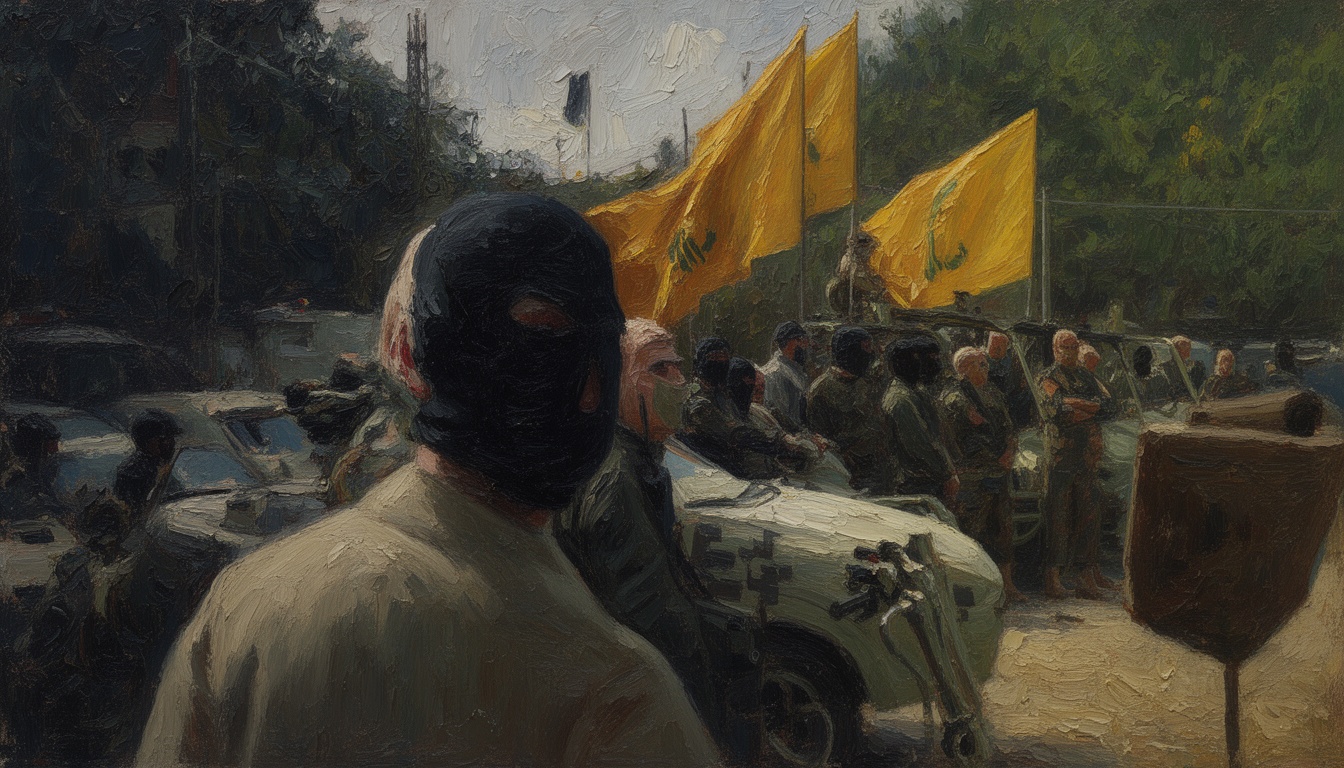
Lebanon Held by Hezbollah Acting at Iran's Behest
Iranian-backed Hezbollah has escalated into a broader confrontation with Israel, trapping Lebanon in a volatile crisis. Six weeks into the war, Hezbollah remains capable and dangerous despite setbacks in 2024. The edition features Dr. Matthew Levitt, a leading counterterrorism scholar, to analyze disarmament prospects and regional dynamics.
Lebanon sits at the center of a widening confrontation as Hezbollah fights alongside Iranian directives against Israel. The war that began in early March has dragged the country into sustained hostilities, with exchanges along the border and intermittent volleys that threaten civilian infrastructure. Hezbollah’s operational tempo remains high, and the group shows resilience despite tactical setbacks last year. The question now is whether the Lebanese state can compel a militant faction to cede power and disengage from a regional proxy conflict.
Background shows Hezbollah's evolution from a domestic militia into a regional instrument of Iran's strategy. The group leverages cross-border fire to project deterrence, while also asserting its own parallel governance in areas of Beirut and southern Lebanon. The Lebanese political landscape is deeply fractured, complicating any attempt to secure disarmament without broader stability guarantees. International mediation remains fragile amid competing regional priorities.
Strategically, the crisis tests Beirut’s legitimacy and the credibility of the government’s disarmament promise. The Israeli response suggests a widening hot border that could escalate into a broader regional crisis affecting shipping lanes and energy markets. For Iran, Hezbollah functions as a pressure valve and a force multiplier, complicating any potential peace process. The unity among regional powers is fraying as alliances shift around Iran’s influence.
Operational details indicate Hezbollah continues to deploy conventional and asymmetric capabilities, including rocket salvos and anti-tank systems. Hezbollah’s weapons stockpiles and supply lines remain a concern, with potential reinforcement from allied states or proxies in the region. The Lebanese security apparatus has limited capacity to counter a non-state actor with external patrons, raising questions about sovereignty and governance. The broader defense challenge is to contain escalation while preserving civilian safety and essential services.
Likely consequences center on heightened risk of miscalculation and civilian harm, potential shifts in the Lebanese political landscape, and increased regional pressure on neighboring states. A protracted conflict could erode Beirut’s legitimacy and deepen economic fragility, opening space for external mediation efforts or external leverage. Analysts expect a tense calculus from all sides: deter, degrade, and avoid full-scale regional war while seeking a diplomatic off-ramp.