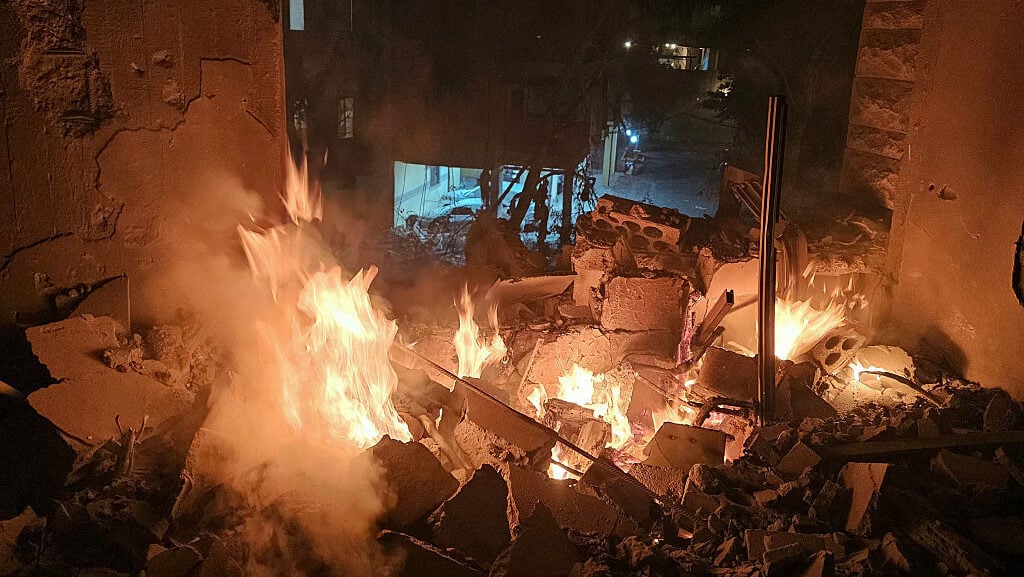
Lebanon Faces Crisis as Beirut Demands Hezbollah Disarmament
Lebanon's call for Hezbollah to surrender its weapons marks a critical escalation in regional tensions. The move exposes the fragility of Lebanon's political landscape and the growing risk of conflict involving state and non-state actors.
Beirut's government has issued a stark demand for Hezbollah to disarm, a pivotal shift that risks plunging Lebanon into further chaos. Retired General Maroun Hitti has characterized Hezbollah’s missile capabilities as having 'instantly transformed' Lebanon from a passive observer to an active battleground. This escalation presses into a volatile situation, likely elevating tensions within Lebanon and exacerbating regional instability.
The conflict's roots trace back decades, with Hezbollah's accumulation of weaponry becoming intensely politicized since the end of Lebanon's civil war in 1990. The group's military operations and stockpiling of advanced missiles have often been justified as necessary for national defense against external threats, particularly Israel. However, this narrative has increasingly come under scrutiny, with growing calls for the Lebanese state to regain sole authority over armed forces.
This demand from Beirut is significant as it not only reflects internal political strife but also represents a broader international security concern. The potential disarmament of Hezbollah could destabilize its well-entrenched military infrastructure, which poses a direct threat to Israeli security. Furthermore, this critical juncture poses strategic risks for Iran, Hezbollah's primary backer, indicating possible shifts in Iranian influence across the region.
Key players in this situation include Lebanon's government, Hezbollah, and regional powers such as Iran and Israel. Hezbollah's motivations for maintaining its weapons are rooted in its role as a deterrent against perceived foreign aggression, particularly from Israel. In contrast, the Lebanese government's push for disarmament signals a possible attempt to reassert state authority and mitigate internal strife as public frustration rises against armed groups.
Hezbollah's arsenal includes thousands of precision-guided missiles, some sourced directly from Iran through land and air routes. Estimates indicate the group possesses around 150,000 rockets, capable of reaching several key Israeli targets. Furthermore, the Lebanese military faces a dire budgetary constrain, relying heavily on international aid to integrate unarmed factions, complicating the demand for disarmament.
Consequences of this demand are manifold, potentially igniting a violent backlash from Hezbollah, which may view disarmament as an existential threat. An outbreak of violence could lead to widespread conflict within Lebanon, drawing in regional powers and potentially reigniting levels of unrest not seen since the civil war. It could also provoke Israeli military action, seeking to dismantle Hezbollah's capabilities preemptively.
Historical parallels can be drawn to the 2006 Lebanon War, where Hezbollah's military activities resulted in Israeli intervention following escalatory provocations. The Lebanese state remains fragile, and the response to calls for disarmament may mirror past crises where failed negotiations led to armed conflict.
Looking ahead, key indicators include Hezbollah's tactical responses to the government’s demand and reactions from Iran. International observers should monitor how external powers might respond—particularly through military, financial, or diplomatic support to either the Lebanese government or Hezbollah. Escalating rhetoric or military posturing may signal a further decline into chaos, marking a critical moment for Lebanon and its neighbors.