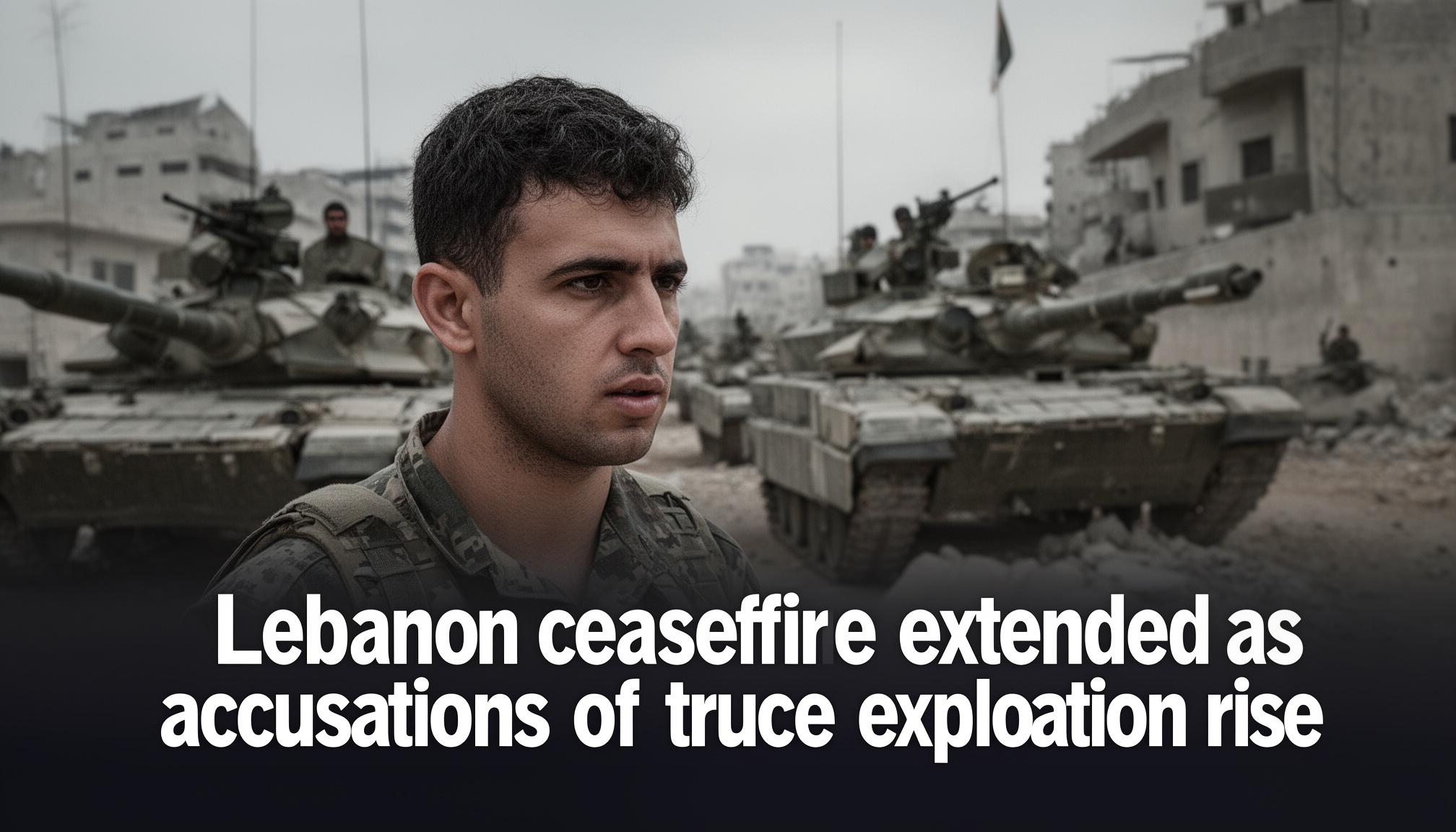
Lebanon ceasefire extended as accusations of truce exploitation rise
The Lebanon ceasefire has been extended by three weeks by an external decision maker. Accusations persist that the truce is being used to advance certain military objectives. The balance of power around Lebanon remains fragile, with regional actors watching for signs of renewal in hostilities.
The ceasefire in Lebanon has been extended for three weeks, according to official statements. The move keeps independent monitors in place and maintains a pause in major fighting, while allowing humanitarian channels to continue operating. The extension comes as tensions flare along border areas and internal political fault lines remain unsettled.
Background to the extension includes pressure from international mediators and regional powers seeking to prevent a relapse into broader clashes. Previous pauses have unraveled quickly when provocations occurred near frontlines or major supply routes. The current extension buys time for diplomatic channels to advance, even as paramilitary groups regroup and assess next moves.
Strategically, the extension reduces immediate risk of a large-scale confrontation that could draw in external powers. It also tests the deterrence architecture surrounding Lebanon, including munition stockpiles and cross-border movement. The pause serves as a litmus test for whether restraint can become a durable norm or whether a temporary lull masks brewing tensions.
Technical details point to the boundaries of the truce: it encompasses specified disengagement lines, monitoring by international observers, and continued restrictions on certain weapon transfers. Negotiations reportedly center on maintenance of corridor safety, inspection regimes, and the management of refugee flows. Budgets and force postures for local security forces are unlikely to shift dramatically during the pause, though maintenance of readiness remains evident.
Looking ahead, the three-week extension increases the probability of a negotiated settlement or a broader de-escalation framework. However, strategic spoilers abound in the region, and rival actors will test the durability of the ceasefire at critical flashpoints. If violations occur, expect a rapid escalation through proxy actions, commercial blockades, or renewed exchanges near populated areas.