Lebanon Airstrike Kills Family of Suspect in Synagogue Attack Crisis
The assassination of a suspect's family raises significant concerns over regional escalations and retaliatory violence. This incident intertwines local criminality with international military actions, exemplifying the volatile nature of the Middle East security landscape.
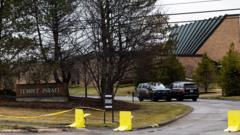
A Lebanese airstrike has reportedly killed the family of a suspect linked to an attack on a synagogue in Michigan, an incident that marks a dangerous intersection of domestic crime and international military conflict. FBI reports indicate that this suspect was apprehended after ramming his vehicle, loaded with large quantities of fireworks and petrol, into the synagogue, igniting a fire. The airstrike was conducted following allegations that this individual had connections to militant groups in Lebanon, demonstrating the escalation of conflict beyond U.S. borders.
This incident is rooted in escalating tensions surrounding attacks on Jewish institutions in various parts of the globe, further complicated by geopolitical rivalries in the Middle East. The suspect's actions are not isolated but reflect a concerning trend of domestic extremism that resonates with growing anti-Semitic sentiments and the spreading of radical ideologies. The joint pressures of local criminal activity and foreign military responses have now converged into a high-stakes confrontation.
The implications of this airstrike extend beyond immediate casualties; they underscore the growing risk of retaliatory strikes that could spiral into broader regional instability. Key players, namely Israel and Hezbollah, are likely monitoring the situation closely, as the potential for a military response from either side looms large. Furthermore, the response from U.S. intelligence and law enforcement agencies concerning domestic security could shift as local threats are linked to international militant networks.
In light of these developments, the motivations of the Lebanese military, involved in recent airstrikes, indicate a crackdown on perceived threats from militant groups. By targeting family members of accused criminals, the Lebanese government may seek to send a strong message to deter future attacks; however, this approach could provoke additional violence and a cycle of vengeance. Both the U.S. and regional actors may see increased tensions as only worsened by this move.
Details surrounding the operational context reveal that the airstrike was likely conducted using precision munitions aimed at minimizing collateral damage while maximizing impact against the suspect's militant ties. Exact figures of casualties remain unclear, but the strike signifies a deliberate military strategy targeting identified threats. The role of intelligence in identifying these suspects will be scrutinized by both military and civilian analysts in the coming days.
As the airstrike unfolds into broader discussions on domestic security and international military action, the potential for escalation remains high. Anticipation of retaliatory measures from the families of both the suspect and the militants could spark a cycle of violence, further destabilizing an already volatile region. International intelligence communities should be on high alert as this incident could herald a significant shift in the methods of combating extremism.
Historical parallels with previous military actions demonstrate that strikes targeting familial connections have led to increased hostilities. Instances of collateral damage from airstrikes, particularly in the context of conflicts involving Israel and Palestine, highlight that retaliatory actions often result in civilian casualties and lead to heightened unrest.
Moving forward, defense analysts and intelligence officials should monitor patterns of retaliation and escalatory rhetoric among militant groups, particularly in Lebanon and Israel. Furthermore, the response from U.S. officials regarding domestic security measures will be critical in assessing how this incident may influence future incidents of domestic extremism and international reactions to them.