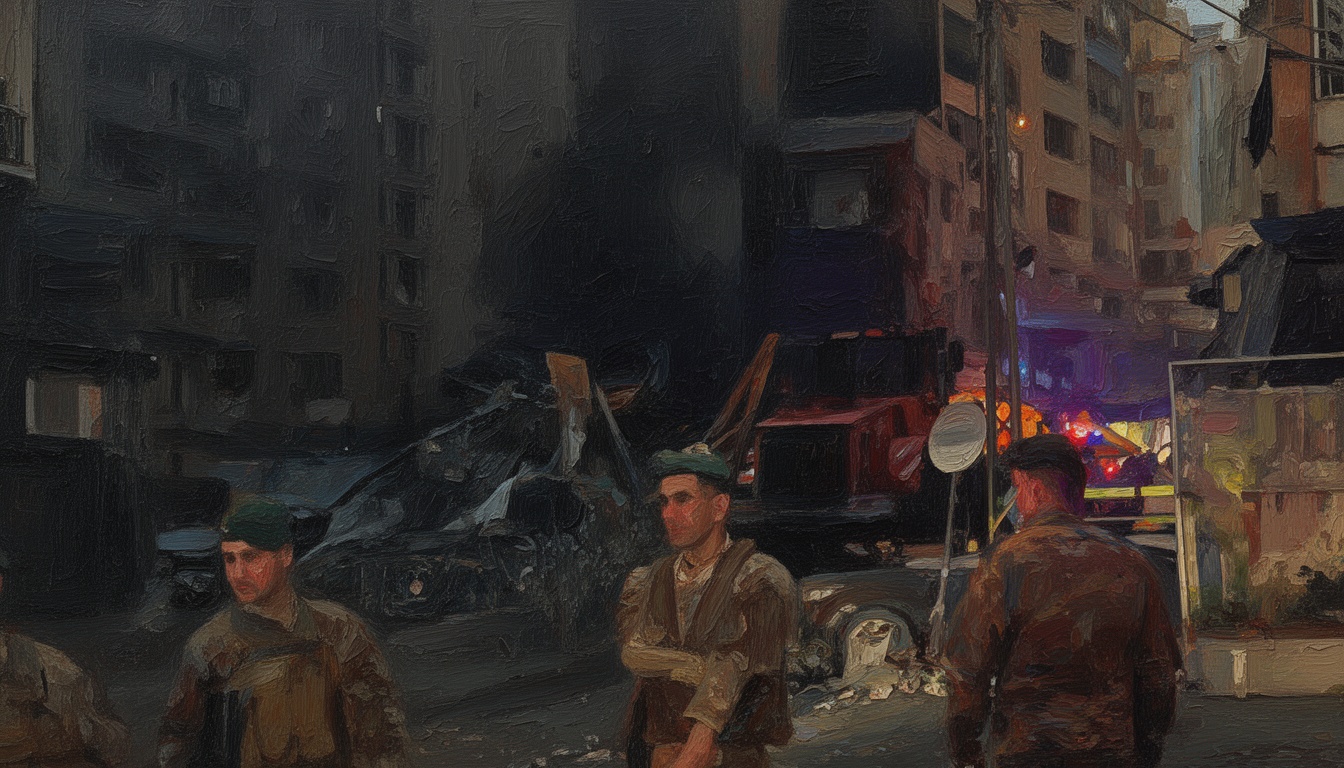
Lebanese Government Politically Present, Operationally Absent as Israel Violates International Law
Lebanese governance faces a dual reality: political legitimacy asserted while operational capacity falters amid Israeli strikes. International-law accusations complicate regional diplomacy as Iran-related ceasefire talks fail to stabilize Lebanon. Three dynamics shape the crisis: fragmented narratives, state-nonstate power asymmetries, and the humanitarian toll on civilians, especially children.
The Lebanese government is politically present but operationally absent as Israeli operations intensify across Lebanon. The prime minister accuses Israel of violating international law while the state struggles to protect civilians and maintain control in conflict zones. The battlefield reality highlights a gap between rhetoric and actionable governance in a period of rising volatility.
Context matters: Israeli maneuvers in Lebanon unfold within a regional mosaic of tensions, negotiations, and intermittent truces. While talks on a ceasefire with Iran continue, they do not translate into immediate stability for Lebanon. The international community watches a landscape of both escalation and containment, complicating any coordinated response from Beirut. The population faces mounting pressure, and the legitimacy of Lebanese leadership is tested.
Strategically, the crisis reveals three interlinked pressures. First, fragmentation of international narratives and divergent interpretations of legality. Second, enduring asymmetry between state authority and non-state actors operating near borders. Third, the humanitarian and psychological cost of sustained violence for civilians, especially children, threatens long-term social cohesion and order.
Operational detail matters: Lebanon must balance deterrence and civil protection with limited resources and external guarantees. Budget constraints, equipment gaps, and partner expectations shape the country’s capacity to respond to threats and protect urban and border areas. Regional security issues demand intelligence sharing and rapid-reaction coordination with allies and international partners.
The future implications include displacement, governance strain, and a need to reconfigure regional diplomatic channels. If tensions persist, Beirut may recalibrate crisis-response mechanisms to uphold legitimacy while preserving civilian protection and humanitarian access. The international community faces a choice: pressure de-escalation or sustain durable channels to prevent broader conflict. Analysts expect a credible ceasefire to be the hinge for avoiding a wider war with humanitarian and geopolitical costs.