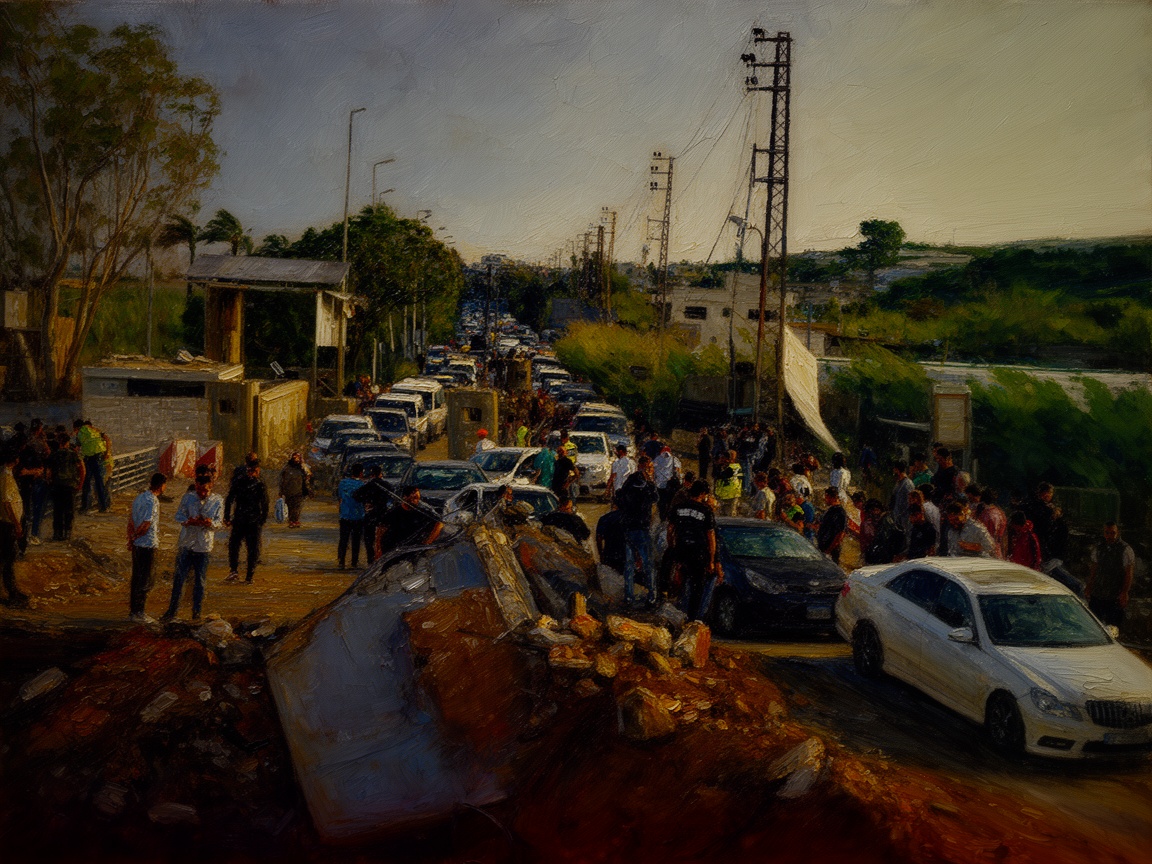
Lebanese families return home as border strikes resume
Lebanese families displaced by Israeli attacks travel south to inspect damaged homes. They face a fragile calculus: return to risk or stay away while tensions rise. The scene underscores a fragile ceasefire’s limits and anxieties about renewed clashes.
Displaced families from Lebanon are moving back toward southern towns and villages despite ongoing Israeli attacks. They describe a cautious, sometimes reluctant, return toward the areas most affected by bombing and shelling. The journeys reflect a broader pattern of forced displacement followed by selective repatriation, as residents gauge whether security conditions will hold long enough to rebuild. Local authorities warn that the risk of renewed hostilities remains, complicating decisions for families who lost homes and livelihoods.
In the background, tensions on the Lebanon-Israel border have persisted for months, with periodic strikes and counterstrikes raising concerns about escalation. UN peacekeepers and regional actors have urged restraint, while residents worry about the durability of any quiet that follows a flare-up. The return movements also expose gaps in shelter, utilities, and essential services, which complicates the prospects for sustainable resettlement. Humanitarian agencies stress the need for rapid reconstruction and safe corridors to allow families to reclaim stability.
Strategically, the renewed attention on border towns highlights the fragility of disengagement efforts and the risks to regional deterrence postures. A partial return can ease population pressure in camps and informal shelters, but it also pressures local governance to maintain security without provoking renewed aggression. The dynamic tests the credibility of ceasefires and the ability of regional powers to manage provocation and retaliation. Analysts will monitor whether any easing of restrictions allows for commutable livelihoods or if the threat of strikes prevents durable settlement.
Technical or operational details remain sparse in initial reports. Observers point to damaged housing, downed electrical infrastructure, and disrupted water supplies in several southern municipalities. Relief budgets are likely to be strained as reconstruction compounds with elevated security costs and potential shortages of building materials and labor. Border guards and UNIFIL forces will play a central role in coordinating safe returns and deterring new attacks, while civil society groups organize local recovery efforts.
Likely consequences include a volatile easing in border weathering with a high risk of relapse if political signals remain ambiguous. The return of families could relieve crowded displacement camps but may increase tension as communities reencounter damaged neighborhoods and contested spaces. In the near term, authorities will push for narrow windows of calm to permit repairs and mid-term planning, while donors assess the pace and prioritization of reconstruction. Long-term stability will hinge on credible deterrence, cross-border communication channels, and sustained humanitarian and development support.