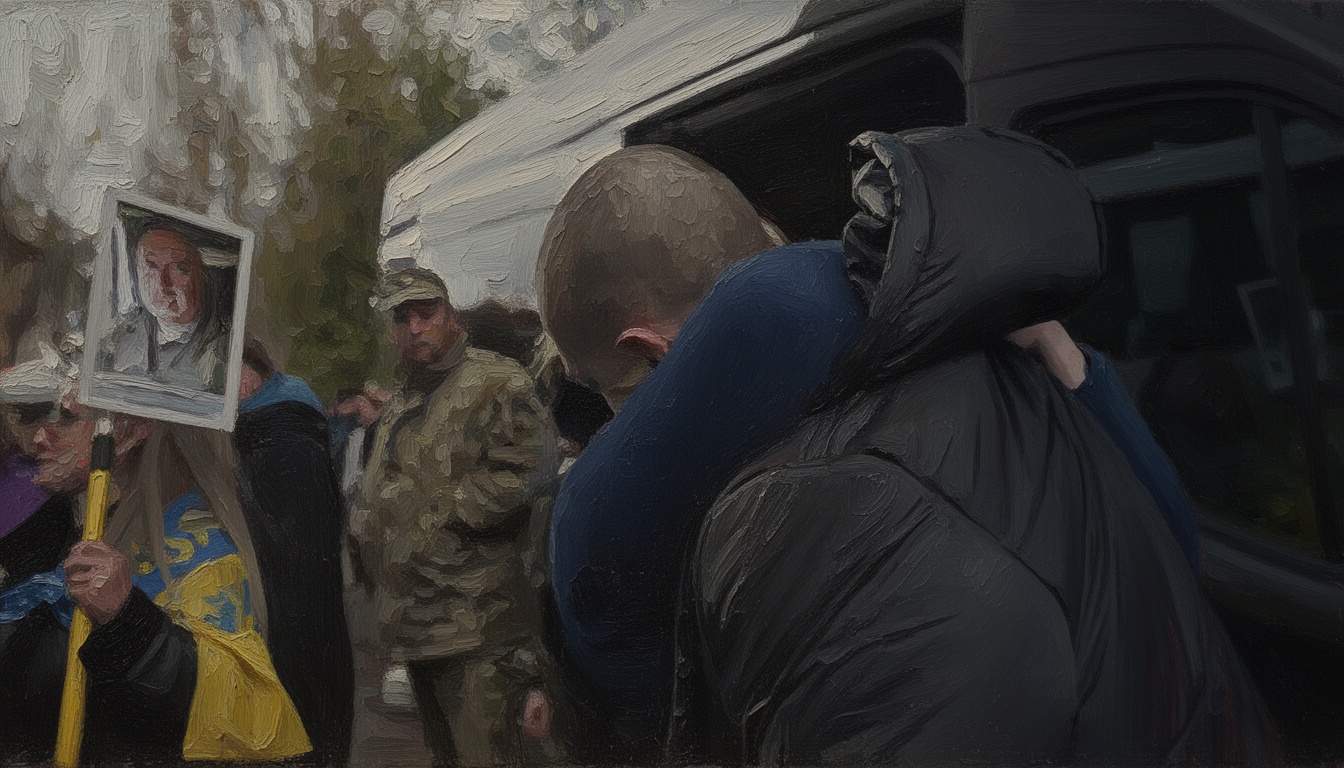
Latest exchange of prisoners of war between Russia and Ukraine
The latest prisoner swap between Russia and Ukraine unfolds as Kyiv documents hundreds of alleged violations of a 32-hour Orthodox Easter ceasefire. Ukrainian authorities accuse Russian forces of ongoing cross-border strikes, including drone activity that wounded five in Kursk and Belgorod. The incident heightens tensions and tests the fragile ceasefire framework in a volatile border theatre.
The exchange of prisoners between Russia and Ukraine continues to unfold against a backdrop of renewed alleged violations of the Orthodox Easter ceasefire. Kyiv reports that it has documented 469 Russian violations within a 32-hour window, illustrating a persistent pattern of breaches that undermine the credibility of the pause. The count, if verified, signals a sustained level of risk for frontline units and civilians near the conflict zone.
Authorities in two Russian border regions claim that Ukrainian drones targeted sites in Kursk and Belgorod, resulting in civilian injuries. Local governors report that five people were wounded, highlighting the potential for escalation and wider spillover into adjacent districts. The assertions come as Moscow maintains a tight information line on border incidents, while Kyiv emphasizes accountability for cross-border actions.
Strategically, the ceasefire framework remains fragile as both sides test boundaries and operational deconfliction lines. The reported violations coincide with renewed prisoner exchange talks that aim to swap detainees on a roughly reciprocal basis. The cadence of exchanges could influence de-escalation incentives but also risks normalizing pressure on frontline areas.
Technically, the Ukrainian side flags drones and other ISR activity as part of the ongoing border contest. Detailed weapon designations or unit-level data were not disclosed, but the emphasis on drone incursions points to a growing role for unmanned systems in cross-border harassment and reconnaissance. Budgetary and supply chain factors continue to shape each side’s capacity to sustain such activities.
Looking ahead, the situation on the Russia-Ukraine frontier remains unstable. A continued sequence of alleged violations and sporadic drone strikes could erode trust, complicate prisoner negotiations, and raise the probability of accidental clashes. The next diplomatic moves and verification mechanisms will be decisive for whether the ceasefire can evolve from a fragile pause to a durable arrangement.