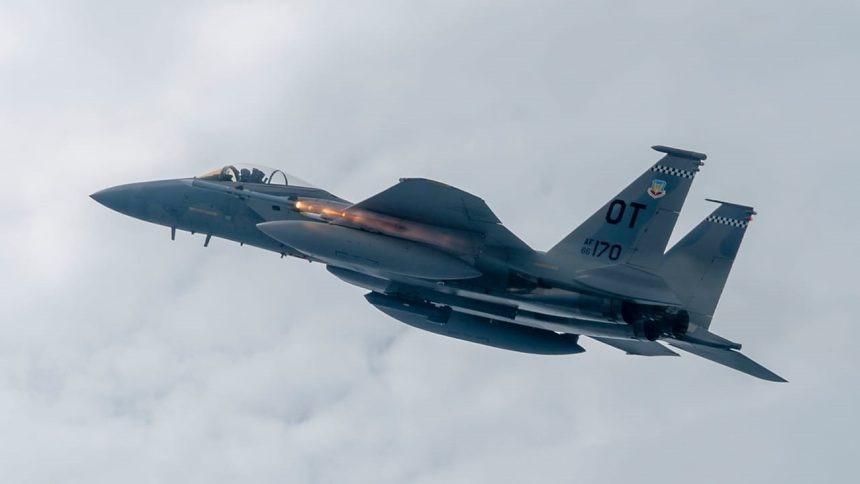
Kuwait Shoots Down Three US F-15E Fighters in Friendly Fire Crisis
Three US Air Force F-15E Strike Eagles were shot down over Kuwait in a shocking incident of friendly fire during ongoing operations against Iranian forces. This incident not only raises serious questions about allied coordination but also heightens regional tensions amid escalating confrontations with Iran.
Three U.S. Air Force F-15E Strike Eagles were shot down in Kuwait, a clear indicator of a dire crisis stemming from friendly fire, as confirmed by U.S. Central Command (CENTCOM). The incident occurred during active combat operations labeled 'Operation Epic Fury,' which involves not only the U.S. but reportedly Iranian aircraft and strategic missile deployments aimed at coalition forces in the region. Early reports suggest chaotic airspace conditions contributing to this tragic misjudgment.
This development is part of a broader historical trend of increasingly strained U.S.-Kuwaiti military cooperation and an escalating threat landscape in the Persian Gulf. U.S. forces have been tasked with countering Iranian military advancements, especially following heightened tensions and provocations from Tehran. The backdrop includes continuous maritime confrontations and missile threats directed at U.S. interests from Iranian proxies and military assets, raising the stakes for friendly fire incidents in an already volatile region.
The significance of this incident cannot be understated. It exposes the fragility of operational coordination among U.S. and allied forces, particularly in high-stress combat scenarios where misidentification can lead to catastrophic losses. Moreover, this situation could embolden Iranian forces, who have persistently challenged U.S. military presence, undermining the deterrent effect that American airpower is meant to sustain in the region.
Key actors in this crisis include not just the U.S. military and Kuwait, but also Iran, which has been actively engaging in provocations that exacerbate the regional security climate. Kuwait's shooting down of its ally's aircraft arguably reflects deepening fears of Iranian retaliatory capabilities, while signaling a defensive posture under high-pressure conditions. This incident raises questions about Kuwait's confidence in U.S. air superiority against a highly agile Iranian air force.
In operational terms, the F-15E Strike Eagle is one of the U.S. military's most advanced multi-role fighters, equipped with precision-strike capabilities and a combat radius of over 2,400 kilometers. The loss of any aircraft from this fleet, not to mention three in one incident, amounts to a significant operational gap and a potential loss of high-value munitions used in the ongoing conflict. The budget implications for rebuilding strike capabilities could lead to delays and shortfalls in U.S. rapid response capabilities in the Persian Gulf.
This crisis is likely to escalate security tensions dramatically, as both U.S. and Kuwaiti forces reassess their operational protocols and communication strategies in joint missions. There may be immediate repercussions, such as changes to command and control processes, as well as amplified scrutiny from defense policymakers in Washington regarding operational hierarchies and inter-alliance training. Additionally, this incident could motivate Iran to exploit perceived vulnerabilities in coalition defenses.
Historical precedents for similar friendly fire incidents exist, such as the 2003 downing of British ally aircraft by U.S. forces in Iraq, which similarly shook the foundations of coalition interoperability and trust. Such prior events serve as cautionary tales for modern military operations, particularly when operating in regions rife with adversarial threats and heightened combat environments.
Moving forward, vigilance is crucial. Observers should monitor changes in U.S. force postures and military engagement rules in the region. Intelligence analyses will focus on enhanced communication measures among coalition partners and the potential for Iran to leverage this incident to further destabilize ongoing operations against its interests. Additionally, any statements or shifts from CENTCOM will provide insight into future military strategies within the context of this escalating crisis.