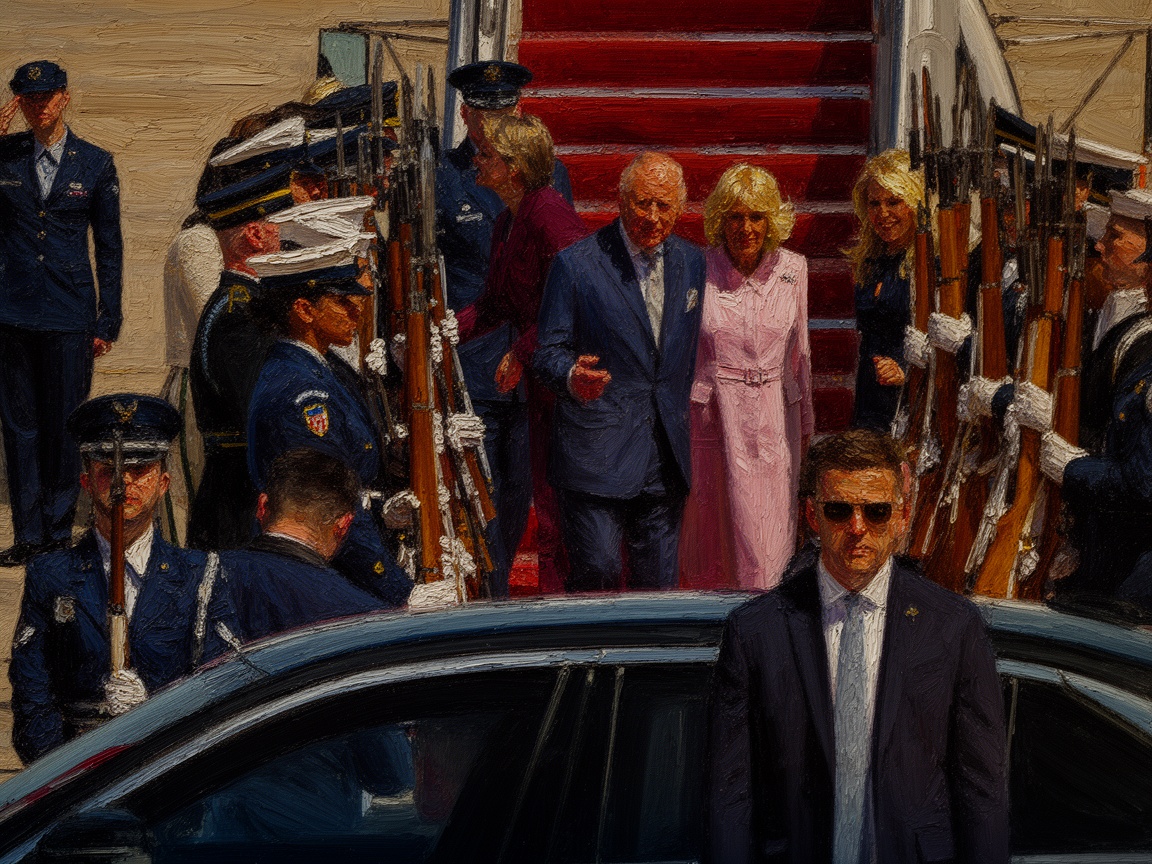
King Charles and Queen Camilla Arrive for US State Visit
The royal arrival signals renewed engagement between London and Washington as the Iran crisis lingers in the background. The visit tests bilateral momentum, balancing ceremonial ties with a backdrop of regional instability and divergent responses to Tehran’s escalation.
The arrival of King Charles III and Queen Camilla marks a high-profile state visit to the United States, aimed at reinforcing long-standing security and cultural ties between the two allies. The royal itinerary emphasizes shared history, transatlantic leadership coordination, and public diplomacy as a means to sustain trust in the special relationship. Yet the opening gestures come against a backdrop of strained strategic dialogue, where Washington and London must demonstrate unity on Iran-related contingencies and regional security dynamics.
Historically, the UK and US have used state visits to calibrate broader alliance messaging. In this instance, the timing suggests an opportunity to signal consolidation in the face of international pressures and to project a unified stance on threat perceptions emanating from Tehran. The host country is likely to leverage the visit to highlight intelligence-sharing, defense collaboration, and sanctions enforcement, while the visitors seek to underscore continuity in the security framework that supports European and North American deterrence postures.
Strategically, the visit operates at the intersection of ceremonial diplomacy and practical alliance management. While the monarchy’s presence is symbolic, the accompanying political and military conversations will test Washington-London alignment on strategic deterrence, naval operations in key theaters, and resilience of critical supply chains. In a period of rising regional volatility, leaders will be judging not just optics but real coordination on crisis response, information sharing, and joint exercises that bolster rapid-reaction capabilities.
From a doctrinal and capability perspective, expect discussions around intelligence collaboration, defense modernization, and interoperability of command-and-control systems. Publicly known defense lines—such as satellite intelligence, cyber defense synergy, and naval port access arrangements—are likely to feature in private briefings. The visit may also hint at potential future arms-control or sanctions trajectories, given Tehran’s pursuing of ballistic and unmanned systems that challenge maritime and aerial domains.
Looking forward, the implications for regional deterrence are mixed but significant. A successful show of unity can bolster deterrence credibility and reassure allied partners in Europe and the Middle East that leadership remains aligned on Iran-related risk. However, any public misalignment or mixed messaging risks emboldening adversaries who are watching for signs of disunity. The long arc will hinge on concrete policy signals and the depth of ongoing security cooperation beyond ceremonial engagements.