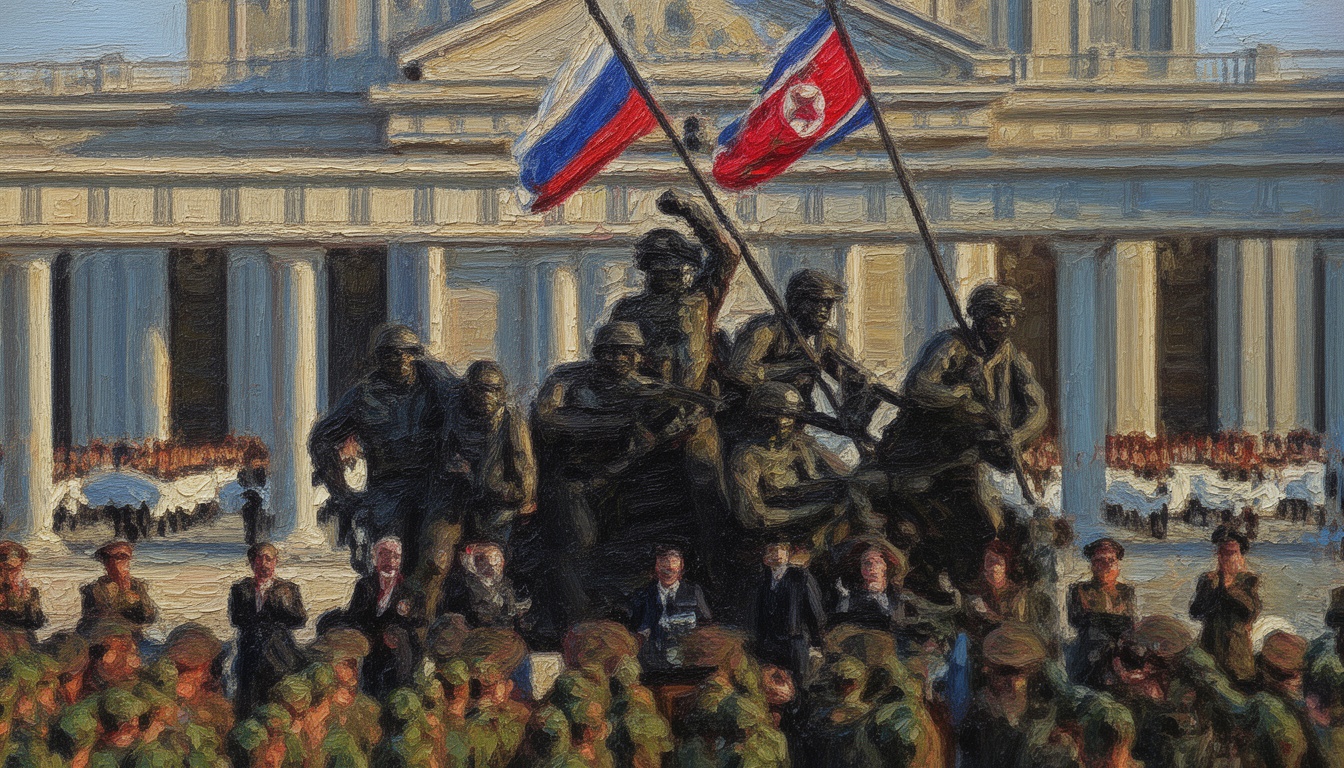
Kim Jong Un Opens Memorial for NK Soldiers Killed in Ukraine War
The ceremony in Pyongyang honors North Korean troops killed in the Ukraine conflict, with Russian defense minister Andrey Belousov present. The act signals a formal alignment between Pyongyang and Moscow as the war continues. The memorial elevates a narrative of shared sacrifice and strategic messaging to both domestic and international audiences.
Kim Jong Un hosted a high-profile memorial ceremony in Pyongyang to honor North Korean soldiers killed in the Ukraine war, in the presence of Russian Defense Minister Andrey Belousov. The event marked a rare public display of memorial coordination between North Korea and Russia, underscoring a developing axis centered on support for Moscow's campaign. The ceremony featured a formal unveiling of a dedicated memorial site, with inscriptions that frame the fallen as martyrs in a broader defense of allied interests.
The decision to stage the memorial in Pyongyang reflects a calculated narrative push. North Korea has long used wartime rhetoric and displays of sacrifice to justify its own military posture and external alignments. By inviting a high-ranking Russian official, Pyongyang signals a willingness to foreground its partnership with Russia as part of its strategic legitimacy. The event also serves as a platform to project resilience to internal audiences amid sanctions, isolation, and periodic domestic stress.
Strategically, the memorial elevates the North Korea-Russia axis in the broader security landscape. It reinforces the perception of a shared front against Western power projection and reinforces deterrence messaging toward Seoul, Washington, and their allies. The gesture also creates a linkage between North Korean military symbolism and Russia’s ongoing campaign, potentially shaping diplomatic and operational calculations for both states. Observers may watch for calibrated statements or future joint appearances that test regional red lines and alliance commitments.
Technical details around the memorial ceremony were sparse in available summaries. The site appears to feature a formal plaque or statue ensemble and a scripted program that honors the deceased without detailing numbers or casualty specifics. The presence of a Russian official hints at coordinated logistics and political signaling rather than a unique battlefield contribution. Analysts will compare this event against historical memorials as a barometer of evolving defense diplomacy and soft power integration.
Forward assessment suggests the memorial will become a pointing node for North Korea’s defense narrative and its international alignment. It may influence domestic propaganda, reinforcing a narrative of solidarity with Moscow against external pressures. Internationally, the ceremony could complicate diplomacy on arms control and regional security, especially if it foreshadows broader security cooperation or information-sharing arrangements. The event therefore merits close watch for any follow-on declarations, force posture moves, or joint exercises that would indicate tangible escalation or deterrence rebalancing.