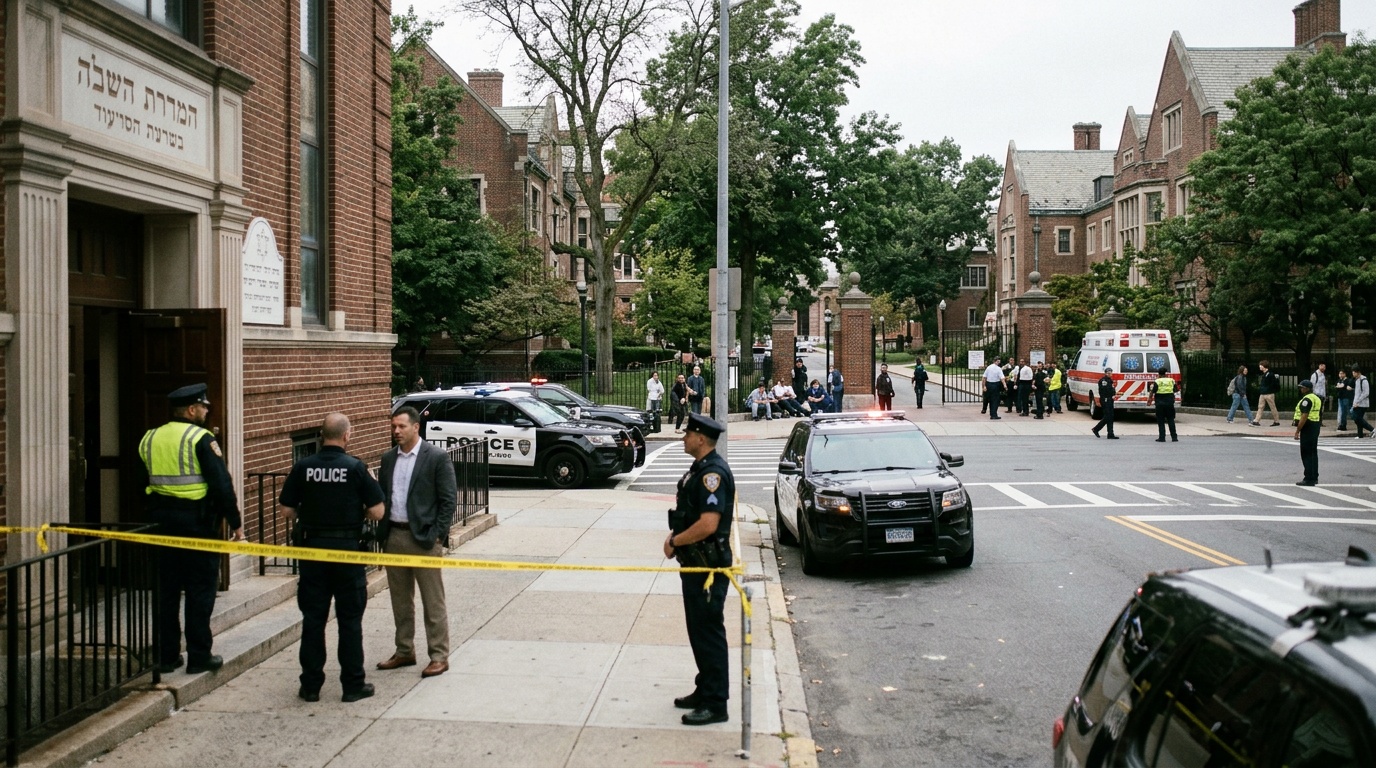
Jewish Synagogue Attack and University Shooting Kill Two in US
Violent attacks on religious and educational institutions expose vulnerabilities in US domestic security. This escalation raises international concerns over rising extremism and potential spillover effects.
In a tragic escalation of violence, a shooting at a synagogue in Michigan resulted in the assailant being shot dead, while a separate shooting incident at a Virginia university left one dead. These incidents occurred on Thursday, marking a grim day of violence targeting centers of faith and education within the United States.
The Michigan synagogue attack reflects a broader trend of increasing anti-Semitic violence in the US. In recent years, there has been a significant uptick in hate crimes against Jewish communities, propelled by a rise in extremist ideologies that have clouded the social landscape. The Virginia university shooting, labeled as "terrorist" by the FBI, suggests a dire national security threat, with potential implications for the safety of educational environments across the nation.
These attacks signal a disturbing shift in the domestic security landscape, with citizens feeling increasingly vulnerable in spaces traditionally thought to be safe. As these incidents unfold, many are questioning the effectiveness of current national policies to combat hate crimes and protect vulnerable communities. The outrage from these events may also lead to calls for stronger counterterrorism measures and legislative reforms.
The key actors in these incidents are not merely the perpetrators; they reflect growing extremist factions operating within the US, motivated by ideologies that incite violence against marginalized groups. The apparent coordination and planned nature of these attacks highlight an alarmingly organized network of domestic terrorism that could further destabilize community trust in public safety and governance.
Operationally, the presence of armed individuals in soft targets such as places of worship and universities raises pressing questions about security protocols. The FBI's classification of the Virginia shooting indicates a serious level of threat, suggesting that law enforcement agencies may be ill-prepared to deal with such emerging risks in crowded and vulnerable public spaces. This also raises financial implications regarding the need for enhanced security funding and resources to better protect civilians.
The immediate consequences include heightened security measures at synagogues and educational institutions, as well as an urgent push for federal intervention to address the root causes of domestic extremism. Analysts anticipate that these incidents could escalate tensions among various demographic groups, leading to a rise in vigilantism or retaliatory actions.
Historical parallels can be drawn to past violent attacks on minority groups in the US, such as the 2018 Pittsburgh synagogue shooting. These events point to a recurring pattern of violence fueled by hateful ideology, with repercussions that resonate beyond local communities and impact national and international perceptions of safety.
In the wake of these two violent attacks, it is crucial to monitor further developments in domestic security policy and community responses. Key indicators to watch will include changes in law enforcement strategy, public reactions, and any movements toward federal legislation aimed at countering hate-fueled violence, all of which may signal shifts in the security landscape across the United States and beyond.