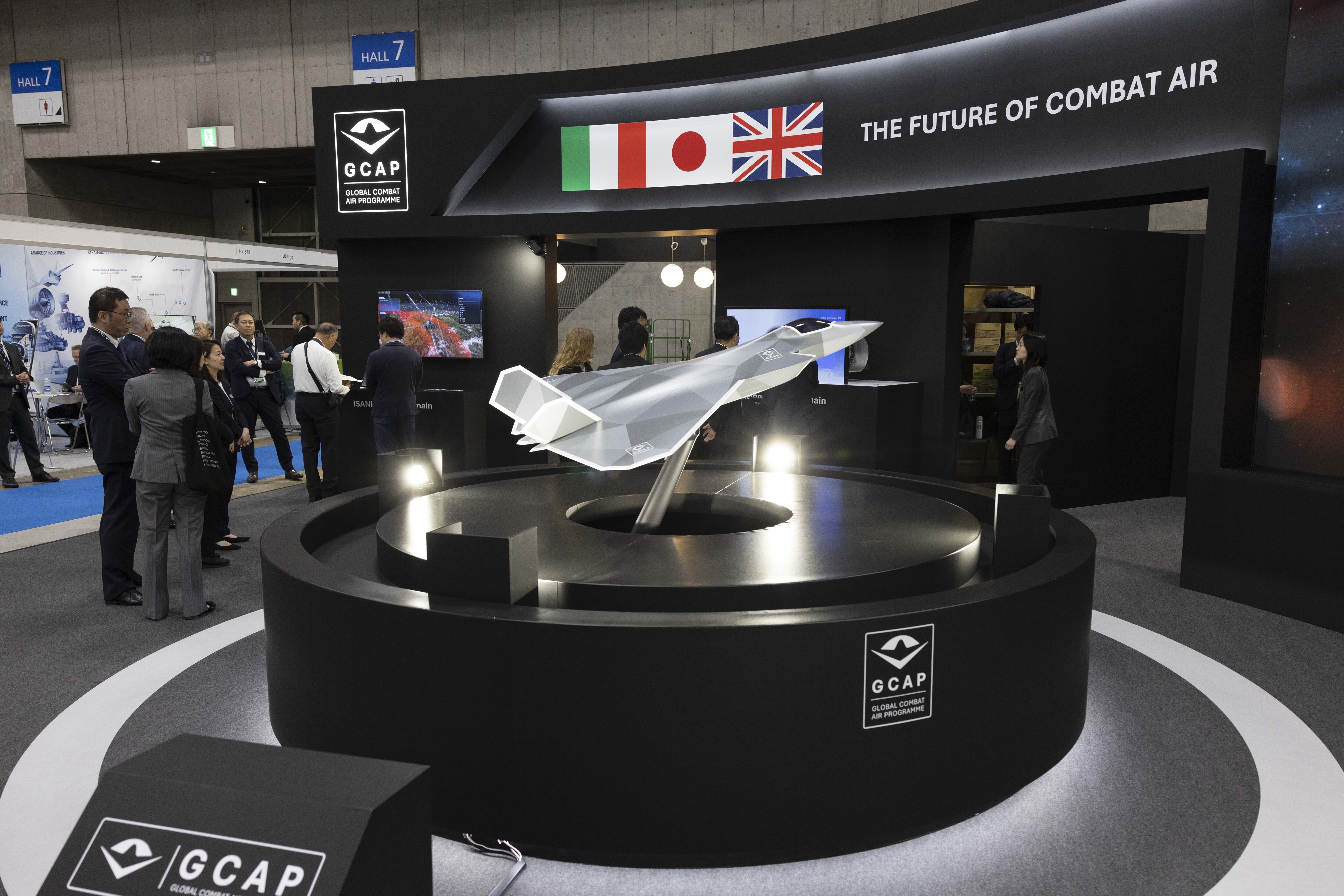
Japan's GCAP Delays Spark Tripled Costs; Export Rules Fast-Tracked Amid Uncertainty
Japan’s Global Combat Air Program (GCAP) faces critical delays and skyrocketing expenses, reflecting significant vulnerabilities in its defense strategy. Prime Minister Sanae Takaichi's commitment to fast-tracking export rules raises strategic implications for future military partnerships and capabilities.
Japan faces a crisis in its Global Combat Air Program (GCAP), with project costs reportedly tripling due to severe delays. Initial projections have spiraled from estimated budgets, yet the stability of Prime Minister Sanae Takaichi's government in maintaining this year's defense budget remains uncertain, fueling speculation on fiscal prioritization in light of these escalating costs.
Japan's commitment to the GCAP marks a strategic pivot in defense, aimed at developing advanced capabilities in response to regional threats, particularly from China and North Korea. The program connects closely with international partners, including the UK and Italy, seeking to establish a next-generation fighter jet that could reinforce allied air power alongside ongoing military modernization efforts. However, consistent setbacks and financial burdens complicate this ambitious strategy, pointing to deeper systemic issues within Japan's defense procurement structure.
The significance of these developments cannot be understated. If Japan cannot control costs or timelines, it risks falling behind in an increasingly competitive military landscape, where advancements are measured in seconds and technologies. Additionally, domestic political pressures may conflict with international commitments, potentially destabilizing long-standing partnerships crucial for regional security architectures.
Key actors in this scenario include not only the Japanese government under Takaichi but also defense contractors, which are scrambling to mitigate cost overruns while delivering desired capabilities. Takaichi's fast-tracking of export rules suggests a clear intent to enhance international cooperation in defense—yet it is driven more by necessity than strategy, as the urgency created by GCAP delays may compel Japan to find quick solutions to bolster its defense requirements rapidly.
Operationally, specifics around the GCAP remain vague, with Japan's Ministry of Defense initially framing a project estimated at $40 billion—a figure now eclipsed by threefold increases. With plans to develop a sixth-generation jet with stealth capabilities and advanced avionics, failures in its procurement timeline could yield further project revisions that may impact Japan's defense posture and its ability to project power in East Asia.
Consequences of the GCAP setbacks extend beyond budgetary concerns, hinting at broader ramifications for Japan's defense industry and its role in regional security frameworks. If critical programs stall, Japan may find itself increasingly reliant on imports for advanced military capabilities, weakening its strategic autonomy at a time when regional dynamics are in constant flux.
Historically, Japan has faced challenges in military production and technology transfer, often leading to delays and political fallout. The GCAP's rising costs mirror historical precedents, such as the delays experienced in the development of Japan's Mitsubishi ATD-X Shinshin fighter. These parallels indicate a pattern of struggles that could undermine Japan's aspirations to enhance sovereignty through indigenous military capabilities.
Looking forward, key indicators to monitor include Japan's revisions to its defense budget, potential shifts in procurement policy, and announcements regarding future fighter jet capabilities. International partnerships could either solidify or fracture depending on how effectively Japan addresses the looming crises presented by the GCAP's delays and increased expenditures. Additionally, the next steps by Takaichi's government regarding the management of GCAP will serve as a critical barometer of Japan's commitment to enhancing its defense capabilities in an uncertain geopolitical environment.