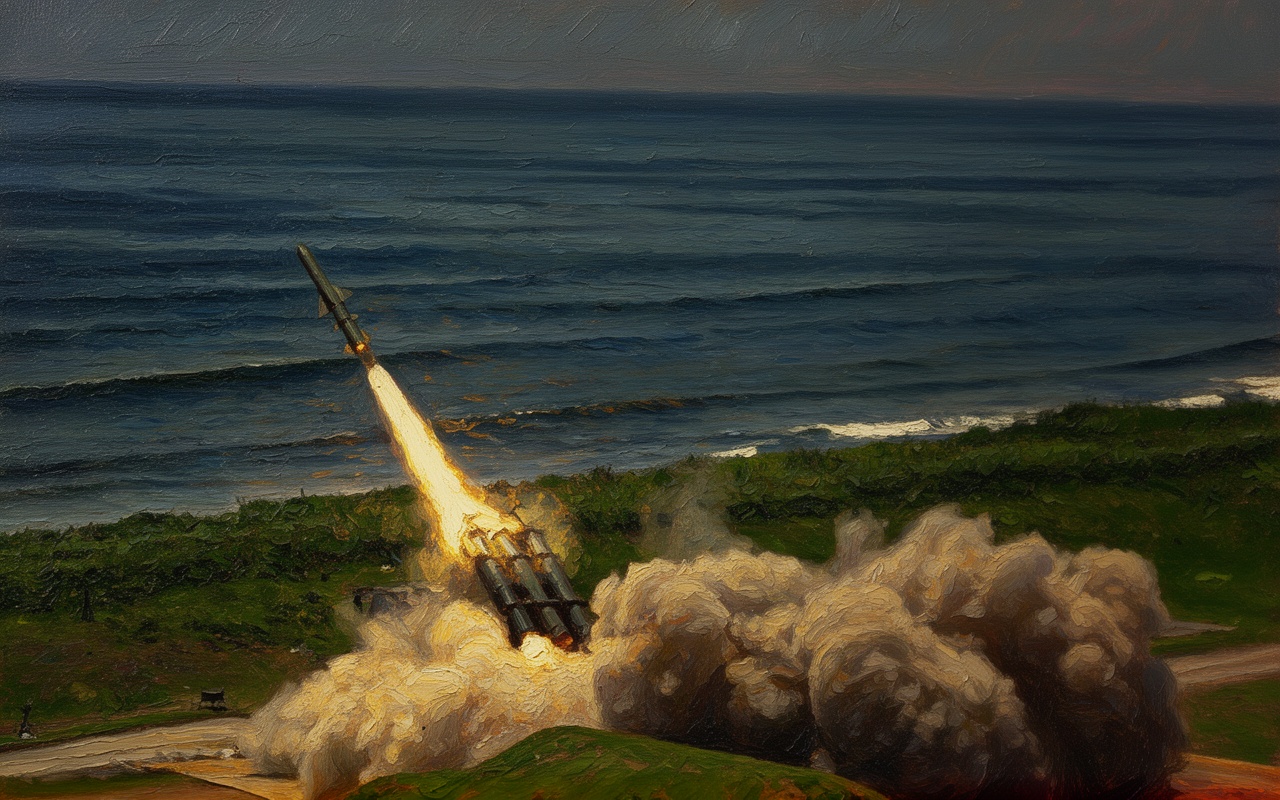
Japan to join Balikatan drills with 1,400 troops, Type 88 missiles
Japan will participate in the Balikatan exercises alongside the Philippines and the United States for the first time as an active participant. Approximately 1,400 combat troops will deploy, and Japan will field the Type 88 surface-to-ship missiles, signaling deeper allied cooperation in the Indo-Pacific.
Japan will participate in the Balikatan war games as an active participant for the first time, deploying around 1,400 combat troops and introducing its Type 88 surface-to-ship missiles as part of the exercise package. The move marks a notable expansion of Tokyo's military engagement with its partnerships in the Indo-Pacific, beyond traditional logistical and advisory roles. The drills, co-hosted by the Philippines and the United States, are aimed at improving interoperability across maritime security, anti-air, and anti-submarine operations.
Balikatan has long served as a demonstration of US-Philippines defense cooperation, with invited partners expanding the scope of the exercise over time. The addition of Japan underscores a broader effort to coordinate allied deterrence in response to rising maritime tensions in the South China Sea and the wider Western Pacific. Tokyo's participation also signals a potential template for future trilateral or quad-like arrangements among regional powers seeking to bolster alliance defensive capabilities.
Strategic significance centers on coercive signaling and crisis management: a visible, multinational training footprint raises the political and military costs of destabilizing actions in the region. The presence of Type 88 missiles introduces an explicit anti-ship capability into the exercise narrative, alongside other Japanese systems and conventional forces. The move is likely to complicate adversary calculations by improving cross-domain integration among air, sea, and land components across the coalition.
Technically, roughly 1,400 Japanese personnel will join Philippine and American units, participating in live-fire and complex maneuver scenarios. The Type 88 surface-to-ship missiles will be integrated with joint command and control architectures to test targeting, navigation, and ballistic data sharing. Other weapons and platforms—such as air defense assets and naval units—will be represented to demonstrate unified response options under a single operational framework.
Forward assessment suggests the Balikatan expansion will reinforce deterrence credibility in the region while enabling practical interoperability gains. If this model proves durable, Tokyo may pursue deeper integration with Southeast Asian partners on maritime security, cyber, and joint logistics. However, potential political sensitivities in domestic and regional audiences will require careful messaging about defense posture and alliance commitments.