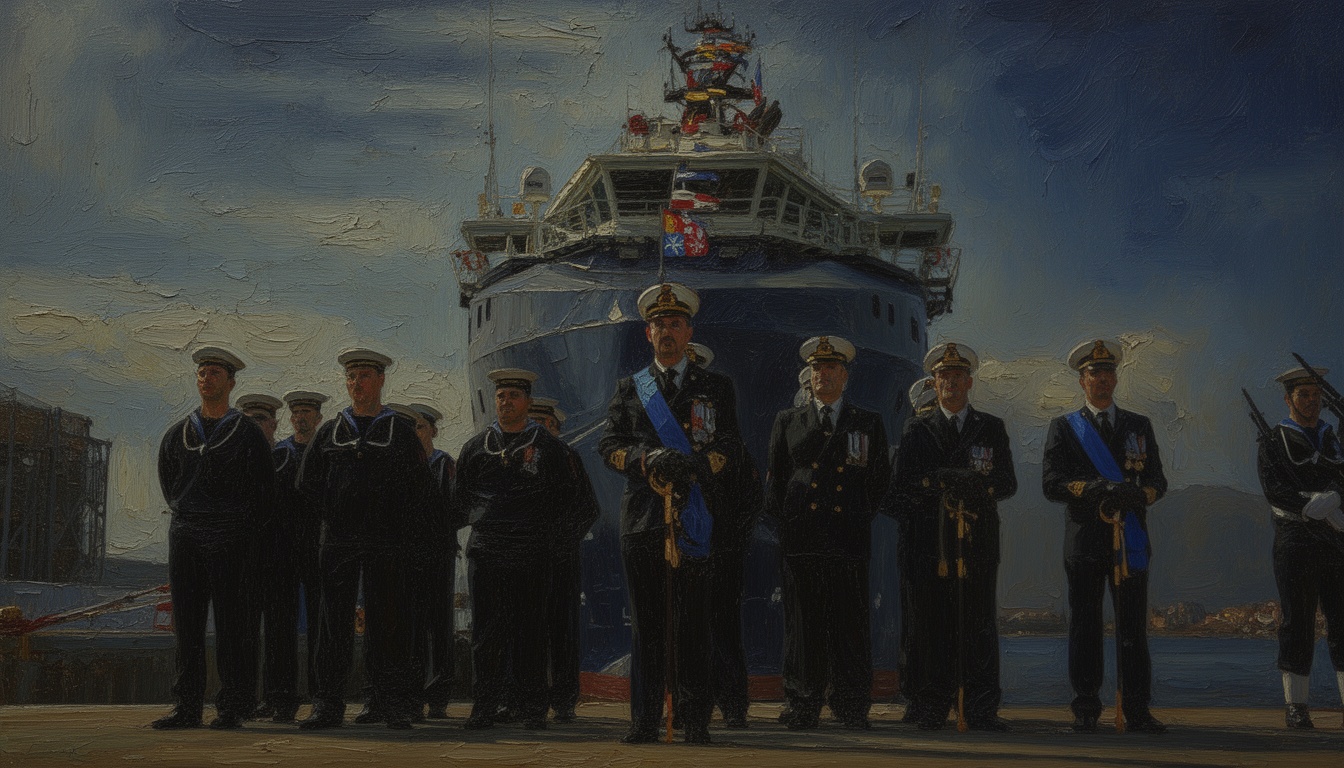
Italy commissions Tritone for seabed warfare
Italy unveils a new seabed warfare capability by commissioning the Tritone (A 5341), a civilian-platform adapted for naval use. The shift signals a move toward rapidly fielded, flexible force elements sourced from commercial platforms. The initiative reflects broader European interest in enveloping undersea domains with lighter, adaptable assets that can be re-tasked swiftly.
The Italian Navy has commissioned the Tritone (A 5341), a vessel derived from a commercial platform and rapidly adapted for naval use to support seabed warfare. This marks a notable shift in how Italy pursues capability acquisition, prioritizing modular, quickly deployable assets over traditional bespoke builds. By leveraging a commercial base, Rome aims to shorten development timelines and increase the fleet’s responsive reach in undersea operations. The Tritone’s commissioning underscores a broader push toward flexible, cost-conscious augmentation of naval power in contested littorals and offshore areas.
Background: Italy has long sought to diversify its undersea capabilities in response to evolving threats in the Mediterranean and adjacent basins. The Tritone concept fits a growing European trend toward leveraging civilian maritime platforms for defense tasks, then tailoring them with mission-specific sensors, payloads, and handling systems. This approach can accelerate technology infusion and reduce program risk compared to bespoke platform programs. The vessel’s introduction comes alongside ongoing modernization within the Italian Navy’s seabed and littoral-realm ambitions.
Strategic significance: The Tritone adds a persistent, dedicated seabed warfare node to Italy’s force posture. In a region characterized by contested undersea space and complex maritime traffic, such assets expand deterrence and situational awareness at depth. The platform is expected to serve as a testbed for integrated undersea sensing, payload integration, and cross-domain interoperability with allied forces operating in the region. Its operational value will hinge on how quickly it can be networked with combatants, intelligence surveillance, and reconnaissance assets.
Technical and operational details: While exact payloads remain under tight disclosure, Tritone is described as a multipurpose support vessel repurposed for seabed warfare tasks. It embodies a hybrid model: a commercially sourced hull with naval-grade sensors, data links, and potentially unmanned undersea conveyances. The serviceability, endurance, and mission-changeout rates will determine how effectively Italy can scale seabed operations alongside heavier, purpose-built platforms. Budgetary data is not publicly specified, but the model emphasizes cost efficiency and rapid adaptability over haute-fidelity bespoke engineering.
Consequences and forward assessment: Italy’s approach signals a shift toward modular, affordable undersea capability, raising questions about alliance interoperability and standardization of sensors and interfaces. If Tritone proves effective, expect further acquisitions of similar civilian-derived platforms across Europe, increasing the nimbleness of naval forces in contested domains. The strategy could pressure adversaries to accelerate anti-access/area-denial measures in the western Mediterranean and adjacent seas, potentially reshaping regional deterrence dynamics.