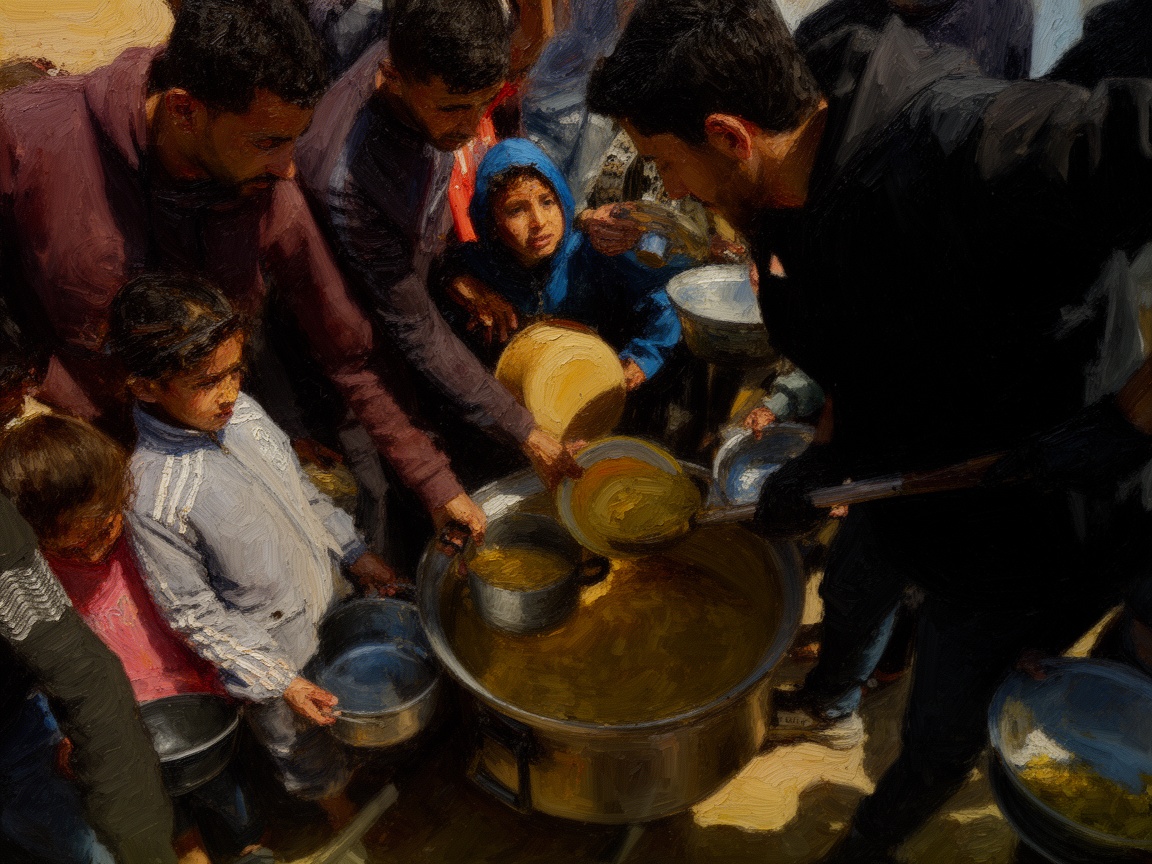
Israel's starvation policy in Gaza escalates regional crisis
Israel's blockade-driven logistics crisis in Gaza is weaponized to constrain civilian life. The policy sharpens regional tensions as external powers watch for a wider confrontation. The evolving humanitarian disaster risks spilling into neighboring theaters and complicating diplomatic efforts.
The core development is stark: reports and open-source indicators point to a deliberate disruption of fuel, food, and medicine flows into Gaza, framed by a narrative of strategic deterrence. This is not mere hardship; it is a calculated constriction of essential goods that sustains daily life for millions. The situation crystallizes a broader pattern where logistics become a battlefield, amplifying political coercion and raising the threshold for any future ceasefire.
Historical context shows Gaza's dependency on cross-border supply lines since multiple conflicts and periodic blockades. Past cycles of escalation have demonstrated how control over corridors translates into political leverage, with humanitarian relief often caught in the crossfire of strategic aims. The current approach appears to institutionalize supply denial as a tool, intensifying pressure on civilian governance structures and local markets alike.
Strategically, the outcome hinges on how regional powers respond to the perceived starvation policy. A few actors may leverage the crisis to press for concessions or alter the rhythm of negotiations, while others seek humanitarian corridors as a stabilizing counterweight. The risk is a widening of the crisis beyond Gaza’s borders, fueling asymmetric escalations in adjacent theaters and complicating any prospect of durable political arrangement.
Technical details indicate severe shortages across fuel, staple foods, and medicines, with distribution networks disrupted and prices spiking. Fuel is critical for hospital operations, water pumping, and industrial supply chains; medicine shortages threaten public health campaigns and basic care. The logistics bottleneck is reinforced by security checks, blocked routes, and a fragile humanitarian framework, all of which magnify the humanitarian toll and strategic vulnerability of Gazan institutions.
Likely consequences point toward intensified regional diplomatic activity, potential spillover into cross-border violence, and a renewed push for ceasefire negotiations under pressure from international actors. If the current trajectory persists, Gaza’s humanitarian crisis could become a weaponized bargaining chip in broader negotiations, shaping disarmament, reconstruction, and aid access terms. Analytical judgments suggest that time is a critical variable: delays in relief could push local resilience past a breaking point, increasing the probability of volatile escalations or unintended clashes.