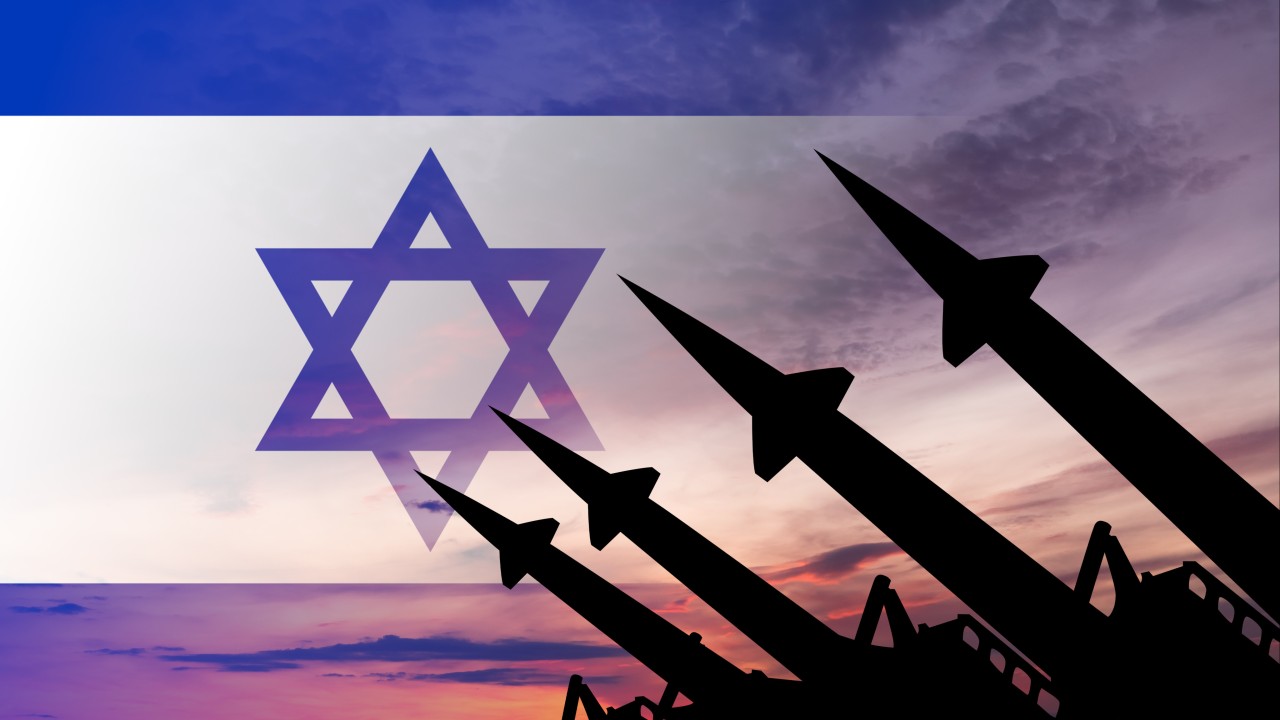
Israel's Nuclear Arsenal Raises Stakes in Iran Conflict, Expert Warns
Israel's unacknowledged stockpile of 90 nuclear warheads poses catastrophic risks to regional stability, especially amid escalating tensions with Iran. The potential use of these weapons would dramatically alter the conflict landscape in the Middle East.
Israel's estimated cache of 90 nuclear warheads elevates the peril of military confrontation with Iran, with experts warning of potentially catastrophic repercussions. As hostilities escalate between Israel and Iranian-backed groups, the unacknowledged nuclear capability looms ominously, underscoring the existential threat that any military strike entails. Alicia Sanders-Zakre, head of policy at the International Campaign to Abolish Nuclear Weapons, characterized this situation as a critical flashpoint for nuclear escalation.
Historically, Israel has maintained a policy of ambiguity regarding its nuclear arsenal since developing its first weapons in the late 1960s. This deliberate opacity has long been intended to deter adversaries while minimizing direct confrontation with international nuclear non-proliferation norms. With tensions flaring over Iran's nuclear ambitions and its support for militant groups like Hezbollah, the spectrum of conventional and nuclear retaliation becomes increasingly complex and fraught with danger.
The strategic implications of Israel's nuclear capabilities extend far beyond its borders, reshaping regional power dynamics. Iran's nuclear program, paired with its aggressive proxy warfare, positions it as a significant adversary capable of challenging Israel's military preeminence. The knowledge that Israel possesses nuclear weapons deters not only Iran but also other regional states, albeit with the risk of a catastrophic miscalculation should hostilities escalate further.
Key actors in this scenario include the Israeli government, which views its nuclear arsenal as a vital component of national security, and Iran, which perceives Israeli military action as an existential threat. While Israel cites a need for deterrence against Iran's expanding missile capabilities and support for terrorist groups, Iran aims to counterbalance Israeli strength and increase its regional influence. Both nations are entangled in a high-stakes security dilemma that could spiral out of control.
The technical aspects of Israel's nuclear arsenal remain speculative, but analysts estimate that the warheads are design-dedicated and deliverable by various platforms, including the Jericho ballistic missiles and F-15 and F-16 fighter jets. The budget allocation for maintaining and modernizing this arsenal is significant, estimated to be billions annually, reinforcing Israel's commitment to retaining a qualitative military edge. The deployment of these capabilities amid ongoing military operations in Syria and against Iranian positions heightens the potential for escalation.
The consequences of an Israeli strike involving nuclear weapons could elicit immediate retaliation not only from Iran but also from its allies, leading to severe regional instability. Any misstep or misunderstanding in this high-tension environment could trigger a broader conflict, drawing in global powers and potentially leading to a humanitarian catastrophe on an unprecedented scale. The permanence of such a crisis would irreversibly alter the geopolitical landscape of the Middle East.
This situation echoes historical precedents, such as the 1962 Cuban Missile Crisis, where miscalculations in nuclear-armed contexts led to dire global implications. The existence of nuclear weapons has created a delicate balance of power, but it also harbors an intrinsic volatility that could unleash unparalleled chaos, particularly in a region already marred by conflict.
Moving forward, monitoring the changes in military posturing by both Israel and Iran will be crucial, as any significant development, such as advances in Iranian missile technology or Israeli military exercises, can serve as indicators of rising tensions. Intelligence assessments should focus on the rhetoric from both nations and their allies, alongside any indications of imminent military actions, to navigate the complexity of this increasingly perilous standoff.