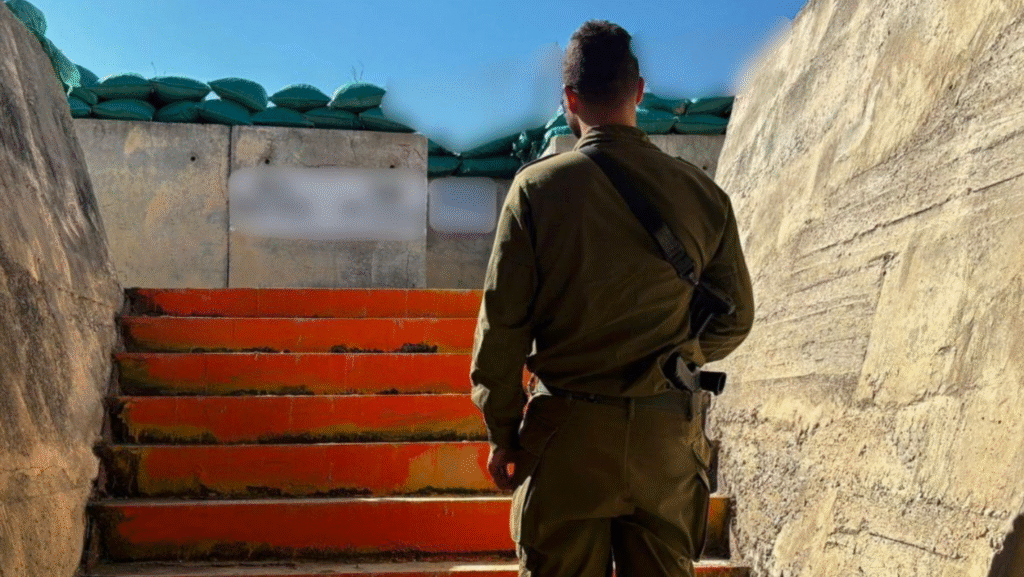
Israel's IDF Strengthens Jordan Valley Border with New Division
The establishment of the IDF's 96th Division represents a significant escalation in Israel's military posture along the Jordan Valley, suggesting a heightened focus on territorial security amid regional tensions. This tactical shift raises the stakes for potential confrontations with neighboring states, particularly in the context of evolving geopolitical dynamics.
The Israel Defense Forces (IDF) has recently activated the 96th Division, a new military unit designed to reinforce security operations along the Jordan Valley. Established in June 2025, this division reflects an aggressive recalibration of Israel's defense strategy in response to growing security concerns. This move marks a definitive shift in command structure and resources deployed to the border area between Israel and Jordan, a region historically pivotal to Israel's national security agenda.
Historically, the Jordan Valley has been a critical component of Israel's defense perimeter, acting as a buffer against incursions from the east. In recent years, Israel's security establishment has faced increasing threats from militant groups and instability in neighboring countries. The formation of the 96th Division is a direct answer to these rising tensions, providing a strategic framework to counteract potential threats from both state and non-state actors operating in the region.
This new military presence is significant as it raises the military capability and resolve of Israel in an area where it shares a border with Jordan but faces potential hostility from groups connected to Syria and further afield. The division’s enhanced operational readiness may create friction with not only Jordan but also with adversarial nations in broader Middle Eastern conflicts. Such a development serves to underline the shifting balance of power in the region, as non-state and state actors continuously vie for influence.
The key players behind this initiative are senior IDF officials and the Israeli government, motivated by the need to maintain a strong deterrent posture amidst evolving threats. The division's establishment comes at a time when Israel is contending with complex geopolitical landscapes, which include a conflict-ridden Syria and a tense relationship with Iran. The underlying intent is a clear message of readiness, signifying Israel's commitment to security and stability in the region.
In operational terms, the 96th Division boasts advanced command-and-control capabilities and is equipped with modern military assets. This includes drone surveillance units and rapid response forces capable of quick mobilization in case of border incidents. With an estimated budget allocation of several billion Israeli Shekels dedicated to its operational capability, the IDF aims to bolster its defensive infrastructure significantly, increasing the troop presence and readiness levels in the region.
The establishment of this division could lead to potential escalations, particularly if perceived threats result in military confrontations. Escalation vectors include increased patrols, potential clashes with security forces from neighboring states, and heightened military exercises aimed at demonstrating readiness. Moreover, the regional security landscape may be impacted by the actions of militant groups that view this division as a direct challenge to their influence.
Historically, Israel's military buildup along its borders has often been met with resistance and counteractions from neighboring states and militant groups. This reality draws parallels to previous instances where military reinforcements led to significant conflict escalations, such as during the 2006 Lebanon War and various confrontations with Hamas. The strategic implications of the 96th Division's establishment may create new flashpoints for regional instability.
In the months ahead, analysts should monitor troop movements and military exercises in the Jordan Valley, as well as Israel's interactions with Jordan and other regional actors. Any signals of increased tension or military activity could suggest a shift toward a more aggressive Israeli military posture. Intelligence assessments will be crucial in interpreting the motivations behind these developments and their potential impacts on Israel's security architecture and regional power dynamics.