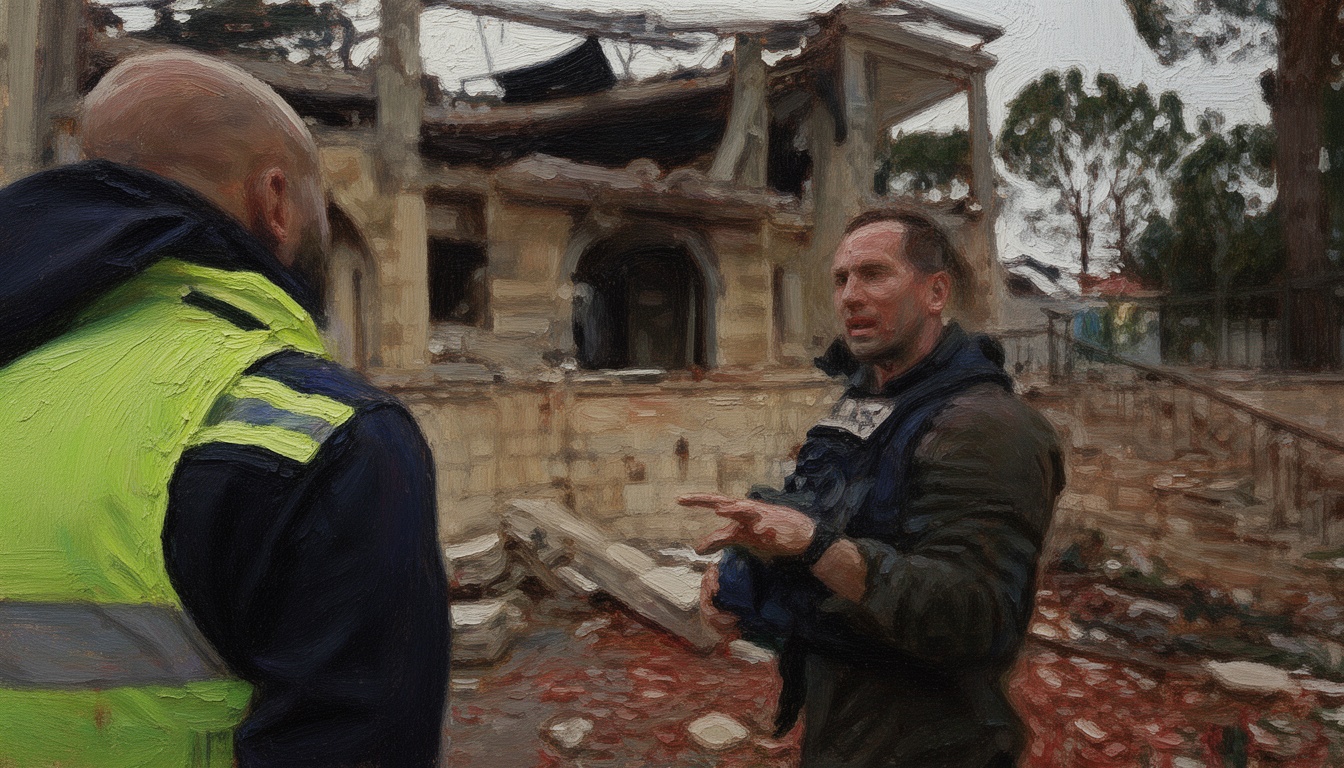
Israeli strikes push Nabatieh into crisis as medics speak out
A wave of Israeli strikes in southern Lebanon drives Nabatieh toward collapse. Paramedics describe overwhelmed EMS, collapsing infrastructure, and civilians fleeing for safety. The reporting highlights how regional firefights threaten broader stability and trigger humanitarian strain.
A sharp wave of Israeli strikes hits southern Lebanon, and Nabatieh stands at the center of the crisis. Paramedics on duty describe a medical system under relentless pressure, stretched thin across a city rapidly transforming from a once-bustling town to a makeshift shelter for the displaced. The situation exposes the fragility of civilian life when front-line tensions spill over into urban heartlands. Emergency teams report not only the demand for immediate medical care but also the dangers of disrupted transport corridors and shattered communication lines that slow every response.
Background context reveals a history of sporadic cross-border hostilities and episodic escalations that leave border communities in a perpetual state of readiness. Nabatieh has long been a logistical artery for the region, its clinics serving a wide swath of rural towns. The current strikes come amid a broader regional dynamic, where political calculations intersect with local emergencies. Civilians bear the heaviest burden as ceaseless shelling and air activity compress daily life into a continuous cycle of alert, escape, and repair.
Strategically, the incident underscores how a localized flare can escalate into a test of regional deterrence and alliance commitments. For Lebanon, the strikes complicate existing security challenges, compounding fragility in a country already confronting political volatility and economic strain. For neighboring states, the cross-border violence intensifies concerns about escalation pathways, potential retaliation, and the risk of a wider confrontation drawing in external actors. The humanitarian dimension—medical access, water, sanitation, shelter—has become a front-line metric of resilience and state capability.
Technical and operational details from the field emphasize how medics adapt under fire. Paramedic teams describe the use of improvised triage stations, improvised medical supply caches, and limited fuel for ambulances. Communications gaps hinder scene coordination, forcing responders to improvise dispatch routes and prioritize life-saving interventions amid repeated bombardment. The broader budgetary and logistical constraints of local health services further complicate supply chains, staff retention, and resilience against ongoing strikes.
Likely consequences point to a protracted humanitarian strain unless a durable de-escalation is achieved. The immediate needs include safe corridors for evacuation, replenishment of medical supplies, and protection for essential civilian infrastructure. International actors face pressure to broker a reduction in hostilities, ensure humanitarian access, and stabilize the regional balance of deterrence to prevent further spillover into neighboring urban centers. The risk calculus for regional security remains dominated by the interplay between violence containment and the credibility of deterrence in a densely contested border landscape.