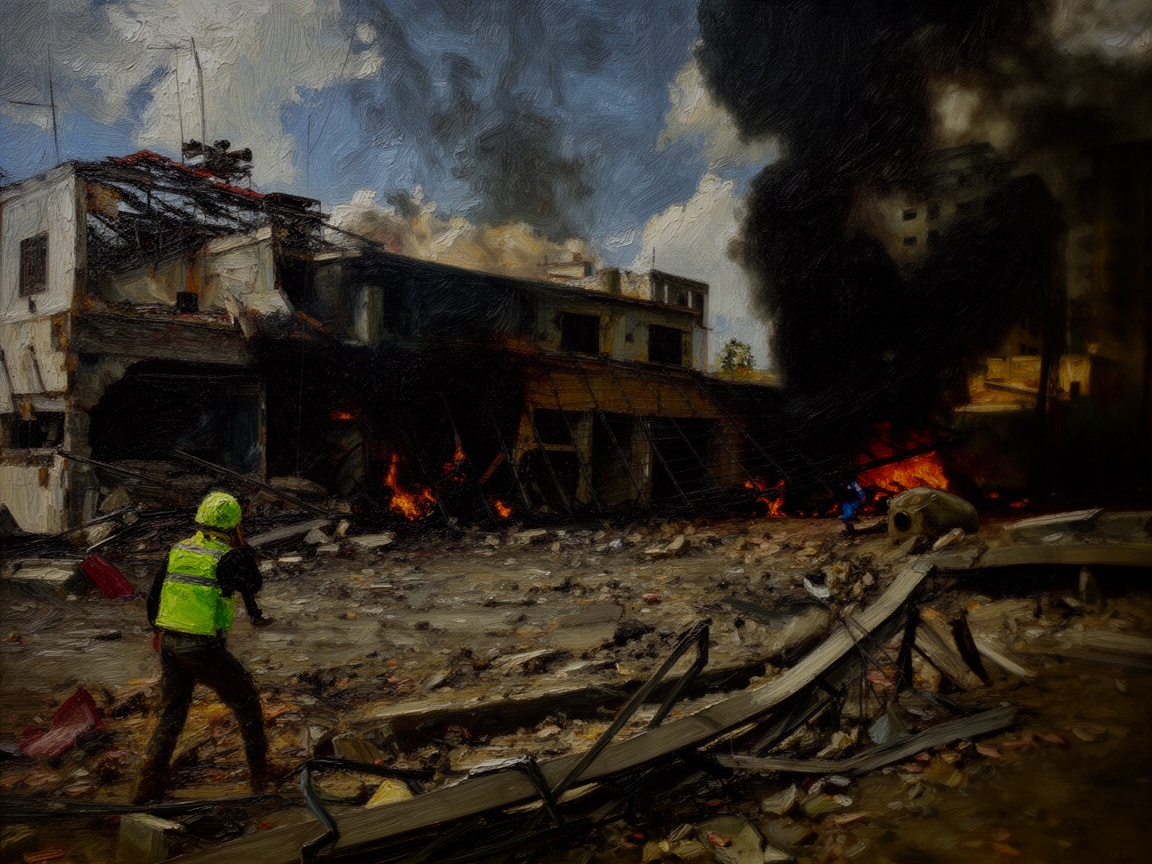
Israeli strike on government building kills Lebanese officers
Israeli air strike targets a government building in southern Lebanon's Nabatieh, killing at least 13 Lebanese officers. The attack risks widening regional tensions and drawing in external actors. Authorities warn of further escalation amid deteriorating security conditions.
An Israeli air strike hit a government building in Nabatieh, in southern Lebanon, killing at least 13 Lebanese officers and wounding several others. The strike underscores Israel's willingness to strike inside Lebanon to target perceived threats along the border. Initial assessments indicate the facility housed multiple security and administrative offices, complicating humanitarian and governance operations in the area.
The incident marks a sharp intensification in a region already convulsed by asymmetric warfare and interlinked crises. Lebanese authorities quickly condemned the attack, and local authorities reported emergency responses rushing to the scene. Israel has long cited Iran-backed groups in Lebanon as a justification for strikes; whether this operation targeted a specific cell or broader deterrence remains contested. The event is likely to provoke regional diplomatic backchannels and possible retaliatory rhetoric from Beirut.
Strategically, the strike could alter the balance of power along the Lebanon-Israel frontier. If the attack was operationally successful, it may demonstrate Israel's capacity to conduct pinpoint strikes with minimal warning, potentially persuading actors to rethink border-area planning. Conversely, the incident risks elevating the threat of broader clashes, complicating UN and regional security efforts to de-escalate tensions. The Lebanese state faces immediate governance challenges as investigators map casualties and secure emergency services.
On the technical front, details remain sparse. The weapon type, flight parameters, and the exact targeting rationale are still under review by Lebanese and international observers. Budget lines, force postures, and civil-military coordination within Nabatieh's security apparatus will come under scrutiny in coming days. Analysts warn that even a limited strike can trigger cascading effects, including displacement, market volatility, and heightened regional disinformation campaigns.
Looking ahead, the destruction of a government facility in Nabatieh will likely push Lebanon toward tighter security controls and potential external mediation efforts. If the conflict projection hardens, regional powers could reassess support to Lebanese authorities and allied groups. The danger of broader escalation remains real, underscoring the need for urgent diplomacy, humanitarian access, and adherence to international humanitarian law.