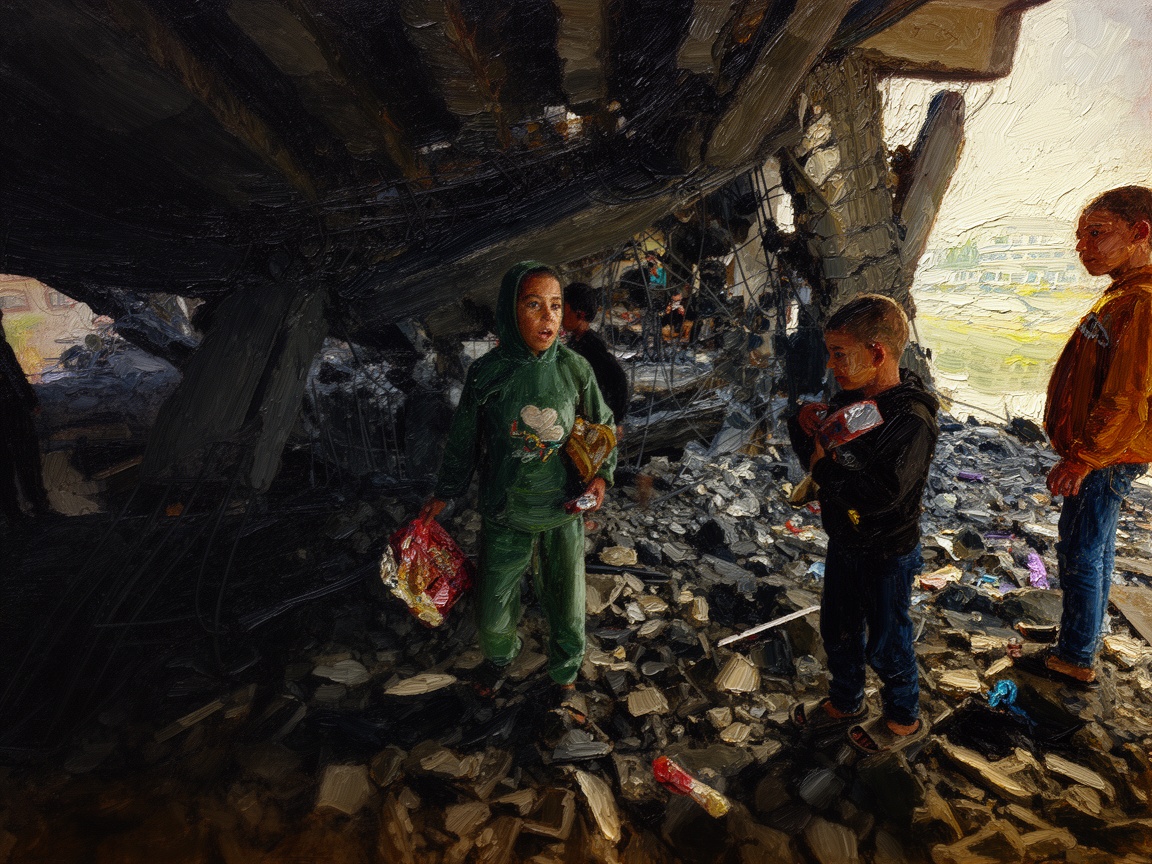
Israeli strike kills five in Gaza, including three children
An Israeli strike in Gaza has killed five people, including three children. The attack intensifies a crisis that already features repeated violations of a ceasefire, according to Gaza officials. The broader regional security implications are increasing as tit-for-tat actions escalate the lethality on both sides.
The blunt fact is clear: an Israeli strike in Gaza has killed five people, among them three children. Initial casualty reports indicate an escalation of hostilities in a densely populated urban area, complicating humanitarian access and civilian protection. The incident follows a pattern of rapid retaliation and air campaigns that punctuate a fragile ceasefire framework.
Gaza officials frame the strike within a broader cycle of violations of the October ceasefire brokered with Hamas. They allege that the current flare-up represents a systemic erosion of the truce, with cross-border violence feeding back into the Gaza Strip and prompting renewed Israeli air activity. The narrative from Gaza emphasizes civilian casualties as a direct consequence of failed risk containment measures.
Strategically, the incident increases risk density around the Gaza envelope and raises doubts about deterence balance in the region. If parallel strikes continue, the risk of a broader confrontation grows, potentially drawing in regional proxies and international mediators. The escalation also tests the limits of humanitarian corridors and international condemnation rhetoric that accompanies such episodes.
Operationally, the available details confirm only that an air strike occurred in Gaza and caused five fatalities, including three children. No verified information on the specific aircraft type or munitions has been released. The incident highlights how urban warfare dynamics constrain precision targeting and escalate civilian harm, placing pressure on international actors to restore restraint.
Looking ahead, the most likely trajectory is a renewed cycle of retaliatory actions and heightened regional rhetoric. Without a credible de-escalation mechanism, civilian harm will fuel political blowback and complicate any future ceasefire negotiations. The international community should prioritize humanitarian access, verification of ceasefire commitments, and targeted diplomacy to prevent a slide into a broader crisis.