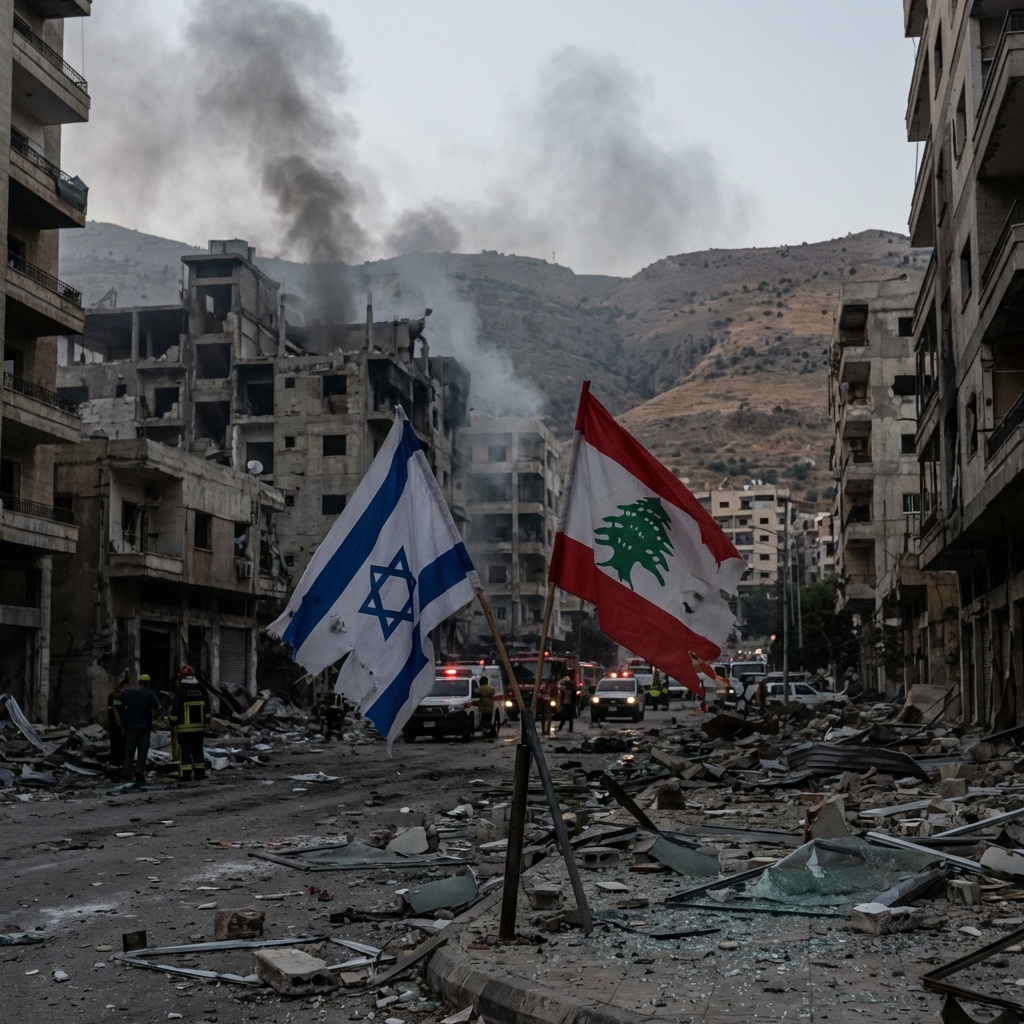
Israel Strikes Hezbollah in Lebanon, Escalating Cross-Border Conflict
Israel has launched a series of retaliatory airstrikes against Hezbollah in Lebanon, marking a dangerous escalation in ongoing hostilities. This renewed military action threatens to destabilize the region further and escalate into a broader conflict.
Israel has conducted a series of airstrikes against Hezbollah positions in southern Lebanon following a period of heightened tension marked by cross-border rocket fire. The strikes targeted multiple sites, including arms depots and command centers, resulting in significant damage to Hezbollah's military infrastructure. Preliminary reports indicate at least 10 fatalities among Hezbollah fighters, further inflaming the conflict.
The current crisis stems from a long-standing adversarial relationship between Israel and Hezbollah, which has its roots in the 1982 Lebanon War and intensified after the 2006 Lebanon War when both sides engaged in a month-long military showdown. Since then, Hezbollah has developed a formidable arsenal of over 130,000 missiles, posing a persistent threat to Israeli territory. Tensions have escalated sharply following incidents of sporadic violence and military exchanges along the Lebanon-Israel border in recent months.
This latest escalation is significant as it not only challenges regional stability but also risks drawing in external powers with vested interests in the conflict. Increased hostilities could potentially engage Iran, which backs Hezbollah, and prompt a response from Israel's allies, including the United States and European nations. The geopolitical stakes have risen dramatically, with vulnerabilities exposed on both sides and an urgent need for a strategic reassessment.
The key actors in this conflict are Israel, which aims to neutralize Hezbollah's military capabilities, and Hezbollah, which seeks to deter Israeli incursions and maintain its status as a resilient force against Israel. Both sides are motivated not only by military goals but also by domestic political pressures: Israel faces pressure to protect its citizens from rocket threats, while Hezbollah must project strength to maintain its regional influence and domestic legitimacy.
Operationally, Israel's strikes involved precision-targeted munitions delivered by F-16 fighter jets, with intelligence gathered by aerial surveillance and cyber operations to identify key military assets. The increased military budget for 2023 includes provisions for the Iron Dome missile defense system, which is essential for intercepting retaliatory fire from Hezbollah. The strikes were executed following a specific timeline, with intelligence reports indicating imminent threats from Hezbollah positions.
The consequences of this confrontation are likely to be severe, as both sides prepare for possible reprisals. Escalation vectors include increased rocket fire from Lebanon into Israel and potential air raids by Israeli forces targeting Hezbollah’s command centers. The risk of civilian casualties and collateral damage is substantial, heightening the potential for international condemnation and calls for restraint.
Historically, previous altercations between Israel and Hezbollah have led to protracted conflicts and significant military confrontations. The 2006 War serves as a stark reminder of the potential scale of escalation, with over 1,200 Lebanese and 160 Israeli casualties, alongside extensive infrastructure damage in Lebanon. Such precedents underscore the urgency of diplomatic efforts to prevent further violence.
Looking ahead, intelligence cues to monitor include the movements of both Israeli and Hezbollah forces along the border, rocket launch preparations, and public statements from Iranian officials who may weigh in on the conflict. The situation remains fluid, and the potential for further escalation looms large as both parties engage in tit-for-tat strikes that threaten to spiral into a larger military confrontation.