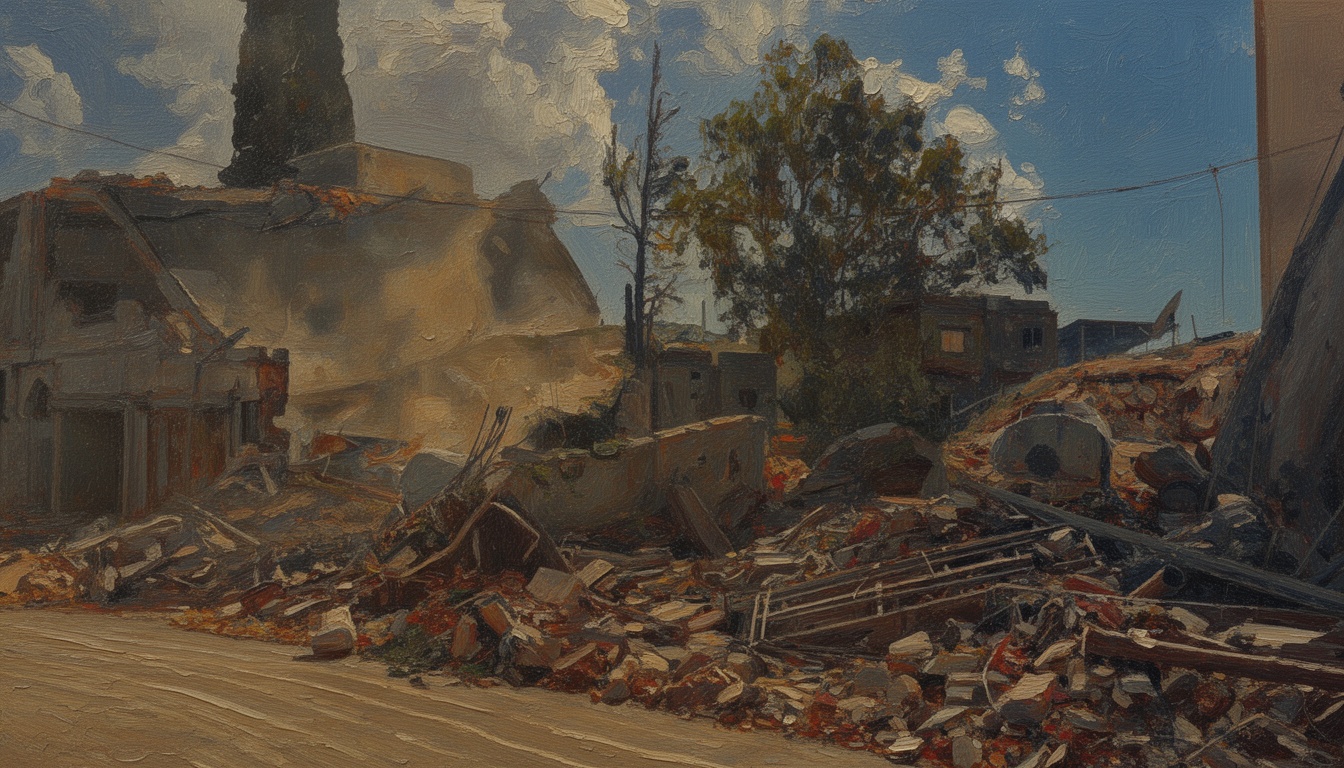
Israel hits 200+ Hezbollah targets in 24 hours
Israeli forces report mass strikes against Hezbollah positions in southern Lebanon. The campaign follows intensified cross-border activity amid ongoing Iran-US peace talks. Tehran demands an end to the bombardment before negotiations progress. Analysis focuses on regional deterrence and potential escalation dynamics.
Israeli defense forces say they have struck more than two hundred Hezbollah targets in the last 24 hours along the Lebanon border. The rapid barrage targets include command posts, weapons depots, and logistic hubs. The reported breadth signals a sustained, high-intensity campaign aimed at degrading the militant group’s ability to operate near civilian-populated areas. The intensity of the strikes raises the risk of wider spillover into southern Lebanon and potential civilian harm.
The background to this escalation lies in recurring cross-border exchanges over the past weeks, with Hezbollah responding to Israeli operations by mounting rocket and drone activity. International actors have pressed for de-escalation, while regional powers recalibrate their deterrence postures. The Lebanese context remains fragile, with political factions already contending for influence as security forces seek to prevent a broader conflict. The latest strikes come as external diplomacy shifts toward broader talks, complicating the security calculus on both sides.
Strategically, the campaign underscores Israel’s intent to impose a continuous pressure campaign on Hezbollah to disrupt its fight readiness. Hezbollah’s own forces are dispersed across southern Lebanon, with significant anti-tank and long-range rocket capabilities that could threaten northern Israeli communities. The balance of power in the Lebanon theater is volatile, hinging on the tempo of Israeli operations and Hezbollah’s adaptive tactics. Defense planners will be watching for changes in force posture and disruptor techniques used by the group.
Technical details indicate coordinated strikes across multiple corridors, utilizing airpower and intelligence-led targeting. The defense ministry has reportedly concentrated efforts on logistics networks that enable rapid Hezbollah deployments, including supply routes through the Bekaa Valley. Precise munitions and surveillance systems are central to the campaign, though civilian risk remains a constant concern for both sides. Analysts anticipate continued activity with possible limited ground or cross-border incursions if Hezbollah escalates further.
The likely consequences include heightened regional tension, potential civilian displacement in southern Lebanon, and shifts in Iranian and American engagement in indirect talks. If the Israeli campaign is sustained, deterrence may harden on both sides, increasing the probability of miscalculation or accidental escalation. Regional partners are watching for signs of restraint or a turn toward wider hostilities, which could redraw the security landscape in the Levant. Policymakers should prepare for renewed diplomacy alongside military pressure, while humanitarian safeguards remain essential for civilian populations.