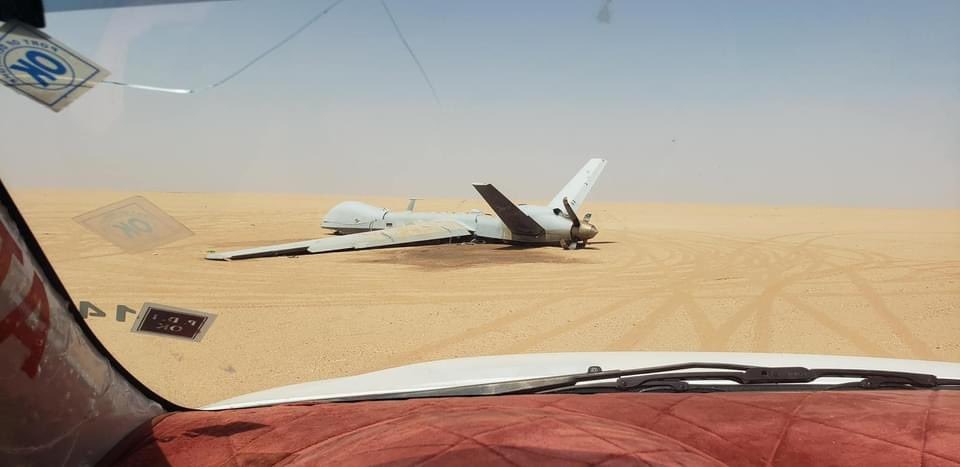
Iran's Forces Shoot Down 11 MQ-9 Reapers in Two Weeks: Crisis Unfolds
The loss of 11 MQ-9 Reapers in Iran signals a critical setback for U.S. military operations, revealing vulnerabilities in drone operations against a bolstered Iranian defense. This unprecedented loss raises alarms over the effectiveness of 'Operation Epic Fury' and U.S. air superiority in the region.
The U.S. Air Force faces a crisis after Iran's military claimed the downing of 11 MQ-9 Reaper drones in less than two weeks, signaling a catastrophic failure in operational execution and situational awareness. This confrontation follows the start of 'Operation Epic Fury' on February 28, aimed at degrading Iranian military capabilities but resulting in heavy losses for U.S. assets in the process.
Historically, the MQ-9 Reaper has been a cornerstone of U.S. drone warfare, providing intelligence, surveillance, and precision strike capabilities for nearly two decades. However, the recent intensification of hostilities in the region has put the drone at risk, highlighting a rapid deterioration in operational effectiveness against Iranian aerial defenses. The Iranian military has invested heavily in anti-aircraft systems and tactics over the last few years, which are now evidently bearing fruit against U.S. technology.
The implications of losing 11 MQ-9 Reapers are profound, as it exposes severe vulnerabilities in U.S. aerial dominance and operational strategy. Each MQ-9 drone is valued at approximately $16 million, and the loss translates into a staggering financial setback while also endangering U.S. intelligence-gathering capabilities in a critical conflict zone. Such losses may embolden Iranian defenses and heighten regional tensions as they showcase their ability to counter advanced technological systems.
Key players in this unfolding crisis include the United States, Iran, and Israel. U.S. officials are likely grappling with the ramifications of these losses, while Iran's leadership may leverage this success to bolster domestic legitimacy and political support. Additionally, Israel's involvement in the operation underscores its strategic interest in neutralizing Iranian influence but complicates its own military calculus given the recent setbacks.
Operationally, the MQ-9 Reapers are deployed for high-stakes missions involving intelligence gathering and targeted strikes, designed to support a variety of soft and hard military objectives. The drones are typically equipped with advanced sensors and weapon systems capable of precision strikes against ground targets. With the increasing sophistication of Iranian countermeasures, including surface-to-air missiles and mobile anti-air systems, the operational environment for the U.S. forces has drastically changed, necessitating a reevaluation of drone utilization and protective strategies.
The immediate consequences of these losses suggest a potential shift in U.S. military strategy regarding drone warfare in hostile environments. Commanders may opt to limit drone operations in areas where Iranian forces demonstrate significant aerial capabilities, which could lead to diminished surveillance and targeting capabilities in an already volatile region. This escalation could further entrench U.S. forces in a reactive posture, rather than a proactive one, risking greater instability.
Historical parallels can be drawn to the U.S. experience in Vietnam, where overconfidence in technological superiority led to a series of costly miscalculations against a determined adversary. The current crisis underscores how lessons from past conflicts remain relevant, particularly concerning assumptions about airpower efficacy in asymmetric warfare environments.
Going forward, watchers should observe U.S. military responses to these drone losses, including adjustments in operational tactics. Key intelligence indicators will include any shifts in drone deployment strategies, updates on Iranian military capabilities, and insights into U.S.-Israeli collaborations aimed at curbing Iranian advancements. The situation remains fluid, and further escalations should be anticipated as both sides recalibrate their military strategies in response to the changing battlefield dynamics.