Iran’s Basij Launches Online Terror Campaign To Crush Protests
Iran’s Basij paramilitary forces use aggressive online intimidation and visible street patrols holding supreme leader portraits to deter protests. Their tactics signal Tehran’s intent to suppress dissent through both digital and physical repression, raising regional stability risks.
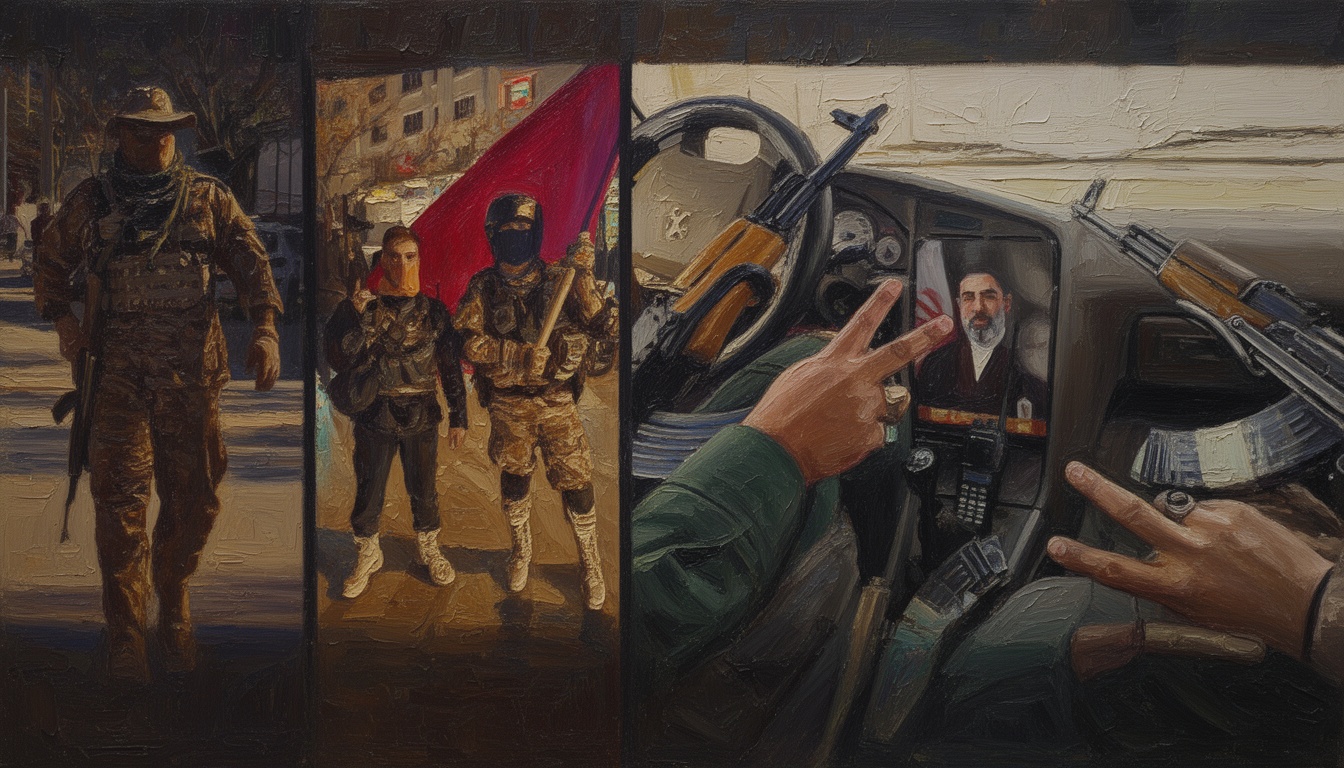
Iran’s Basij militia is aggressively deploying online harassment campaigns combined with armed street patrols to intimidate citizens and prevent renewed protests. Since early March, Basij members in camouflage have circulated images showing armed patrols through Tehran streets holding portraits of Supreme Leader Ali Khamenei. This dual strategy marks a visible step-up in regime tactics to quell growing public unrest.
The Basij, a paramilitary branch cultivated by Tehran’s Revolutionary Guard, routinely functions as the regime’s internal enforcers. Their operation aims to scare Iranians into silence and dissuade any momentum for mass demonstrations challenging the regime’s grip. This marks a significant move amidst the broader context of sustained but fragmented opposition activity inside Iran.
Strategically, this campaign reflects the regime’s deep fears over losing control as social unrest threatens national stability. The combination of digital harassment and armed intimidation on the streets shows Tehran’s willingness to escalate repression dramatically. This has implications for the region, as any intensification of conflict inside Iran risks broader instability with spillover effects.
The Basij’s deployment includes paramilitary personnel equipped with small arms and body armor, conducting public displays of loyalty by carrying high-profile images of Khamenei. The online campaign intensifies psychological pressure through coordinated harassment and threats aimed at activists and general dissenters. This operational tempo is aimed at maintaining absolute regime control through terror tactics both online and offline.
Looking ahead, the regime’s reliance on such harsh measures indicates a tenuous political environment vulnerable to explosive backlash. The Basij’s campaign of intimidation may temporarily suppress protest momentum but risks fueling further resentment and underground resistance. International observers should monitor Tehran’s escalating repression as a bellwether for future instability risks in the region.