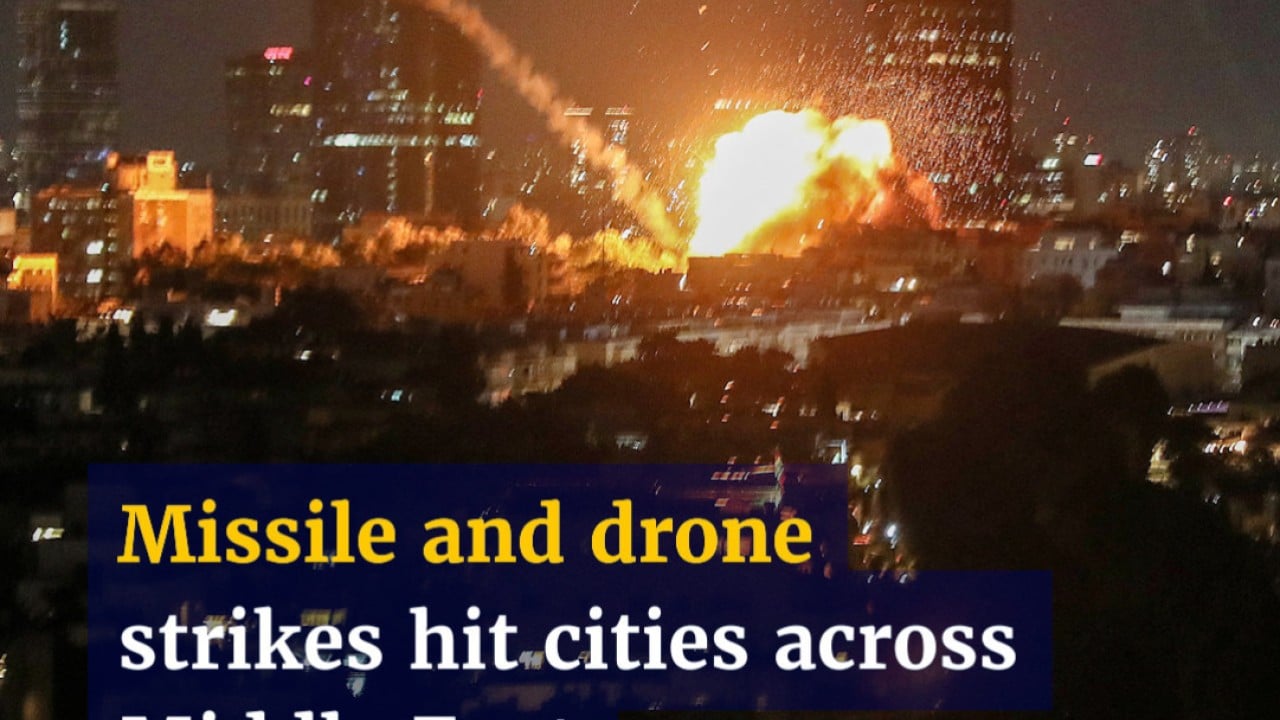
Iran's Armed Conflict Expands as Neighboring Nations Hit by Missiles
Iran's internal conflict has deteriorated into regional aggression, exposing neighboring nations to missile and drone attacks. This escalation poses severe risks to Middle Eastern stability and military balances.
Iran's internal crisis has escalated into a regional conflict, with missiles and drones targeting neighboring countries. Reports indicate that Iranian forces have launched strikes into Iraq and Syria, provoking retaliatory responses and destabilizing an already volatile region. Eyewitness footage reveals the aftermath of these strikes, depicting destruction and chaos across borders.
The roots of this crisis stem from ongoing civil unrest within Iran, fueled by economic strife and political repression. These internal pressures have led Tehran to assert itself militarily beyond its borders, attempting to deflect attention from domestic dissent. The historical trend of Iran using proxy warfare to augment its influence in the Middle East is being amplified through direct action, marking a significant departure from its previous tactics.
This escalating conflict holds severe implications for regional security. The involvement of Iranian military assets, alongside the risk of retaliatory actions from neighboring states, could ignite a wider regional confrontation. Such tensions severely undermine existing military balances, paving the way for increased hostilities and potential alignment of military alliances against Iran.
Key actors in this situation include the Iranian Revolutionary Guard Corps (IRGC), Iraqi paramilitary factions, and the Syrian government. While Iran seeks to maintain its influence in Iraq and Syria, the targeted nations are motivated by a desire to protect their sovereignty from Iranian encroachment. The interlinked relationships and proxy elements create a complex web of motivations that drive the conflict.
Operationally, precision strikes from drones and missile platforms are being utilized to project power and inflict damage. Iran has revealed upgrades to its drone capabilities, now fielding models like the Shahed-136, which can hit targets hundreds of kilometers away. This escalation has not only increased the immediacy of the regional threat but also raised concerns among global defense circles about the potential responses from allies of the affected countries, particularly the U.S. and Saudi Arabia.
The likeliest consequence is a rapid escalation of military engagements across the region, potentially drawing in external powers. Should this trend continue, it may lead to a widespread military conflict, with unpredictable outcomes for all involved. Moreover, the potential for civilian casualties and humanitarian crises complicates international response strategies.
Historically, this scenario mirrors events leading to the 2006 Lebanon War, where a localized conflict spiraled into wider regional hostilities. Instances of Iranian support for Hezbollah and direct military involvement showcase a continued pattern of Iranian behavior that is likely to repeat in the current context.
In the coming weeks, defense analysts will need to closely monitor Iranian military deployments and drone activity as well as the responses from neighboring countries. Indicators to watch include cross-border military movements, changes in regional alliance formations, and any increase in US naval presence in the Persian Gulf as a counterbalance to the emerging threats from Iran.