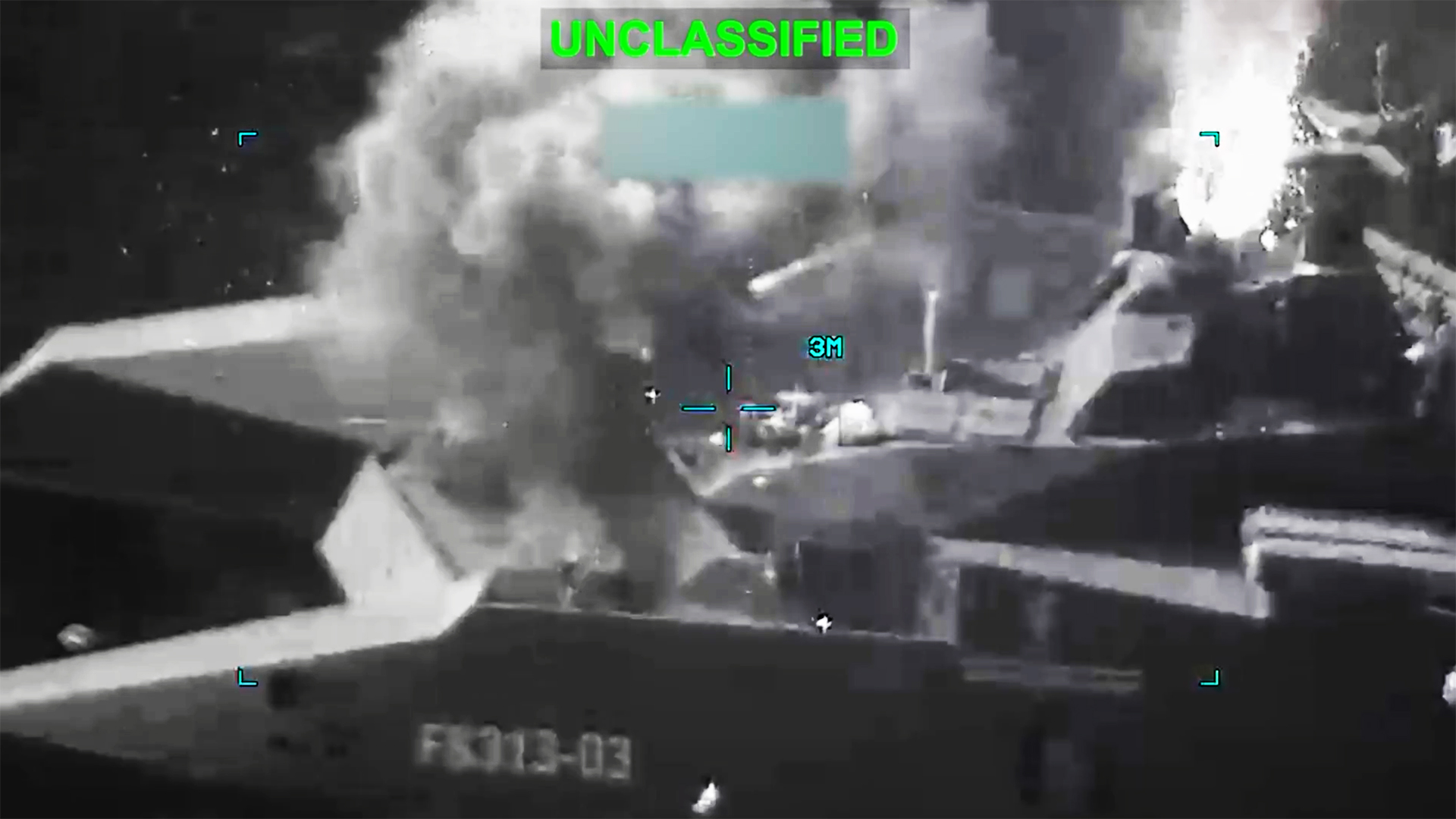
Iran's Advanced Warship Sunk, Signaling Naval Crisis for Tehran
The sinking of the Shahid Soleimani class warship reveals critical vulnerabilities within the Iranian Navy, further destabilizing the region's maritime security. This incident marks a significant escalation in ongoing tensions between Iran and global maritime powers.
The Iranian Navy has suffered a significant setback following the sinking of its Shahid Soleimani class warship, a notable loss that undermines the country's naval capabilities. Reports indicate that the vessel was engaged in operations before being irreparably damaged, leading to an unspecified number of fatalities among its crew. This incident marks a stark illustration of Iran's naval vulnerabilities and diminishing presence in contested waters.
The Shahid Soleimani class warships were intended to enhance Iran's asymmetric naval strategy, allowing for rapid maneuvering and effective coastal defense. The class was designed with innovative features, including advanced stealth capabilities, yet appears to have been outmatched in a direct confrontation. This loss significantly alters the status quo within the region's naval balance, given the rising competition for maritime dominance.
The sinking of the Shahid Soleimani highlights the strategic challenges Iran faces as its navy remains fraught with outdated technology, limited operational range, and rising threats from both U.S. and allied forces in the Persian Gulf. As tensions mount, Iran’s inability to sustain its naval operations reveals a widening gap between its ambitions and realities on the ground. This incident also poses risks for the broader regional security landscape, opening potential avenues for increased aggression or interventions.
Key actors in this crisis include the Iranian Revolutionary Guard Corps (IRGC), which has historically prioritized asymmetric tactics, yet now must contend with a crumbling naval fleet. Domestically, Iranian leadership seeks to project strength despite these setbacks, likely fueling further aggressive posturing in response to perceived external threats. This internal dynamic complicates Iran’s foreign relations, especially with nations wary of its military capabilities and strategic intentions.
From a technical standpoint, the Shahid Soleimani was a modular multihull vessel designed for versatility, including anti-ship and anti-aircraft capabilities. With a length of 55 meters and a planned surface speed of up to 35 knots, its sinking not only reduces Iran's immediate deterrence posture but also raises questions about the efficacy of Iranian investment in modernizing its naval forces.
In the aftermath of this incident, potential escalation pathways may involve Iran resorting to proxy forces in the region, including in Iraq and Syria, to counterbalance its naval losses. Additionally, the government may divert more resources into irregular naval warfare tactics or coastal missile systems to mitigate the impact of its weakened naval fleet. The international community should remain vigilant as Iran reassesses its maritime strategy, which could lead to further unrest and conflict.
Historically, naval losses have provoked escalatory responses — the sinking of Iraq's naval assets during the Gulf War serves as a clear example. The repercussions of such losses often incite more profound retaliatory actions or realignments in military postures, potentially destabilizing regions already marked by volatility.
Looking ahead, observers should monitor additional military maneuvers from Iran, particularly any mobilization of assets along the Straits of Hormuz, where maritime chokepoints remain critical for global oil shipments. Intelligence assessments should focus on the potential for Iran to augment its missile capabilities or engage in asymmetric warfare tactics to offset its maritime deficiencies, which may provoke responses from regional rivals and allied forces in the Gulf. A pattern of increased tensions could herald further maritime skirmishes or unintended confrontations in the coming months.