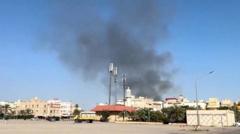
Iranian Missiles Kill Six US Soldiers at Kuwait Base
An Iranian missile strike on a US military base in Kuwait has killed six soldiers, escalating tensions in the region and underscoring the volatile nature of US-Iran relations. This incident marks a significant inflection point that could trigger further military responses and regional realignments.
On Sunday, an Iranian missile strike on a US military base in Kuwait resulted in the deaths of six American soldiers. This attack, confirmed by the US Secretary of Defense, signifies an alarming escalation in hostilities between Iran and the United States, heightening the risk of broader regional conflict. The reckless use of missile technology in direct assaults raises significant challenges for US military operations in the Middle East.
The backdrop to this violent escalation is the long-standing tension between Washington and Tehran. Following the US withdrawal from the Iran nuclear deal in 2018 and the subsequent imposition of crippling sanctions, Iran has repeatedly voiced its hostility towards US military presence in the region. This incident adds to a series of confrontations, including Iran's support for proxy forces targeting US interests across the Middle East, which have been ongoing for years.
The broader significance of this attack cannot be understated. It not only claims American lives but also serves as a potent reminder of Iran's growing military capabilities, particularly in precision strikes, which can affect the security calculus of US allies in the region. The incident illustrates the vulnerability of US forces and installations, especially those in close proximity to hostile regimes.
Key players in this crisis include the Iranian government, which aims to demonstrate its military resolve, and the US administration, which must now consider its next move carefully in light of the casualties. Tehran's motivations diverge from its public narrative of self-defense; they are strategically seeking to challenge US influence and deter future aggression through high-profile military actions.
The operational details emerging from this attack reveal the deployment of advanced Iranian missile systems capable of hitting targets hundreds of kilometers away. The specific type of missile used remains undisclosed, but Iran has previously utilized Fateh-110 or Qadr series missiles for similar operations. These systems represent a clear upgrade in Iran's strike capabilities compared to past engagements.
In terms of likely consequences, the US might escalate its military presence in the Gulf or initiate retaliatory strikes against Iranian positions. Increased naval patrols and aerial operations in the region can be expected as the US attempts to reassure its allies and deter further Iranian aggression. The risk of miscalculation is high, raising the likelihood of additional military responses from both sides.
Historical precedents for such an escalation can be found in prior US-Iran confrontations, notably the assassination of Quds Force commander Qassem Soleimani in January 2020, which led to missile strikes on US bases in Iraq and subsequent retaliations. The pattern of increasing military actions highlights a precarious cycle that can spiral out of control rapidly.
Moving forward, intelligence monitoring should focus on Iranian military movements, US response strategies, and the potential for further attacks on American forces in the region. Changes in troop deployments, military exercises by Iran, and rhetoric from both governments will be critical indicators in assessing the evolving landscape of this confrontation.