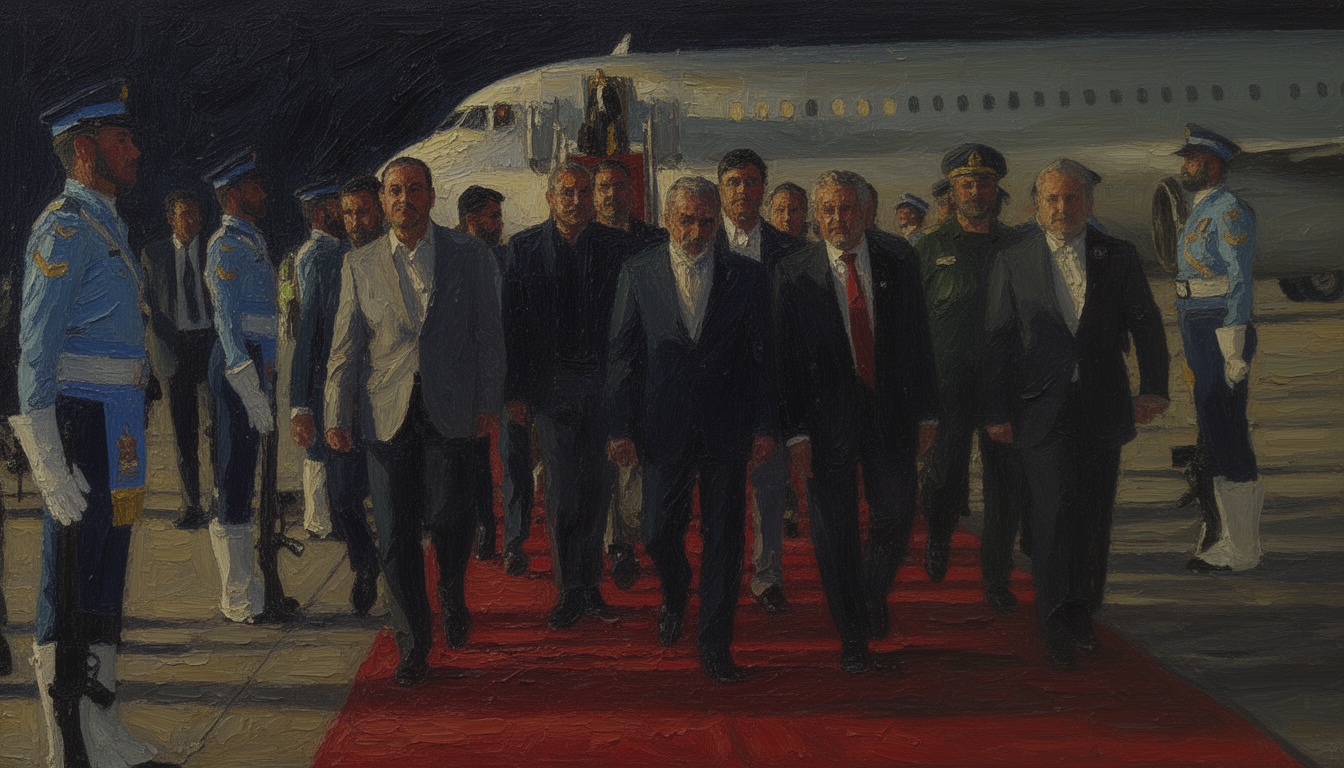
Iranian FM Arrives in Pakistan as US-Iran ceasefire talks loom
Iranian Foreign Minister Abbas Araghchi travels to Islamabad to push for restart of peace talks with the United States. Islamabad hosts the envoy amid mixed signals on whether a meeting with U.S. negotiators will occur. Washington signals ongoing engagement through its special envoys, who depart soon for regional discussions.
Iranian Foreign Minister Abbas Araghchi arrived in Islamabad on Friday to push for revived peace talks with the United States, signaling renewed diplomatic maneuvering on a volatile Western-Islamic arena. The trip follows a pattern of high-level diplomacy aimed at sustaining channels for a potential ceasefire framework. Officials in Islamabad described the visit as a bid to align proposals before any substantive engagement with U.S. negotiators. The visit underscores Pakistan’s role as a discreet hub for regional diplomacy amid fluctuating signals from Washington.
Iranian diplomacy has long leveraged third-country hubs to maintain leverage while direct talks linger. Pakistan’s capital has hosted repeated rounds of talks and back-channel discussions involving Tehran and Washington. The current overture comes as both sides navigate red lines on sanctions relief, regional security guarantees, and verification mechanisms. While the Pakistani staging ground remains a constant, the exact format of upcoming conversations remains unclear.
The strategic significance centers on whether the nascent diplomacy can translate into a credible pause in hostilities or broader normalization steps. Tehran appears intent on leveraging regional interlocutors to preserve momentum even as substantive friction persists over Iran’s nuclear program, ballistic missiles, and regional proxies. Washington, meanwhile, buffers its position behind a rotating cast of envoy pairs, signaling caution while keeping civilian and military channels open.
On the ground, the talks potentially hinge on tactical concessions: cessation of certain disruptive activities, verifiable monitoring, and a pathway to relief from economic pressure. Tehran is likely pushing for sanctions relief tied to compliance metrics that are acceptable to regional partners and allied capitals. The U.S. side has signaled willingness to continue dialogues, but public messaging emphasizes firm conditions and incremental trust-building steps. Foreseeable outcomes range from a narrowed framework for de-escalation to a stall that preserves status quo uncertainty for months.
Looking ahead, the stalemate could redefine regional deterrence dynamics and affect the balance of power in the Persian Gulf. A breakthrough would alter calculations for Israel, Saudi Arabia, and other neighbors by shaping risk appetites and alliance posture. Conversely, a protracted negotiation lag or a breakdown could trigger renewed volatility, prompting ally governments to recalibrate defense postures, sanctions policies, and crisis management timelines.