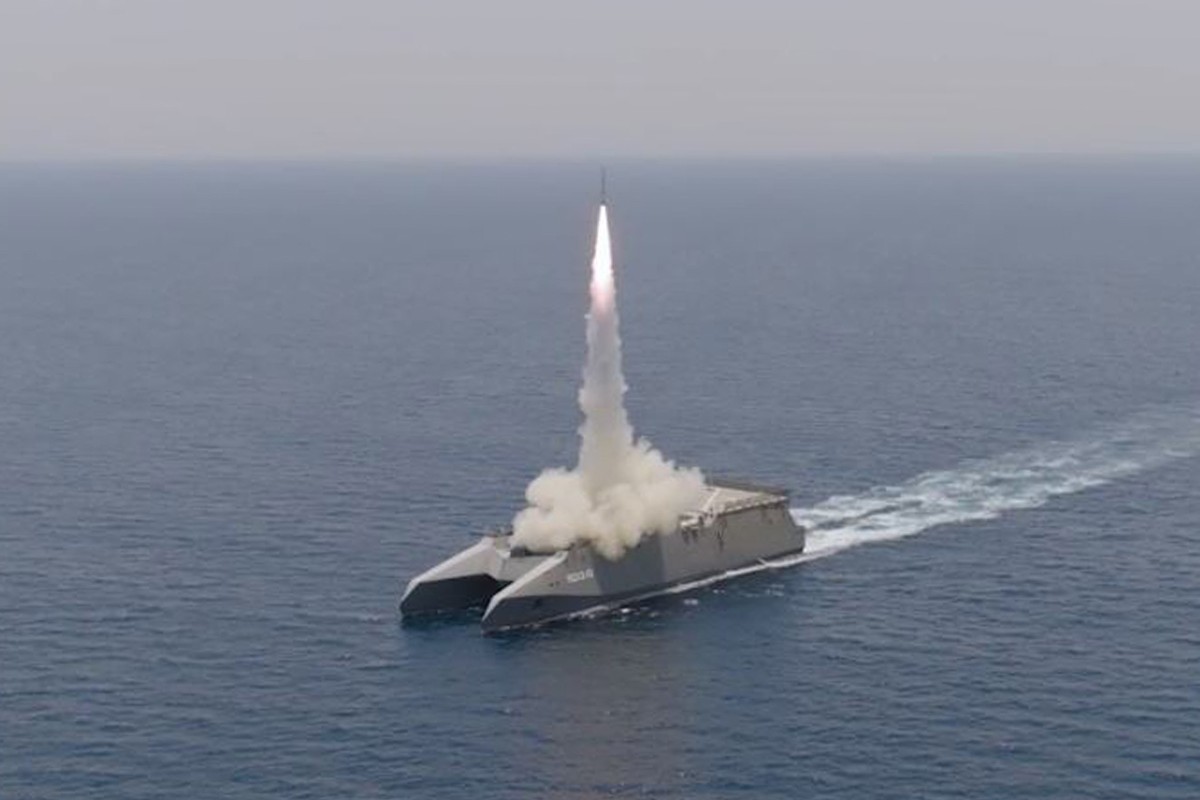
Iran Faces Nuclear Crisis: Potential for Crude Atomic Bomb After U.S.-Israeli Assault
Iran may seek to develop a rudimentary nuclear bomb in response to escalating U.S.-Israeli threats, significantly heightening regional tensions. This could destabilize power dynamics and provoke a full-scale military response from neighboring states.
Iran may soon take decisive steps toward assembling a crude, rudimentary nuclear bomb if it faces severe military attacks from the United States and Israel. Air Vice Marshal (R) Prashant Mohan's recent commentary highlights the fragility of Iran's current defense strategy amidst aggressive pressure from Western powers. As the U.S. and Israel engage in joint military operations, the specter of an Iranian nuclear response looms dangerously on the horizon.
Historically, Iran has pursued nuclear capabilities under the guise of peaceful energy development, facing consistent international scrutiny and sanctions. Following the withdrawal of the U.S. from the Joint Comprehensive Plan of Action (JCPOA) in 2018, Iran has gradually abandoned compliance with nuclear constraints. With ongoing military posturing from Israel and the U.S. increasing, Iran’s strategic calculus is shifting toward nuclear armament as a means of deterrence.
The implications of Iran's potential nuclear advancement are severe. A nuclear-armed Iran could drastically alter the balance of power in the Middle East, inciting an arms race among regional adversaries like Saudi Arabia and Turkey, both of whom have expressed intentions of pursuing their own nuclear programs in response to Iranian capabilities. This exacerbates existing sectarian and geopolitical tensions in a region already fraught with conflict.
Key actors in this crisis include the U.S., Israel, and Iran itself, each with distinct motivations. The U.S. aims to maintain its hegemony in the region and to protect its allies from what it perceives as nuclear proliferation by Iran. Meanwhile, Israel is fixated on preventing any existential threat from a nuclear-capable Iran, which it views as a direct threat to its national security. Iran, on the other hand, perceives the pursuit of nuclear capabilities as essential to its sovereignty and regional power projection.
On the technical side, Iran’s nuclear program has shown significant advancements, with reports indicating that it has accumulated enough enriched uranium to produce several bombs. Currently, Iran has around 3,600 kg of low-enriched uranium, far exceeding limits set in the JCPOA. This stockpile, combined with its operable centrifuges and potential clandestine facilities, gives Iran a pathway to creating a nuclear weapon if it so chooses.
The likely consequences of Iran's nuclear ambitions are alarming; further military action by the U.S. and Israel could lead to an immediate crisis, with potential airstrikes targeting Iran’s nuclear facilities posing an existential threat to the Iranian regime. Additionally, includes the risk of Iranian retaliatory actions against Israeli and U.S. interests around the globe, including cyberattacks and asymmetric warfare.
Historical parallels abound with nations that pursued nuclear weapons under existential threats, notably North Korea and Pakistan. Both states leveraged the fear of military intervention to justify their nuclear development, leading to severe global ramifications and ongoing geopolitical strains. Iran appears ready to follow this contentious path, as it may view nuclear armament as a necessary safeguard against perceived aggressions.
Moving forward, observers should closely monitor intelligence indicators such as changes in Iran's uranium enrichment levels, missile development capabilities, and military exercises with an anti-Israeli focus. Additionally, U.S. and Israeli military activities in the region will provide critical insight into their strategies regarding Iran, potentially foreshadowing more aggressive postures as this crisis unfolds.