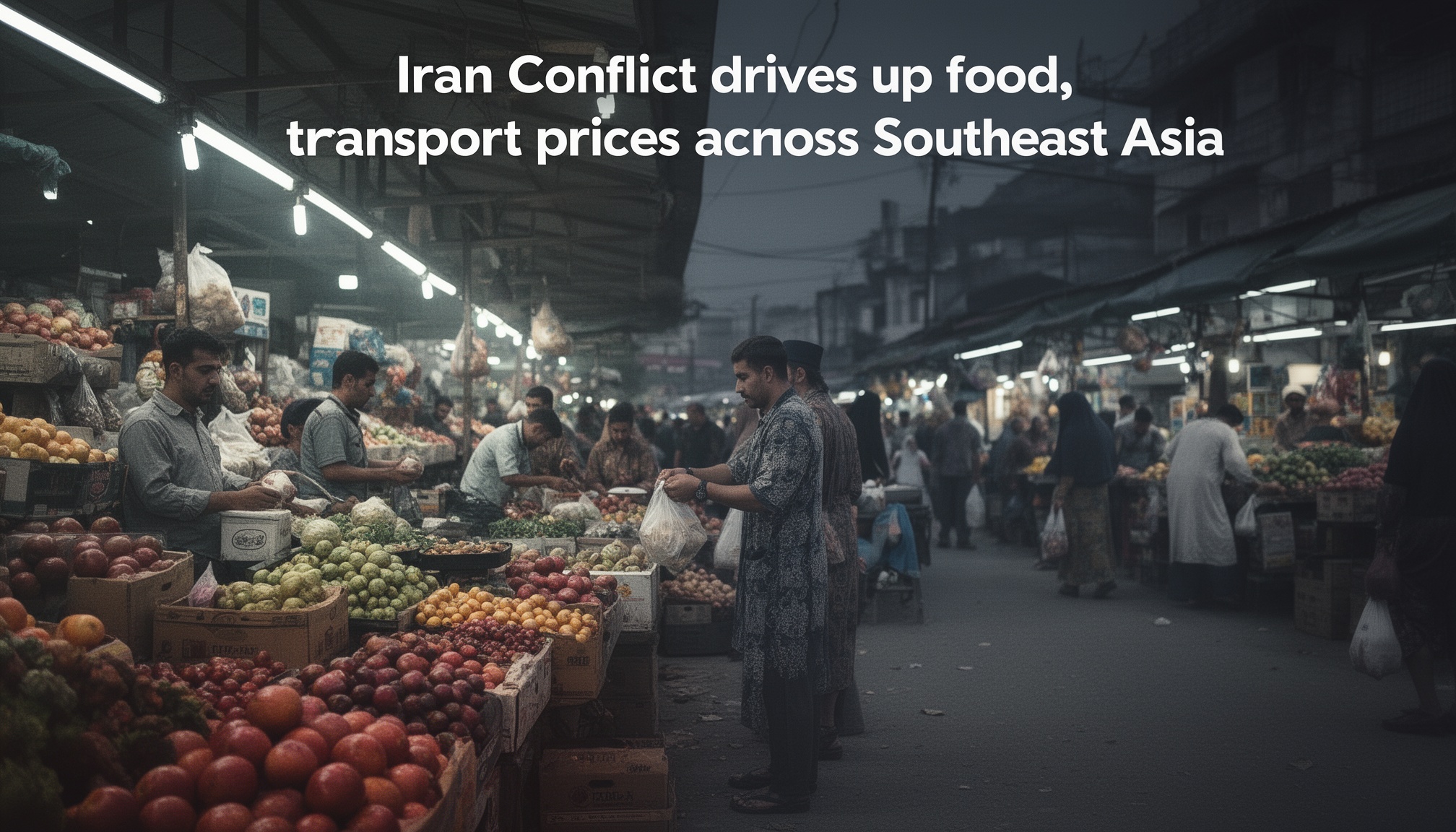
Iran conflict drives up food, transport prices across Southeast Asia
The Iranian conflict is rippling through Southeast Asia, lifting food and logistics costs across multiple markets. The surge tests food security, cooling demand, and regional supply lines. Analysts warn the effect could widen inflation and heighten social strain if the crisis persists.
The Iranian conflict is producing measurable price pressures on food and transport in Southeast Asia. Markets report higher freight costs and tighter food supply windows as sanctions, shipping delays, and risk premia spill into regional supply chains. The immediate impact appears concentrated on staples and essential goods, with price signals translating into consumer inflation in several economies. The crisis atmosphere complicates policy choices for central banks already juggling growth and affordability. Governments increasingly view spice and staple imports as vulnerable to geopolitical shocks that may outlast the current combat cycle.
Background context shows a world already wired for supply shocks encountering a fresh disturbance linked to Iran. The region depends on a complex patchwork of import channels for cereals, cooking oils, and industrial inputs, all sensitive to maritime routes and fuel costs. As Tehran’s adversaries adjust sanctions, shipping lanes experience rerouting risks and insurance premiums rise, further elevating landed costs. Domestic demand remains resilient in some SEA economies, but pockets of price-sensitive households feel the squeeze as transport and storage become more expensive. Regulators are watching for secondary effects on labor markets and small business viability across informal sectors.
Strategic significance centers on how a quarter-world crisis can tilt regional power dynamics and economic security. Southeast Asian states rely on diversified energy and food sources to stabilize prices, yet geopolitics in the wider Middle East now has a direct line to consumer baskets here. If the Iran conflict escalates or broadens, dissuasive signaling could harden. The risk to regional stability lies not in battlefield moves alone but in the cascading economic friction that narrows policy levers for a congested, urbanizing region. This is a test of resilience for supply chains, monetary policy, and regional cooperation mechanisms.
Technical or operational details reveal that price rises are not confined to one corridor. Freight rates on sea routes through the Indian Ocean and South China Sea show volatility tied to risk assessments and port congestion. The rise in insurance premia translates into higher landed costs for food staples and industrial inputs. Regional logistics providers report tighter scheduling windows and longer lead times, forcing shippers to stock earlier and hold more inventory. Budgets across ministries, from trade to agriculture to transport, face an unplanned squeeze as price inflation feeds into social programs and subsidies.
Likely consequences point toward a mixed risk picture: short-term price spikes may ease if conflict dynamics stabilize, but high input costs could persist if sanctions or blockade risks remain elevated. Inflation could remain sticky in the absence of supply normalization, pressuring households and driving political attention toward subsidy reform and social protection. Forecasters warn that a protracted disruption would test food security buffers and force closer regional coordination on routes, insurance, and contingency reserves. Over the medium term, SEA economies may seek diversifications to insulate themselves from external shocks, while watchers gauge whether Iran’s strategic posture translates into longer-term volatility in regional trade corridors.