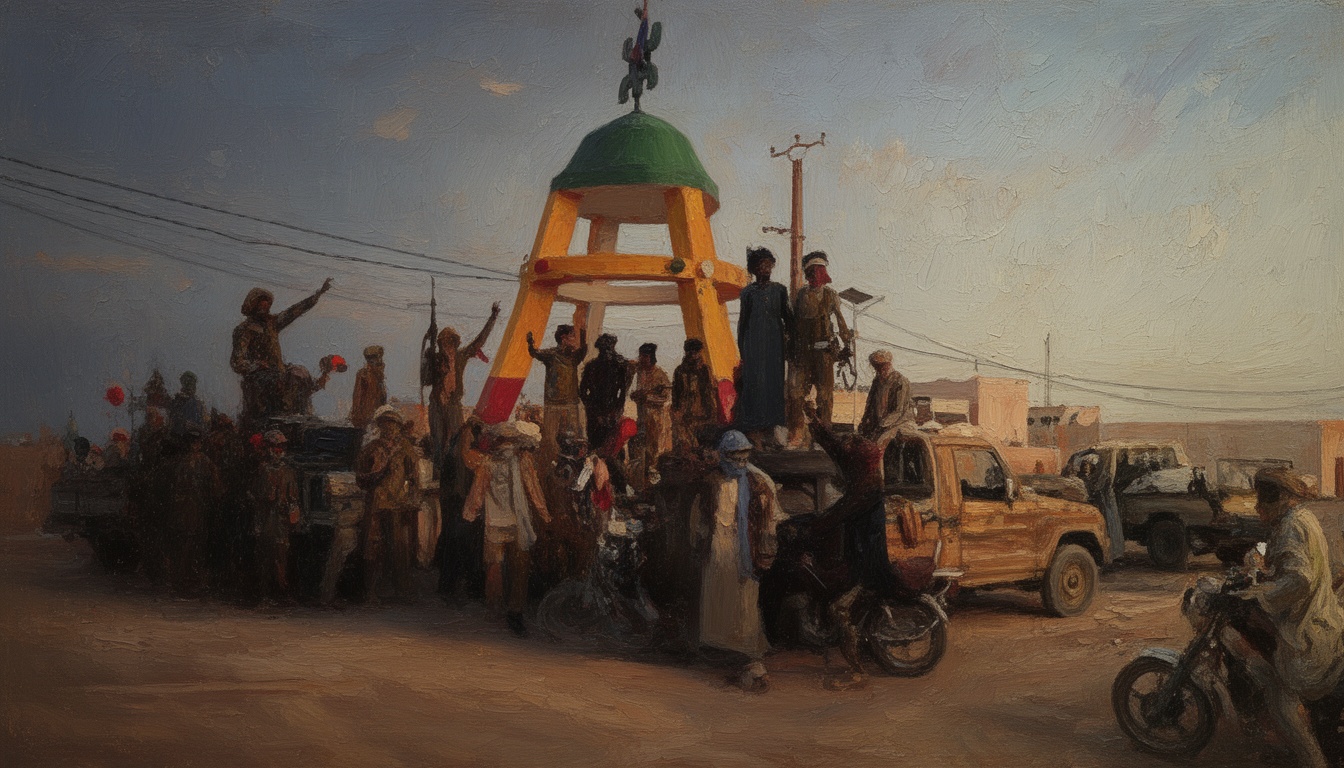
Insurgents Expand Control in Mali Amid Growing Tuareg and Jihadist Threats
Mali faces a significant shift in power as Tuareg and jihadist groups extend their influence. The escalation in coordinated attacks reveals a reconfiguration of authority in the region.
Insurgents in Mali are experiencing a notable surge in operational capabilities, fundamentally reshaping the power dynamics within the country and across the Sahel region. The Tuareg rebels, alongside jihadist factions like the Jama'a Nusrat ul-Islam wa al-Muslimin (JNIM), have increasingly demonstrated their ability to orchestrate complex attacks, reflecting a shift away from traditional state control. While the state apparatus and international forces appear to be losing their foothold, these insurgent groups do not necessarily intend to assume direct governance.
The resurgence of the Tuareg insurgency has historical roots, with demands for greater autonomy frequently clashing with national interests. Over the years, Tuareg groups have sought to assert their independence in northern Mali, capitalizing on the disenfranchisement felt by local populations. Nevertheless, the current situation is further complicated by the rise of radical jihadist movements that aim for broader territorial claims, seeking to establish a caliphate across the Sahel.
The strategic significance of these developments cannot be overstated. With the expansion of armed groups, Mali risks descending into a state of ungovernability. The insurgents are not merely increasing violence; they are actively dismantling the existing governance structure. This creates a precarious security environment where both local communities and international efforts to stabilize the region are challenged. There is an urgent need for a recalibrated approach to counter the insurgency, fostering local resilience and cooperation.
Operational assessments highlight the sophistication of jihadist tactics, which include well-coordinated and unpredictable assaults aimed at state security forces. The recent attacks underline a capacity to strike at critical state installations, indicating a significant tactical evolution for these insurgent entities. The growing capability of these groups poses a severe threat not only to Mali’s sovereignty but to regional stability as a whole.
Looking ahead, the trajectory of violence in Mali suggests an escalation rather than a de-escalation of conflict. Both Tuareg and jihadist factions are likely to continue pressing their agendas amidst the weakening of state authority. If not addressed through comprehensive policy responses that prioritize local engagement and security improvements, the prospects for peace in Mali could diminish further, potentially inviting an even larger scale of regional conflict involving neighboring states. The international community must reassess its strategies to remain relevant amid these evolving threats.