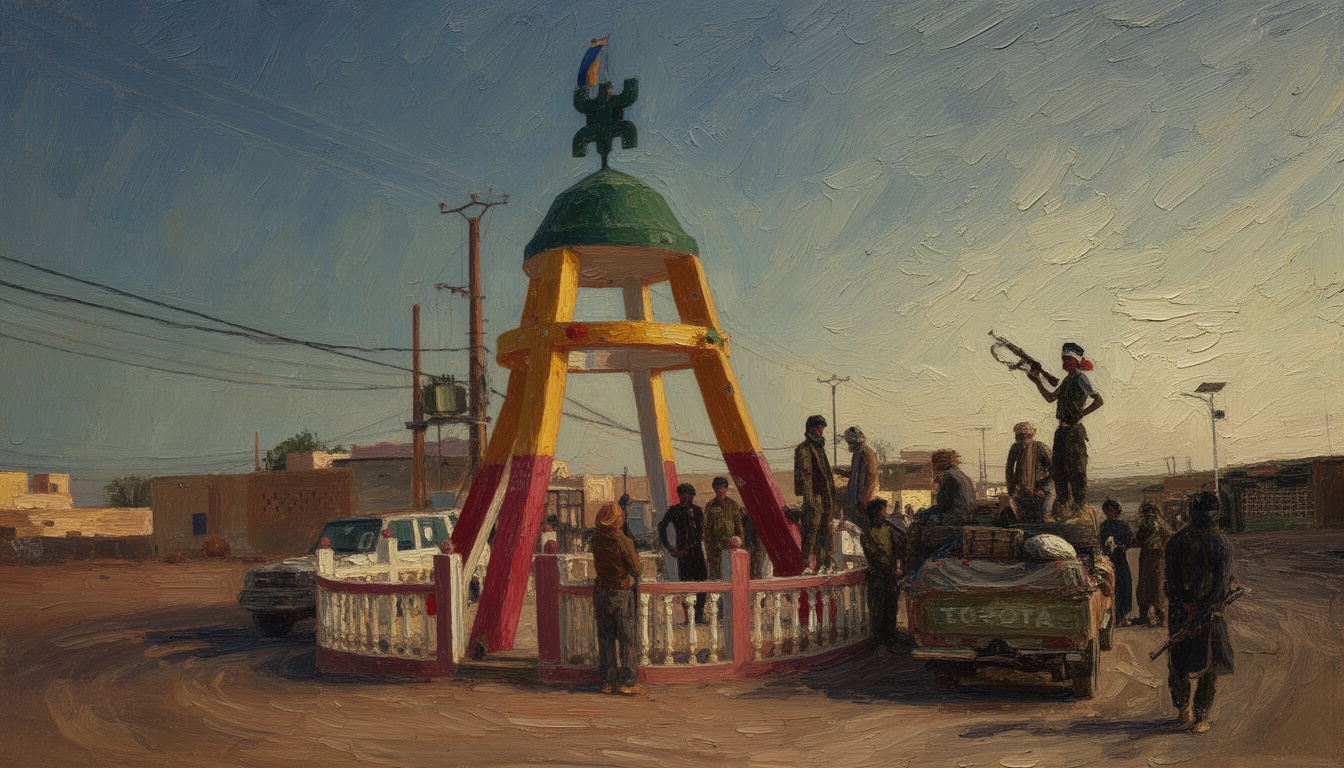
Insurgent Alliance Strikes Mali Junta, Exposes Limits of Russian Protection
A coordinated assault by separatists and jihadists fractures Mali’s security grip and tests the junta’s reliance on Russian security guarantees. The clashes signal a widening challenge to Bamako’s authority and complicate regional stability as Moscow’s role is put under scrutiny.
The core development is stark: Mali’s ruling junta faces a coordinated multi-front assault from a newly aligned insurgent coalition, comprising regional separatists and al Qaeda–linked jihadists. The attacks triggered two days of intense combat across multiple provinces, stretching security forces far beyond their typical urban counterterrorism footprint. The surprise element lies in the coalition’s ability to operate with a degree of coordination previously unseen in the Malian theater, signaling a possible shift in local insurgent dynamics and external tipping points in the country’s volatile security landscape.
Historical context matters. Mali’s junta seized power amid a protracted crisis that began after a 2012 rebellion and a French-led intervention that curtailed large-scale rebellion in the north. Since then, various militant groups have exploited porous borders, desert terrain, and weak state institutions to embed themselves in vast peripheral zones. The presence of foreign security support—most notably Russian security arrangements and advisory posts—has been central to Bamako’s attempted deterrence, even as it remains contested domestically and regionally. The current clashes thus test not just battlefield resilience but the political cohesion of a government dependent on external guarantees.
Strategically, the confrontation exposes several risk vectors. First, it underscores the fragility of Bamako’s security architecture in the face of a fragmented insurgent front that can exploit synchronized operations across provinces. Second, it complicates a broader regional threat calculus, where jihadist networks and separatist aims intersect with illicit economies and transnational trafficking routes. Third, it elevates Moscow’s security posture as a variable in Sahel balance of power, forcing international partners to reassess the durability and credibility of Russian support amid growing questions about strategic redundancy and cost-to-benefit in counterterrorism efforts. The outcome will influence how neighbors calibrate diplomacy, sanctions, and potential security guarantees going forward.
Operational details remain sketchy, but the assault clearly leveraged diverse combat capabilities. Reports indicate improvised explosive devices, guerrilla ambush techniques, and precision-fire engagements that indicate evolving tactics among the insurgent coalition. The Malian security apparatus reportedly deployed air and ground assets, including rapid reaction units and local auxiliaries, to contain the spread of fighting. Financial and logistical support networks appear to be more integrated than in past incidents, suggesting a maturing insurgent ecosystem that can sustain prolonged engagements and threaten multiple urban centers simultaneously. While casualty figures and specific weapon designs are not publicly confirmed, the pattern points to a calculated effort to fracture central government authority rather than simply harass it.
Looking ahead, the likely consequences are multi-faceted. For Bamako, the attacks could catalyze a security consolidation drive, including intensified counterterrorism sweeps, border controls, and a potential acceleration of external security commitments or re-negotiations with partners. Regionally, a stronger insurgent footprint could compel neighboring states to rebalance their humanitarian and logistical policies, affecting mining, trade, and transit routes across the Sahel. For external patrons, the episode seeks to test the rhetoric of protection versus the durability of boots-on-the-ground commitments, potentially reshaping how Moscow, Paris, and other capitals structure intelligence-sharing, sanctions, and military aid. Farther ahead, the crisis could either harden the junta’s grip as a stabilizing force in the short term or deepen governance vacuums that empower insurgent networks and exacerbate civilian suffering, complicating regional disarmament and reconciliation efforts.