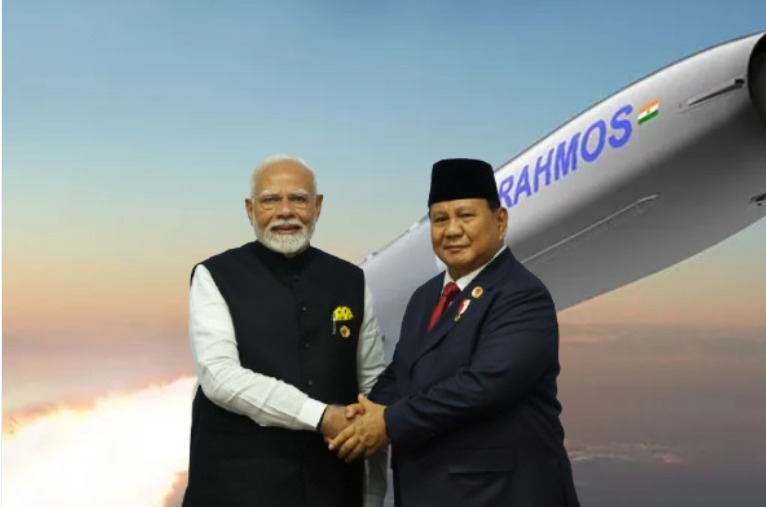
Indonesia Agrees to Acquire BrahMos Missile, Escalating Regional Arms Competition
Indonesia's pending acquisition of the BrahMos missile signals a dangerous arms race in Southeast Asia, following the Philippines. This development raises critical concerns over regional stability and shifting power dynamics.
Indonesia has confirmed its intent to acquire the BrahMos supersonic cruise missile, marking a significant escalation in military capabilities in Southeast Asia. This announcement comes shortly after the Philippines finalized a deal for the same missile system, highlighting a rapid arms buildup that could alter the security landscape of the region. The Indonesian Ministry of Defence (MoD) spokesperson stated on March 9 that negotiations have concluded, advancing Indonesia's offensive capabilities against emerging threats.
The BrahMos missile, developed jointly by India and Russia, boasts a remarkable speed of Mach 2.8 and a strike range of approximately 290 km, offering a strategic advantage in naval and ground-based applications. Indonesia's move comes after years of increasing tensions in the South China Sea and surrounding waters, where territorial disputes have heightened military posturing among nations. The Philippines' earlier procurement of the BrahMos missile indicates growing concerns over potential Chinese aggression, clearly signaling a regional arms escalation.
The acquisition of BrahMos missiles by both Indonesia and the Philippines signifies a pivotal shift in balance of power in Southeast Asia. With China asserting dominance in contested waters, neighboring countries are compelled to expand their military arsenals. The alarming speed and range of the BrahMos system will likely encourage other Southeast Asian nations to accelerate their own military purchases in response to perceived threats, potentially creating a regional arms race.
Key players in this emerging scenario include India, which seeks to bolster its military exports while countering Chinese influence in the region. Additionally, the Philippines is driven by urgency to establish a credible deterrent against China's extensive naval maneuvers. Meanwhile, Indonesia's motivations stem from a desire to protect its sovereignty and counterbalance China's growing assertiveness, making the acquisition of advanced missile systems an imperative.
The BrahMos missile is not only notable for its speed but also for its versatility—it can be launched from ground-based platforms, ships, and submarines. This adaptability enhances Indonesia's strategic deterrent capabilities, allowing it to threaten both surface vessels and land targets with precision. Furthermore, the financial commitment tied to these acquisitions, estimated in the hundreds of millions of dollars, will strain already limited defense budgets.
The implications of this arms acquisition are significant, as it can provoke heightened military exchanges and potential skirmishes in maritime zones. A shift towards offense-oriented capabilities might invite preemptive strikes, leading to a more volatile security environment. Furthermore, other countries like Vietnam and Malaysia may feel pressured to acquire similar advanced weapons systems, further exacerbating regional tensions.
Historically, the procurement of advanced missile technology has triggered similar arms races, as seen during the Cold War. The introduction of such capabilities transforms conflicts, with nations seeking superior technology to assert dominance. The ongoing developments in Southeast Asia echo past scenarios where countries have escalated their military preparedness in response to neighboring threats.
Moving forward, defense analysts should closely monitor additional acquisitions and military drills in the region. Significant military exercises, joint operations, or announcements regarding defense agreements will be key indicators of the escalating arms race. These developments may also prompt international actors, particularly the United States and regional powers like Australia and Japan, to recalibrate their security strategies in response to the evolving military calculus in Southeast Asia.