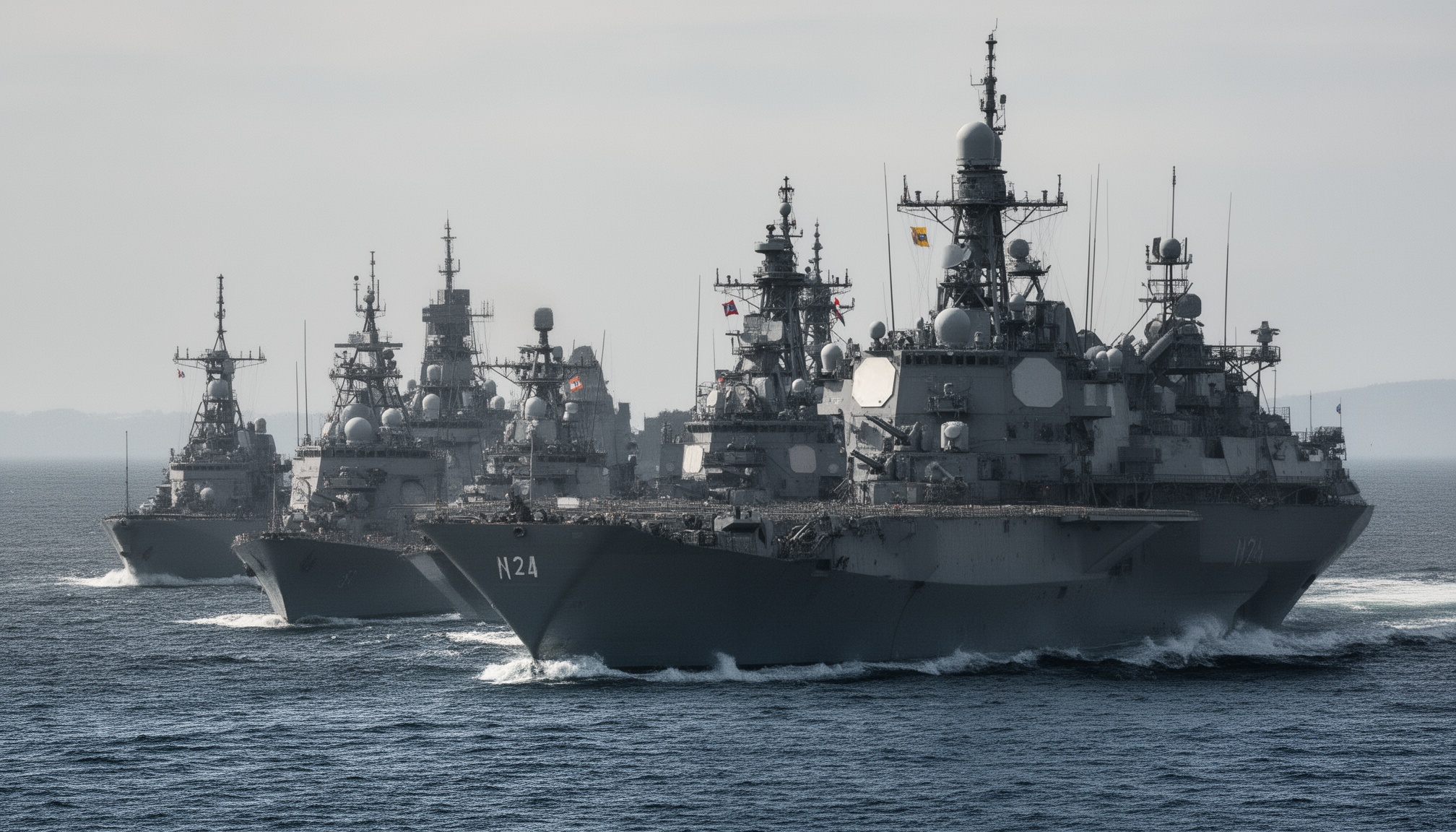
India-Russia Pact Triggers Troop and Warship Deployments
A sweeping pact allows India and Russia to station military personnel and warships on each other's territory during both peace and war. The agreement signals a deep, alliance-like entente that could shift regional power dynamics. Analysts will monitor how this affects regional security architectures and crisis management frameworks.
The core development is blunt: India and Russia have formalized a standing arrangement to deploy soldiers and warships on each other's soil in peacetime and during conflicts. The pact consolidates a long-simmering defense partnership into a tangible force posture that could complicate regional strategic calculations. It marks a notable evolution beyond joint exercises and logistics cooperation into permanent basing rights.
Background sections show this is a watershed move built on decades of defense collaboration. The two countries have shared defense procurement, technology transfer, and joint drills, but this agreement elevates the level of operational integration. The deal aligns with a broader pattern of Russia pivoting toward strategic partnerships with Asian states and India seeking diversified security guarantees. The historical context suggests a calculated balancing act amid shifting power projections in the Indo-Pacific and Eurasia.
Strategic significance centers on deterrence, crisis management, and regional power balance. By allowing reciprocal access, New Delhi and Moscow may complicate adversaries’ planning, offering both sides faster reinforcement options and combined naval and land-based response capabilities. The arrangement could affect maritime chokepoints, air corridors, and energy transit routes, potentially altering how third parties plan their own operations. Analysts will watch for signature changes in alliance psychology and command arrangements.
Technical and operational details are sparse in official disclosures. The pact emphasizes the deployment of personnel and warships, but specific force levels, basing locations, and operational command structures remain undisclosed. Budgetary allocations, maintenance commitments, and legal immunities for deployed forces are unresolved in public summaries. What is clear is the scale of commitment: a formal, long-term framework that absorbs both peacetime routines and wartime contingencies.
Likely consequences point to a firmer security flank for both nations, with potential ripple effects on neighboring powers and regional blocs. The agreement could prompt neighboring states to rebalance partnerships, increase surveillance, or accelerate indigenous defense production to compensate for perceived exposure. In the medium term, expect intensified diplomatic signaling, additional military drills, and more routine port visits and joint logistics operations.