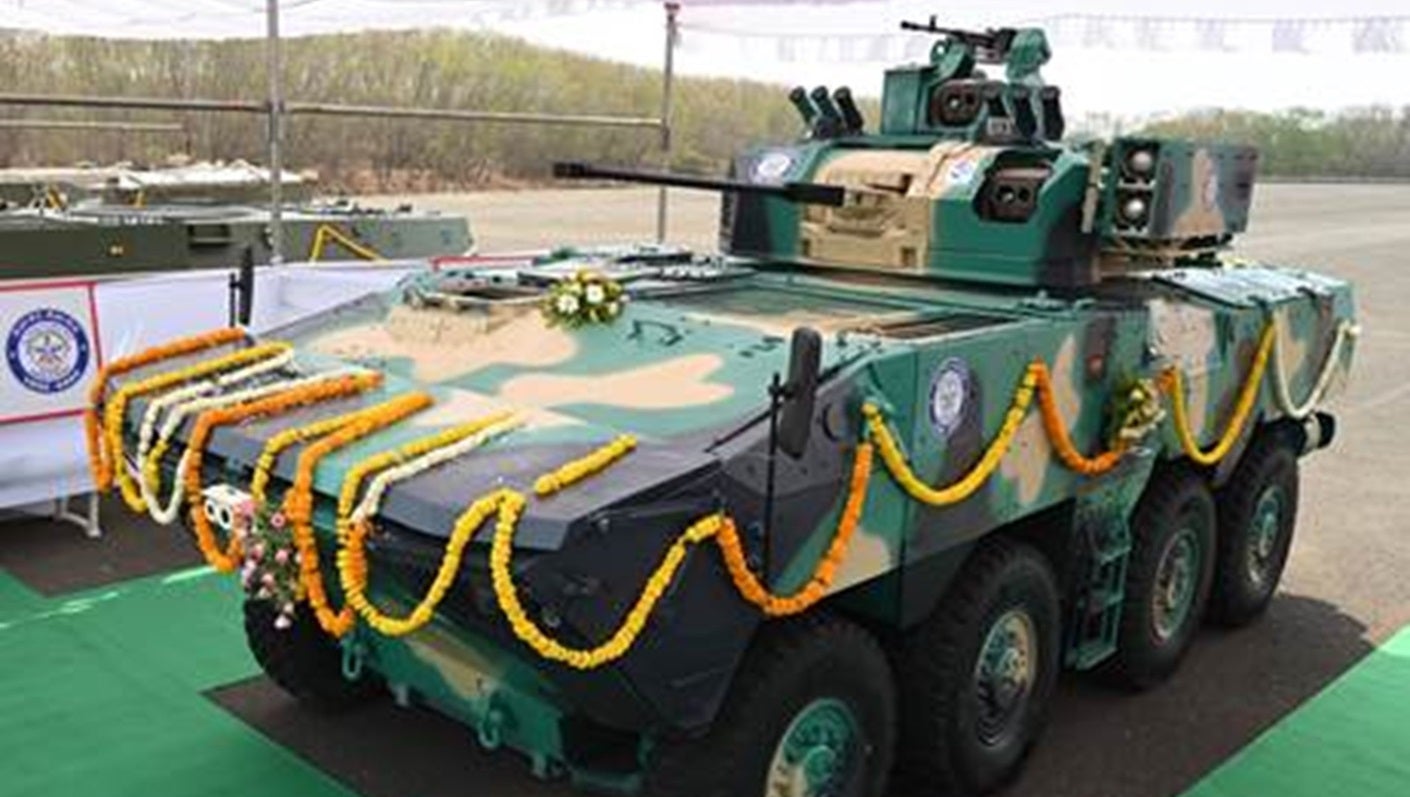
India Reveals Vikram VT21 Advanced Armoured Infantry Fighting Vehicle
India has unveiled the Vikram VT21, a new family of infantry fighting vehicles (IFVs) designed to enhance its mechanized combat capabilities.
India has showcased its latest development in armored warfare with the introduction of the Vikram VT21, an advanced family of Infantry Fighting Vehicles (IFVs). This new platform is expected to significantly boost the Indian Army’s mechanized capabilities on the battlefield, providing enhanced mobility, protection, and firepower. The Vikram VT21 symbolizes India's ongoing commitment to modernizing its military forces amidst evolving regional security challenges.
The Vikram VT21 is developed to meet the operational requirements of the Indian Army, featuring both tracked and wheeled variants. The design emphasizes versatility, allowing it to operate effectively in diverse terrains and combat scenarios. The IFV is equipped with advanced systems for situational awareness, enabling coordination with other military units in real-time. Such features are crucial as India navigates complex geopolitical situations in the region.
Strategically, the introduction of the Vikram VT21 positions India to enhance its deterrence capabilities against potential adversaries. By bolstering its mechanized infantry units, India aims to ensure rapid troop deployment and effective engagement in potential conflict zones. This development forms a part of India's broader defense strategy, which focuses on indigenization and self-reliance in military manufacturing, signaling a shift towards enhanced domestic production.
Operationally, the Vikram VT21 is expected to incorporate modern armament systems, including guided missiles and cannon-based systems, allowing it to engage both ground and aerial threats effectively. The armored protection of the vehicle is designed to withstand contemporary weaponry, crucial for soldier survivability during engagements. This aspect of the platform showcases India's intentions to match current global standards in armored warfare.
The unveiling of the Vikram VT21 is likely to have significant implications for the regional balance of power. As India continues its defense modernization efforts, neighboring countries may reassess their military postures in response. Furthermore, this development could trigger regional arms races or prompt increased military cooperation among nations concerned about balance and security in the South Asian theater. Analyzing the reception and integration of such platforms will be essential in understanding their impact on future conflicts in the region.