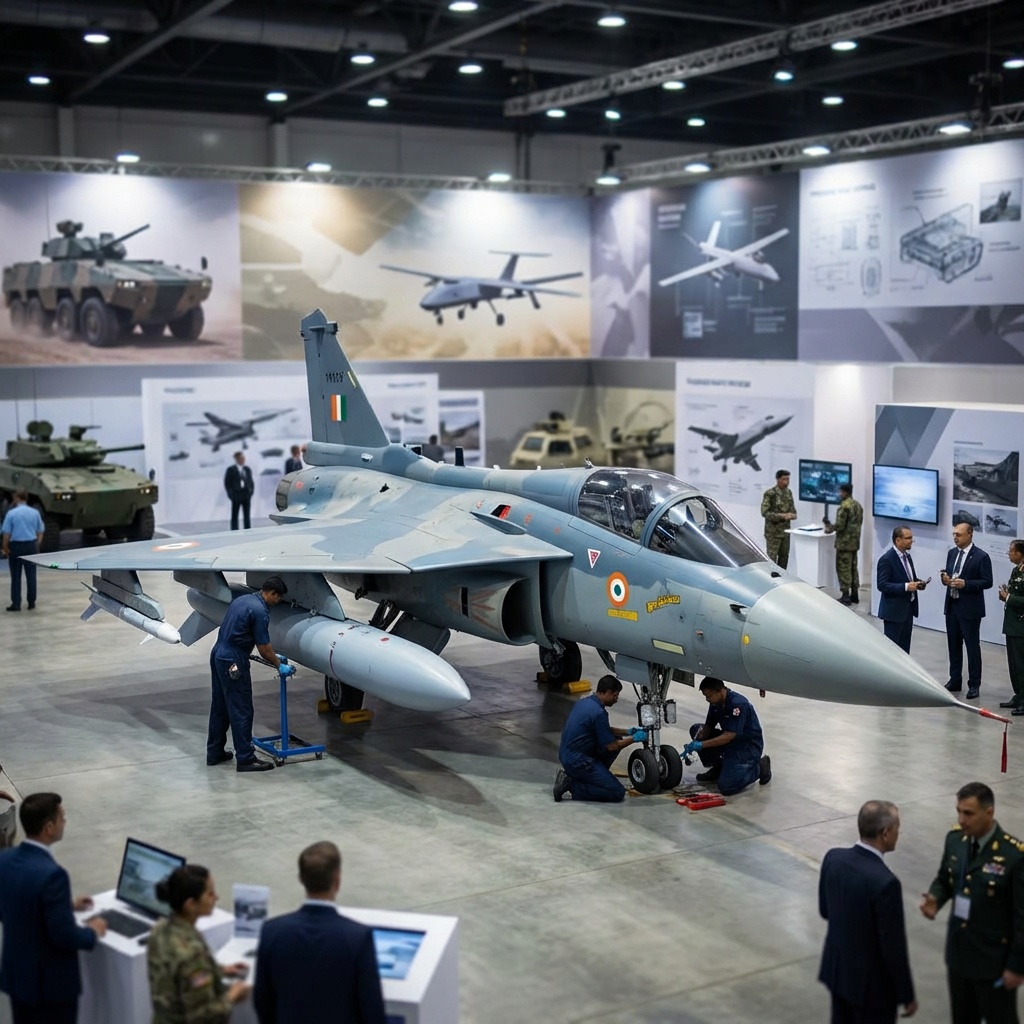
India Pursues Israeli AI-Enabled BVRAAM for Tejas Enhancement
India aims to secure procurement of the 'Sky Sting' BVRAAM from Israel, designed to enhance the capabilities of the Tejas fighter jet amidst regional threats. The missile boasts advanced features to counter China’s PL-15 and PL-17.
During Indian Prime Minister Narendra Modi's second state visit to Israel, discussions are intensifying regarding the procurement of the Israeli ‘Sky Sting’ Beyond-Visual-Range Air-to-Air Missile (BVRAAM). Although still in the development phase, the advanced capabilities of the Sky Sting are pivotal in strengthening India’s aerial deterrence against regional adversaries, particularly China and Pakistan, who are equipped with advanced missile systems such as the PL-15 and PL-17.
The Sky Sting missile is being developed with cutting-edge AI technology that enhances target acquisition and engagement capabilities. The precise specifications of the missile remain classified, but reports suggest an operational range that substantially exceeds current-generation AAMs, enabling it to effectively engage high-speed aerial threats at altitudes and distances previously unattainable. This next-generation missile is expected to integrate seamlessly with India's LCA Tejas fighter jet, significantly upgrading its combat effectiveness in Beyond Visual Range (BVR) scenarios.
Strategically, the acquisition of the Sky Sting BVRAAM aligns with India's broader defense posture of enhancing indigenous platforms to counter perceived threats from Chinese air capabilities. The integration of advanced munitions on the Tejas will not only improve the fighter's combat radius but also its operational versatility, giving the Indian Air Force (IAF) a vital edge in potential air engagements.
The manufacturer of this missile system, Rafael Advanced Defense Systems, has a track record of delivering state-of-the-art defense technologies. By engaging with such established defense entities, India seeks to bolster its defense industrial base through technology transfer and co-development agreements, an initiative that can strengthen strategic alliances while boosting local defense manufacturing.
In practical terms, the implementation of the Sky Sting could enhance operational readiness and response times for the IAF. With the growing complexity of aerial warfare and the increasing capabilities of adversaries, India's focus on acquiring such advanced missile technology will not only fortify its defense systems but also send a clear signal regarding its commitment to maintaining air superiority in a competitive regional landscape.