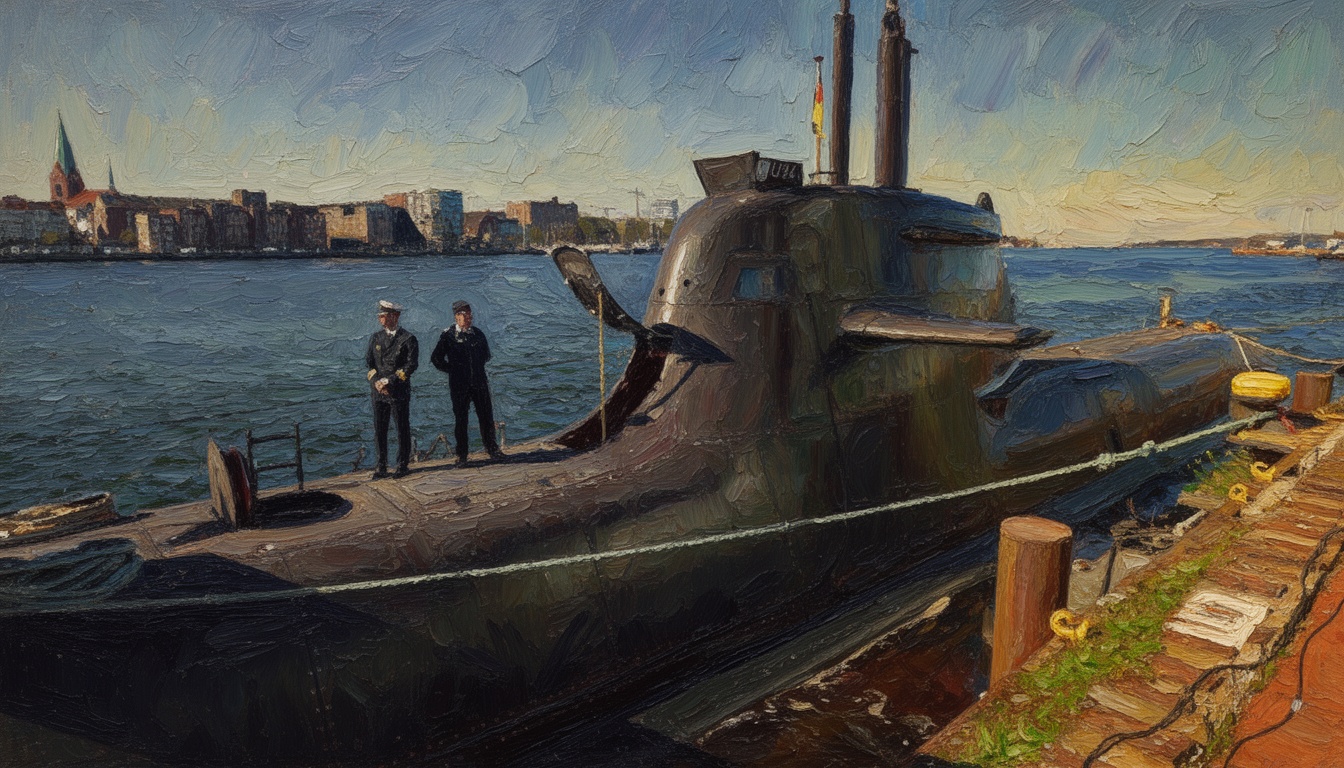
India-Germany defence road map reshapes EU-INDO PACIFIC security dynamics
A Defence Industrial Cooperation Road Map signed in Berlin tightens India-Germany collaboration on development, production, and niche technologies. The accord supports India’s naval modernisation, particularly its undersea fleet, while expanding Europe’s security footprint in the Indo-Pacific. Analysts view the pact as a lever for broader EU defense engagement with Asia.
The Defence Industrial Cooperation Road Map between India and Germany was signed in Berlin, binding New Delhi and Berlin to deepen collaboration across development, production, and niche technologies. The agreement was reached during a formal meeting between Indian Defence Minister Rajnath Singh and German Defence Minister Boris Pistorius, signaling a high-level commitment to industrial and technological alignment. The document frames a joint approach to accelerate capability building, including critical supply chains and advanced maritime systems. The initiative is designed to translate diplomatic cordiality into concrete defense-industrial outcomes that can affect regional balance of power.
Background context situates this road map within India’s long-running push to modernise its undersea fleet, a priority that encompasses indigenously developed platforms and foreign partnerships. New Delhi has sought to reduce dependency on external suppliers while expanding domestic naval yards and offset-friendly collaborations. In parallel, Europe, and Germany in particular, has been seeking to broaden its strategic role in the Indo-Pacific, aiming to diversify partners and markets for its defense industrial base. The Berlin accord thus links India’s naval ascent to Europe’s interest in a more active presence across the maritime frontier.
Strategically, the pact signals a structural shift in how European powers engage the Indo-Pacific in security terms. It creates a framework for diversified sourcing, joint development, and potential co-production, reducing single-source risk for both sides. For India, it offers access to German precision technologies and industrial practices that could accelerate submarine and sensor programs. For Europe, the agreement presents a mechanism to anchor its dissuasion and deterrence capabilities nearer to critical sea lanes and allies.
Technical and operational details emphasize collaboration in development, production, and niche technologies rather than open-ended aid. The road map likely covers naval propulsion, sonar and acoustic systems, submarine safety and life-support, and potentially cyber-relevant defense tech. It may also include joint R&D facilities, shared testing ranges, and potential co-production in Indian shipyards. Budgetary specifics are not disclosed, but the framework points to long-term investment and capability-based contracts with measurable delivery timelines.
Likely consequences point to accelerated naval modernisation for India and a more robust European industrial footprint in the Indo-Pacific mix. The partnership could enable faster deployment of advanced undersea platforms and associated support ecosystems, including maintenance, training, and logistics. However, it may provoke recalibrations by regional rivals and invite periodic political scrutiny over technology transfer and offsets. Looking ahead, the road map could become a template for broader EU-India defense cooperation that reshapes supply chains, deterrence postures, and strategic alignments across the Indian Ocean and adjacent theaters.