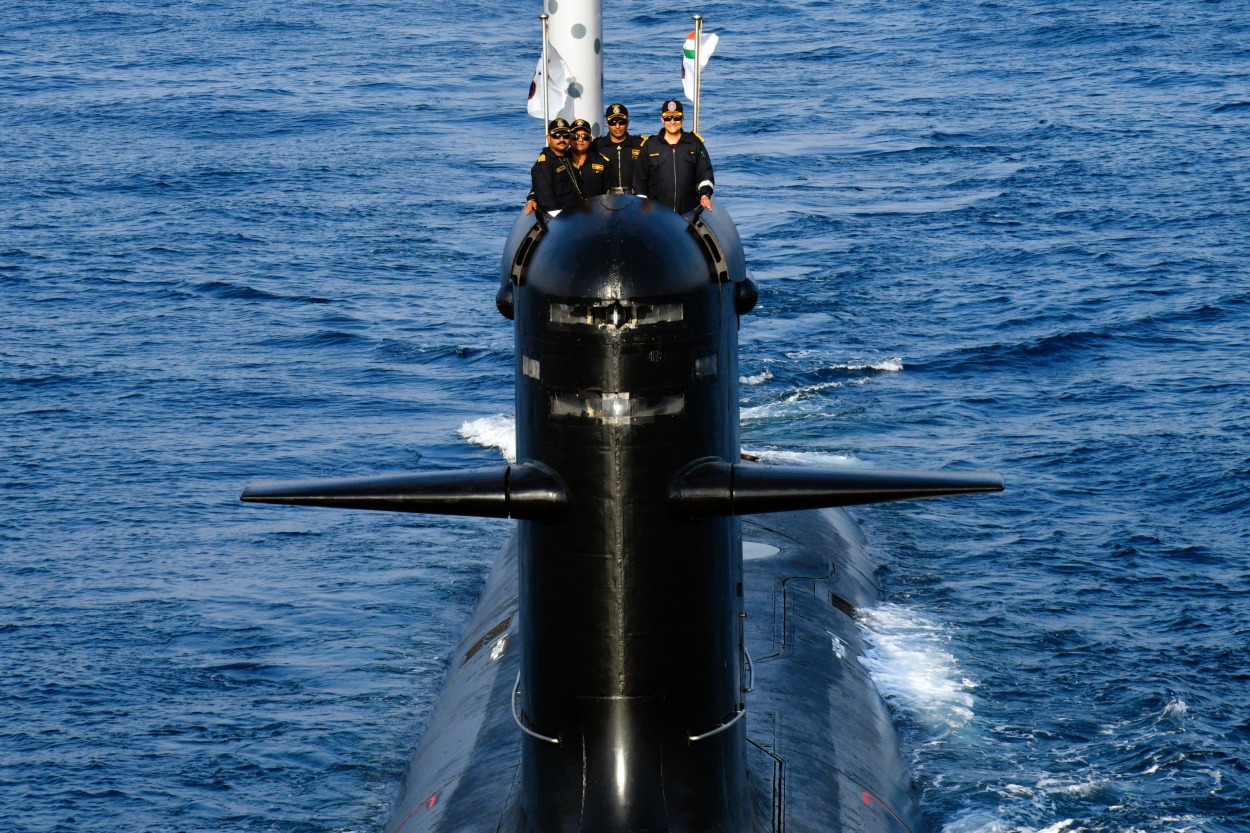
India Accelerates Naval Capabilities with AIP Upgrade for INS Khanderi
India’s DRDO aims to enhance submarine stealth and endurance amid regional maritime tensions. The AIP upgrade on INS Khanderi underlines a significant leap in indigenous military technology.
India's Defence Research and Development Organization (DRDO) is set to enhance the operational capabilities of the INS Khanderi, the Indian Navy's second Kalvari-class submarine, with a new Air Independent Propulsion (AIP) system. This upgrade will be integrated during a scheduled refit in 2026-27, significantly bolstering the submarine's stealth, endurance, and combat effectiveness. The operational readiness of the INS Khanderi is critical as it directly impacts India's strategic deterrence posture in the Indian Ocean Region (IOR).
The Kalvari-class submarines, developed under Project-75 in collaboration with France's Naval Group, have been a cornerstone of India's maritime defense strategy since the commissioning of INS Khanderi on September 28, 2019. The integration of AIP technology, enabling submarines to operate without surfacing for extended periods, marks a key milestone in India's ambition to achieve self-reliance in defense capabilities. Over the last decade, India has ramped up efforts to develop indigenous technologies for its naval forces, spurred by regional threats and the need for better underwater warfare capabilities.
This development is significant as it reflects India's intention to counterbalance China's expanding naval influence, particularly in the Indian Ocean. Enhanced indigenous naval capabilities will not only improve India's deterrence quotient but also provide greater flexibility in responding to potential incursions. Moreover, the AIP upgrade is expected to give the INS Khanderi a strategic edge in stealth operations, complicating enemy tracking and engagement efforts.
Key actors in this scenario include the Indian Navy, which prioritizes indigenous developments to reduce dependency on foreign technologies, and the DRDO, which is eager to showcase its engineering prowess. Both aim to solidify India's position as a formidable maritime power in the region amid escalating geopolitical tensions, including China's aggressive maritime strategies and Pakistan's ongoing naval enhancements.
The AIP system will equip INS Khanderi with the ability to remain submerged for weeks, significantly enhancing operational stealth. This technology represents a multi-million dollar investment in India's future naval capabilities and will likely incorporate advanced lithium-ion battery technology, further extending submerged endurance. The Indian Navy's long-term goal is to eventually roll out a fleet of AIP-equipped submarines as part of an overarching strategy to modernize the fleet over the next decade.
The consequences of this upgrade could lead to an arms race in the region, as rival powers are likely to respond with their advancements in submarine technology. The Indian Navy’s modernization efforts may provoke further strategic adjustments from both China and Pakistan. Increased underwater capabilities could embolden India to conduct more assertive maritime operations while simultaneously raising the stakes in maritime disputes.
Historically, naval capabilities have often dictated regional power dynamics, exemplified by the Cold War naval arms race. Previous missile submarines developed under the Indian strategic program have ushered in new levels of deterrence. The introduction of AIP technology could parallel these past advancements, ushering in a new phase of underwater warfare in Southern Asia.
Looking ahead, one key indicator to monitor is the progress of the AIP integration on INS Khanderi. Observers should also watch for the responses from both China and Pakistan, particularly regarding upgrades to their submarine fleets, which could signal an impending arms build-up in the region. In addition, any moves by the Indian Navy to extend operational patrols deeper into contested areas would be a critical sign of escalating strategic intent.