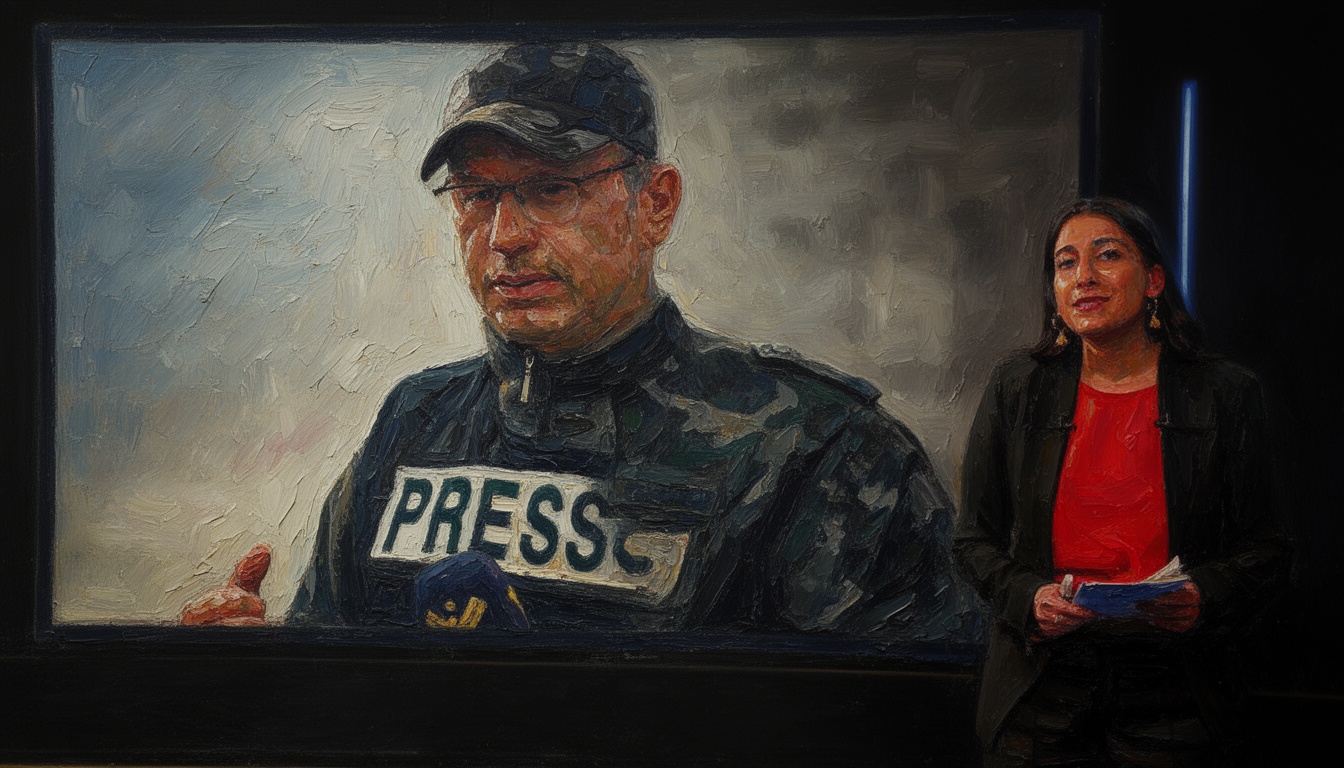
IDF accused of posting AI photo to smear Lebanese journalist
State actors clash over disinformation and enforcement of wartime narratives. An Israeli airstrike killed a Lebanese journalist in March, with the IDF later sharing an AI-generated image portraying him as a Hezbollah terrorist. The Foreign Press Association denounces the tactic as an attempt to delegitimize independent reporting amid ongoing Southern Lebanon tensions.
The Israeli Defense Forces have acknowledged a targeted airstrike in southern Lebanon that killed Ali Shoeib, a Lebanese journalist. The incident has since become a political and information warfare flashpoint. An allied claim of responsibility accompanied the strike, while subsequent communications raised questions about how the incident was portrayed to the public. The Foreign Press Association has adamantly accused the IDF of discrediting a deceased journalist by circulating an AI-generated image that labels him a Hezbollah operative. The accusation emphasizes concerns about the manipulation of imagery to demonize journalists who cover conflict zones. The episode marks another instance where wartime reporting intersects with digital forensics and propaganda.
Context matters: Shoeib's death occurred in a line where long-standing hostility between Israel and various Lebanese actors intersects with broader regional turbulence. The IDF’s public narrative framed the strike as a precision operation against a target tied to militant activity, while observers note the difficulty of separating combatant targeting from civilian journalism in dense border areas. The incident also tests how media organizations, press freedom advocates, and international bodies respond to alleged misrepresentation during active hostilities. The misalignment between the strike's rationale and later online imagery underscores a broader trend in modern warfare: the weaponization of information as a parallel battlefield. Analysts warn that such tactics can erode trust in frontline reporting and complicate humanitarian access and verification efforts.
Strategic significance centers on the joint pressure points of deterrence, information dominance, and the protection of reporters in conflict zones. If proven, the use of AI imagery to cast journalists as combatants could chill coverage in southern Lebanon and adjacent border territories, impeding independent verification of casualties and battlefield conditions. The incident sits at the intersection of state behavior, non-state proxies, and the evolving norms around digital manipulation in warfare. Regional powers and allied media watchdogs will watch closely how this case shapes future rules of engagement for information operations in contested terrains.
Technical and operational details reveal a two-track dynamic: a lethal strike attribution and a contemporaneous digital artifact that recontextualizes the victim posthumously. The strike is described by official sources as a targeted operation in southern Lebanon. The AI-generated image overlay placed a Hezbollah uniform over Shoeib’s press vest, a deliberate visual insinuation designed to blur lines between journalism and militant affiliation. No independent verification of the image’s provenance is provided in the public briefings, raising questions about attribution and the limits of watermarking and provenance checks in rapid-response communications. The broader defense budget and force posture in the region are not disclosed in the current briefing, but the exchange signals continuity in the region’s high-stakes information environment.
Looking ahead, the dispute over Shoeib’s death and the accompanying imagery will likely drive further scrutiny of how states manage press safety, digital propaganda, and accountability. Global journalism groups may push for clear, verifiable standards around the posting of image assets in the wake of lethal operations. If the dispute intensifies, expect renewed calls for independent investigations and for established humanitarian and human rights mechanisms to weigh in on media integrity and the protection of journalists operating in conflict zones. The episode could influence future media access negotiations and the behavior of armed actors during information operations, affecting both risk calculations for reporters on the ground and the credibility of official narratives fed to international audiences.