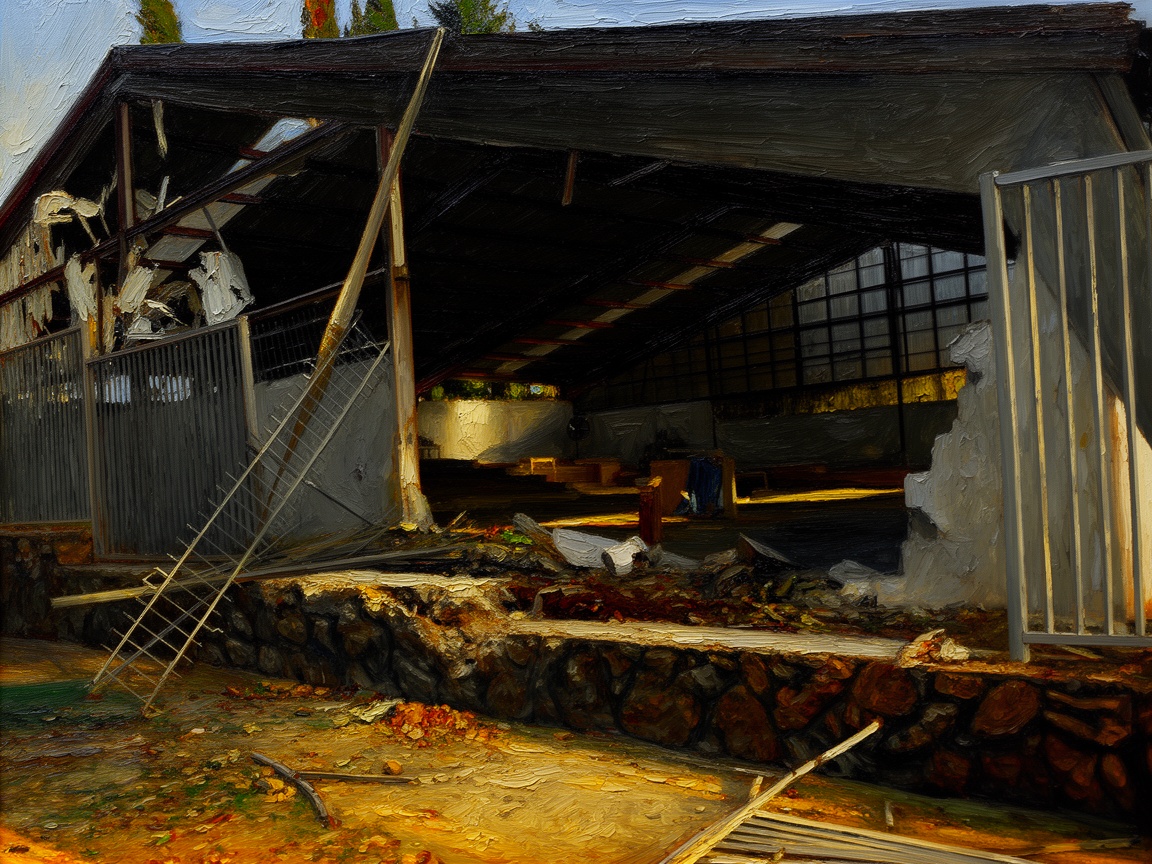
Hezbollah rocket barrage damages ancient Israeli church
Hezbollah launched a rocket salvo into northern Israel, damaging a 1,500-year-old Byzantine church in Nahariya. The strike underscores increasing regional tensions and risks to civilian heritage sites. Officials warn of potential escalation and broader spillover effects across the Levant.
A rocket barrage from Hezbollah struck northern Israel, striking Nahariya and wounding a fast-moving security debate about escalation. The attack targeted civilian infrastructure and cultural heritage, with a 1,500-year-old Byzantine church sustaining damage. Israeli emergency services responded immediately, and surrounding areas were placed on heightened alert as sirens sounded. There are no confirmed details on casualties at this time, but the incident has already drawn sharp political condemnations from Jerusalem.
The incident situates itself within a broader, long-running ceiling of tensions between Hizballah and Israel along the Lebanon border. In the past, such cross-border fire has translated into episodic clashes and limited retaliatory strikes. Security analysts warn that an attack on cultural heritage sites can serve as a political signal, raising the stakes for deterrence calculations on both sides. Regional actors are closely watching how the incident may influence the already fragile balance around Gaza, Syria, and Lebanon.
Strategically, the strike tests Israel’s civil-defense preparedness and the readiness of the Israel Defense Forces to respond to multi-front pressures. The damage to a Byzantine church in Nahariya also feeds into the broader battle over legitimacy and narrative in the information space surrounding the conflict. If Hezbollah claims the attack as a message, it could prompt a response aimed at degrading Hizballah’s deterrent calculus and pressuring regional partners to recalibrate support dynamics.
Technical details remain scarce. The type and number of rockets used have not been officially disclosed, nor has a definitive assessment of the church’s structural damage or the status of nearby preservation work. The event underscores the vulnerability of cultural heritage sites in conflict zones and the potential for civilian faith spaces to become focal points in asymmetric warfare. Analysts expect continued military- and political-level signaling in the hours ahead, with potential follow-on strikes or warnings depending on perceived provocations.