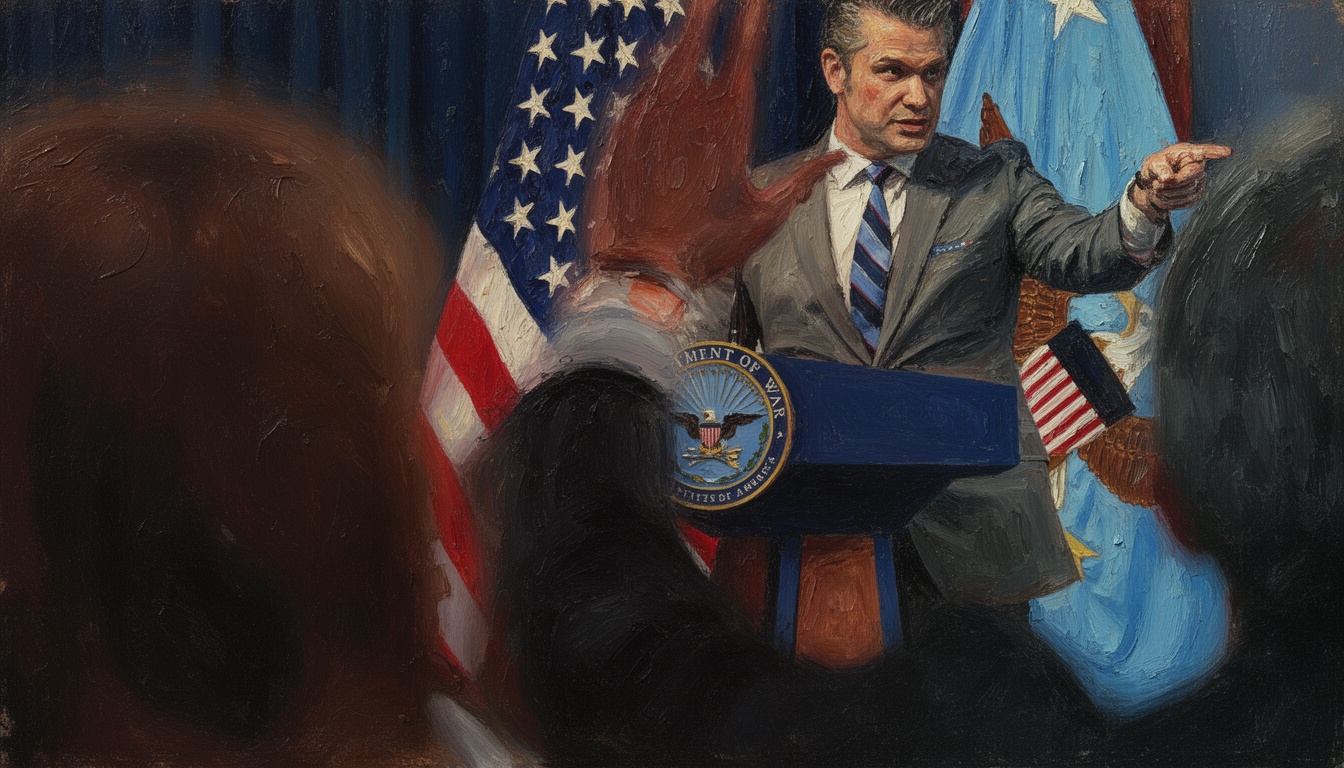
Hegseth: US blockade on Iran is expanding to a global scale
US Defense Secretary Pete Hegseth asserts that Washington’s blockade on Iran is expanding worldwide, framing it as a decisive step in pressuring Tehran. He claims the initiative requires permission from the US Navy for any movement in Hormuz Strait and beyond. The remarks come as talks with Iran surface as a potential path to a new deal, according to multiple sources. The rhetoric signals a sharpened US stance with broad maritime reach and international scrutiny.
General-issue notice: The Pentagon chief asserts that the US blockade on Iran is 'growing and going global,' framing maritime pressure as a universal prerequisite. He claims a global reach that allows the United States Navy to grant or deny passage through critical chokepoints, elevating the risk of accidental or deliberate escalations. The statement, delivered to reporters, underscores a posture intended to deter Tehran while signaling external partners to align with Washington's terms. The broader objective appears to be coercive diplomacy wrapped in maritime supremacy.
Background framing centers on the concept of a blockade as a tool of economic and political coercion. Tehran is presented as the target of intensified measures designed to constrain its strategic options, including its nuclear and regional activities. The possibility of a resumed dialogue is mentioned, with Pakistan cited as a potential venue for future talks. Three Pakistani sources have suggested that talks could restart soon, indicating a potential pivot toward diplomatic management after mounting pressure.
Strategic significance centers on how a globalized blockade would alter the balance of power in the Gulf and beyond. If credible, the policy would extend US influence across sea lanes that feed Asia, Europe, and the Middle East. Allies and adversaries would reassess risk, insurance costs, and routing choices, with potential ripple effects on global energy markets and shipping prices. The development tests Tehran’s willingness to resist or accommodate external demands within a tense, multipolar security environment.
Operational details remain high-level. The claim that no vessel can pass the Strait of Hormuz without US Navy permission implies an expansive police-and-control framework across key maritime corridors. There is no explicit attribution of new hardware or units, but the rhetoric signals elevated readiness and a possible increase in naval presence or intelligence-sharing with partners. Observers would watch for concrete deployments, port access arrangements, and legal justifications to gauge real-world effect.
Forward assessment points to an intensified escalation cycle with uncertain outcomes. If the blockade solidifies into a global logistical constraint, maritime insurance, shipping lanes, and energy flows could face sustained friction. Tehran’s calculus will hinge on whether the US is prepared to tolerate broad economic disruption in exchange for strategic concessions. The risk of miscalculation rises as sector-specific economies respond to tightened sanctions and heightened near-term military risk.