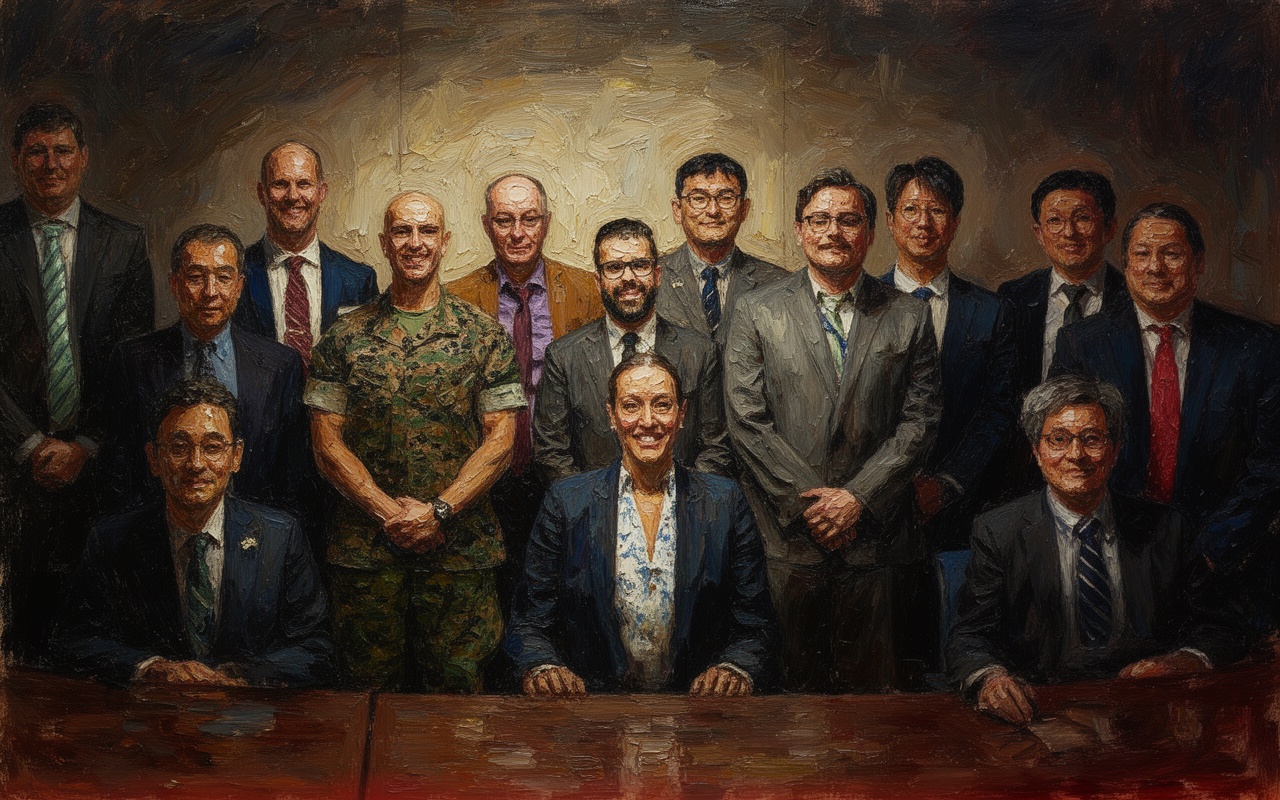
HD HHI Becomes First Korean Firm to Win ONR Research Project
South Korea’s HD Hyundai Heavy Industries secures a groundbreaking Office of Naval Research contract, marking the first Korean company to win an ONR research project. The award signals deeper U.S.-Korea defense-industrial collaboration and potential joint development avenues for naval technology.
HD Hyundai Heavy Industries has secured a formal contract with the United States Office of Naval Research, becoming the first Korean firm to win a defined ONR research project. The agreement follows a signing ceremony and reflects accelerated collaboration between Seoul’s shipbuilding sector and Washington’s naval research ecosystem. The development indicates a strategic shift toward broader, more formalized U.S.-Korean cooperation on next-generation naval capabilities.
Historically, ONR contracts have driven critical advances in ship design, sensors, and propulsion, partnering with global defense contractors and academic institutions. The achievement by HD HHI positions the company within a selective group of international suppliers capable of contributing to U.S. Navy science and technology programs. It also underscores Korea’s rising role in defense industrial capacity and its alignment with regional security dynamics in the Indo-Pacific.
Strategically, the award expands competition for advanced naval technologies, potentially influencing future shipbuilding standards and interoperability with U.S. systems. It could accelerate joint research cycles, testing, and deployment timelines for cross-border platforms. The move also reinforces deterrence and resilience posture in the region by integrating Korean industrial heft with American doctrinal priorities.
Technical and operational specifics remain to be disclosed, but ONR programs typically encompass propulsion efficiency, hull form innovations, sensor fusion, and unmanned or autonomous surface/underwater platforms. HD HHI’s capabilities in large-scale shipbuilding, integration of complex systems, and supply chain readiness will be key to delivering competitive proposals. Budget allocations, milestones, and performance metrics will likely mirror ONR’s structured, milestone-driven framework.
Looking ahead, this collaboration could catalyze further industrial partnerships, co-development opportunities, and export potential for dual-use naval technologies. If timelines hold, it may influence future naval procurement cycles and spur allied partners to seek similar engagements. The strategic signal is clear: Washington and Seoul are expanding joint R&D to sustain technological edge in high-end maritime warfare and strategic competition.