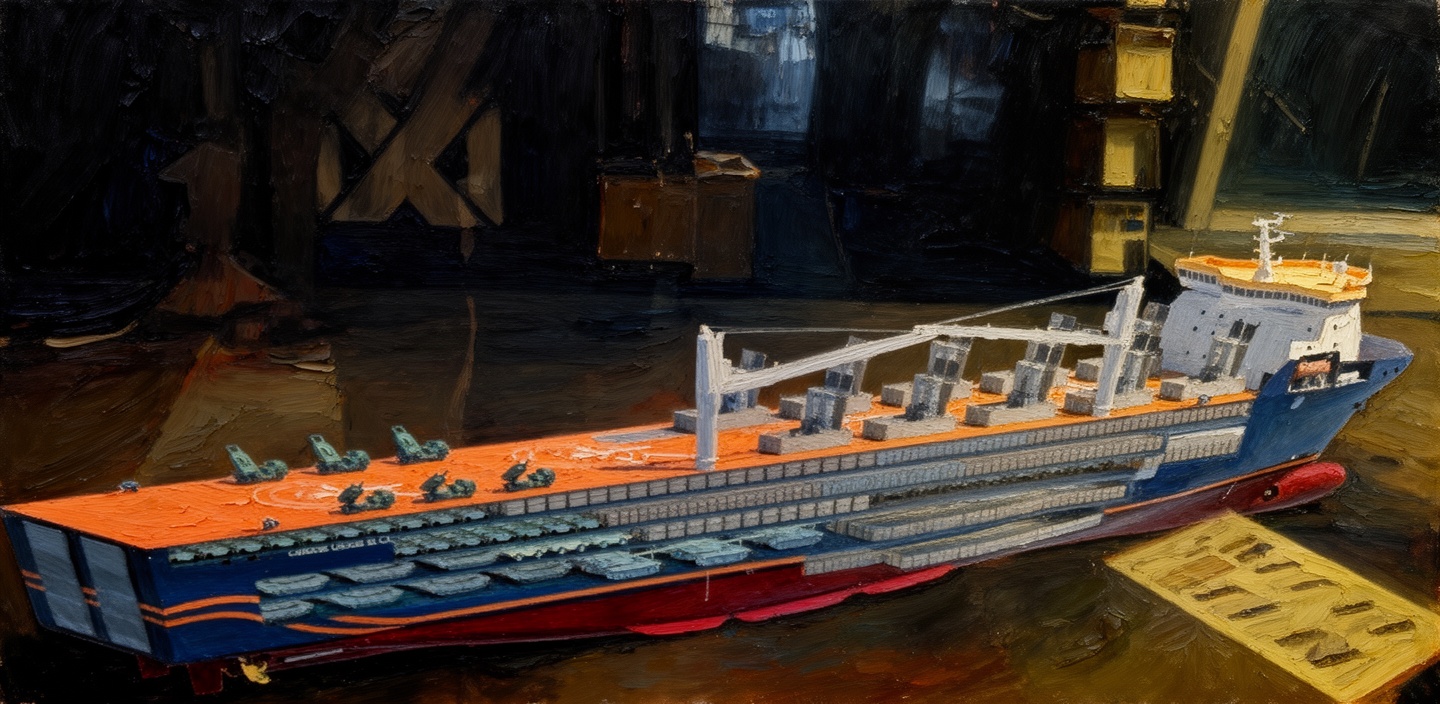
Hanwha Ocean Unveils Dual-Use Vessel for Drone and Strike Roles
Hanwha Ocean and Leidos Gibbs & Cox plan a high-capacity ship capable of carrying roughly half a brigade and performing drone mothership or arsenal ship duties. The project signals Korea's push to expand U.S. operations and broaden dual-use naval tech. This could alter future force projection and unmanned weapons integration.
A dual-use vessel concept is in the spotlight as Hanwha Ocean, in collaboration with Leidos Gibbs & Cox, advances a high-capacity platform designed to support drone operations and strike missions. The vessel is described as capable of carrying up to half a brigade combat team, with roles centered on drone mothership duties or serving as an arsenal ship. The initiative aligns with Hanwha’s strategy to broaden its footprint in American defense activities amid ongoing industrial scaling.
Background context shows a growing emphasis on modular, rapidly reconfigurable ships to host unmanned systems. The design reflects broader naval trends toward higher payloads, increased autonomy, and flexible mission packages. The project follows Hanwha’s stated aim of expanding U.S. operations, signaling deeper ties with American defense ecosystems and suppliers. While specifics on timelines remain sparse, the concept underscores a shift toward integrated manned-unmanned naval power.
Strategic significance centers on the potential to extend naval reach and preserve deterrence in multi-domain competition. A vessel capable of carrying a brigade-level force for drone operations could alter littoral and open-ocean balance by enabling persistent, distributed capabilities. The dual-use framing explicitly ties to long-range precision strike envelopes and sea-denial or sea-denial-adjacent ambitions, raising questions about alliance interoperability and rules of engagement in contested waters.
Technical and operational details emphasize the vessel’s intended payload capacity and mission flexibility. While exact displacement, propulsion, and drone types aren’t disclosed, the architecture is designed to host drone motherships and act as an arsenal ship, implying integrated logistics, data links, and cyber-physical command nodes. The collaboration with Leidos Gibbs & Cox suggests a focus on complex systems integration, including avionics, autonomy, and mission-management software. Budget and procurement milestones remain undecided, pending defense program approvals and partner engagements.
Forward assessment points to intensified competition in next-generation naval platforms and unmanned systems networks. If realized, the ship would enable large-scale drone swarms, extended maritime ISR, and heavier sustainment for strike campaigns at greater standoffs. Adversaries will monitor how quickly Hanwha and allies move from concept to demonstrator, as early demonstrations could redefine carrier-class support for unmanned warfare and regional power projection.