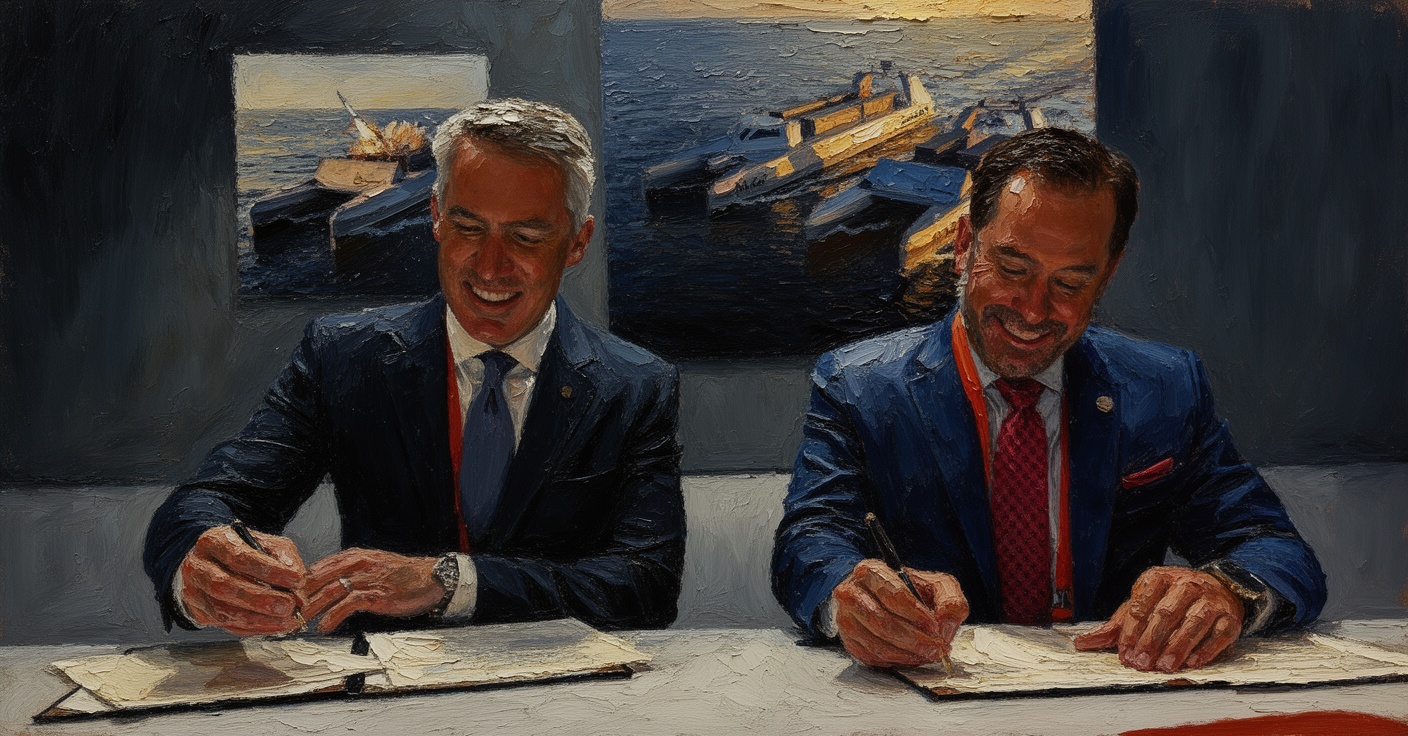
Hanwha and Magnet Defense Formalize MUSV Strategic Partnership
Hanwha Defense USA and Magnet Defense formalize a strategic MUSV partnership to develop 38-meter autonomous surface vessels. The deal signals a push toward cost-effective, high-endurance unmanned ships for potential U.S. military use. The alliance encompasses multiple projects and rapid prototype pathways, highlighting growing naval AI and autonomy competition.
A formal MUSV partnership has been announced between Hanwha Defense USA (HDUSA) and Magnet Defense, a Miami-based autonomous maritime company. The collaboration centers on the design, production, and integration of medium unmanned surface vessels (MUSVs) aimed at supporting U.S. military operations. Initial scope includes developing 38-meter MUSVs that emphasize advanced capability and cost efficiency, with multiple prospective projects under consideration.
Background context shows a broad industry shift toward autonomous naval platforms as undersea and air threats evolve. The push reflects a broader deterrence strategy that leverages unmanned systems to supplement manned fleets, reduce risk to sailors, and enable scalable force projection in contested waters. The HDUSA-Magnet Defense partnership aligns with ongoing U.S. and allied investments in autonomy, modular payloads, and open-architecture control systems.
Strategic significance centers on creating a domestic MUSV supply chain capable of rapid adaptation to evolving missions, including ISR, mine countermeasures, surface warfare, and fleet protection. By combining Hanwha's defense manufacturing footprint with Magnet Defense's autonomous software and integration capabilities, the alliance could accelerate fielding timelines and foster cross-domain interoperability. The arrangement may influence regional naval architectures, particularly in the Indo-Pacific and Atlantic theaters, where unmanned platforms are increasingly prioritized.
Technical and operational details indicate a focus on 38-meter hulls with modular payload bays, waterjet propulsion, and enhanced sensor suites. The program contemplates incremental demos, sea trials, and potential production contracts, subject to funding and test outcomes. If successful, the MUSVs could join existing unmanned programs as force multipliers, enabling distributed lethality while preserving crewed assets for high-risk missions.
Likely consequences include a faster cadence for unmanned maritime capability development, greater industrial collaboration, and heightened competition among maritime AI suppliers. Analysts will watch for procurement milestones, inter-service testing, and export-controls considerations as the project scales. The collaboration could shape future alliance signaling, deterrence postures, and industrial base resilience in a high-threat environment.