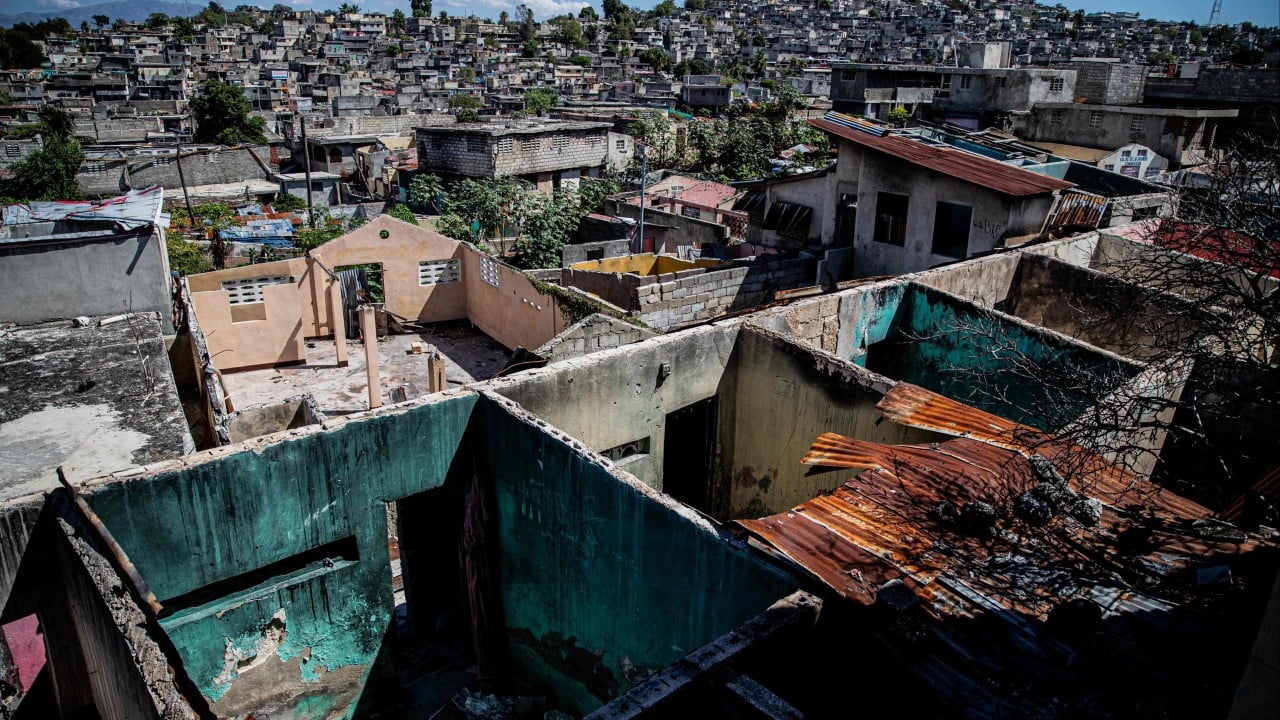
Haitian Security Forces’ Drone Strikes Kill 1,200, Civilians Among Victims
Haitian drone warfare escalates, exposing dire human rights violations during anti-gang campaigns. Civilian casualties rise sharply amid intensified confrontations in Port-au-Prince.
Haitian security forces have conducted explosive drone strikes that have resulted in over 1,200 deaths, with alarming casualty figures including at least 43 adult civilians and 17 children, according to Human Rights Watch. The operations, dramatically ramped up in recent months, reveal a severe escalation in the government’s war against gang violence, reflecting a state under siege and desperate to reclaim control.
The surge in drone strikes can be traced back to the escalating gang dominance in Haiti, particularly within the capital, Port-au-Prince. Following the assassination of President Jovenel Moïse in July 2021, violence and lawlessness rapidly intensified, leading to an unprecedented situation where gangs effectively ruled multiple neighborhoods. With limited state control and public trust eroded, security forces resorted to drone technology to combat the pervasive threat, partnering with private military contractor Vectus Global.
This trend is significant as it deepens the humanitarian crisis in Haiti and raises critical concerns over state-sponsored violence against its own populace. The extensive use of drones in densely populated areas not only demonstrates a worrying tactic that disregards civilian lives but also reflects the government's inability to address the underlying issues of poverty and instability that fuel gang activities. It sets a dangerous precedent for the use of military technology in conflict zones, especially in urban environments.
Key players in this escalating conflict include the Haitian government under Prime Minister Ariel Henry and Vectus Global, which provides the drone technology and expertise. The government’s motivations are twofold: reclaiming control over the country and appearing strong amidst increasing local and international pressure to restore peace. Vectus Global's involvement represents the intersection of private military services and state authority, complicating the narrative around foreign intervention and human rights.
Operationally, the drones utilized are quadcopters equipped with explosives, specifically designed for precision strikes against identified gang positions. While specific models and operational statistics are scarce, the deployment signifies a worrying growth in the privatization of warfare where high-tech solutions are employed in impoverished urban landscapes. Such tactics can lead to profound implications for urban warfare doctrine as they evolve.
The likely consequences include increased local and international backlash against the Haitian government due to escalating civilian casualties, which could lead to sanctions or increased scrutiny from human rights organizations. Furthermore, the tactics employed may incite even greater violence from gangs retaliating against the state, perpetuating a cycle of violence that could destabilize the region further and draw in external powers.
Examining historical parallels, similar situations have unfolded in other nations where governments resorted to overwhelming force against insurgent groups, often resulting in humanitarian disasters. The use of aerial bombardment tactics in urban environments by state actors has frequently attracted international condemnation, raising concerns over accountability for war crimes.
Going forward, intelligence analysts should monitor changes in gang activity and civilian unrest as the strikes continue. Observers should also look for shifts in international response, especially from humanitarian organizations assessing the situation, as rising casualties could prompt calls for intervention or a reassessment of support for the current administration. Potential foreign interventions may also arise if the humanitarian crisis deepens or if regional stability is threatened further by the violence.